Reflexology: what it is, what it feels like, and how to think about it honestly
Pressure-point foot (and hand) work, relaxing and pleasant, with claims worth keeping in perspective.
Short answer: Reflexology is firm, structured pressure across the feet for 30 to 60 minutes, fully clothed, and it reliably produces relaxation, lower anxiety and lower heart rate. The foot map itself has not held up: practitioners reading organs from tenderness do no better than chance. Enjoy it as relaxation, not treatment.
Reflexology is a pleasant, deeply relaxing foot treatment wrapped in a theory that deserves an honest look. The experience is genuinely enjoyable for most people; the underlying organ-map claims are a different story. Knowing the difference lets you enjoy reflexology for what it actually delivers, without disappointment from what it doesn’t.
What reflexology is
Reflexology is a practice that applies structured pressure to specific points on the feet, and sometimes the hands or ears, based on the principle that these points correspond to (“map to”) organs, glands, and systems elsewhere in the body. A reflexologist working the ball of your foot, for example, would say they’re influencing your lungs; the heel supposedly connects to the lower back and intestines.
The practice has parallel traditions in ancient Chinese, Egyptian, and Native American healing systems, though the modern foot-map system was largely codified in the early twentieth century by Eunice Ingham, an American physiotherapist. A session is, at its most mechanical level, a firm, focused foot massage with a specific theoretical framework applied, and a practitioner who knows a great deal about foot anatomy and pressure.
What a reflexology session is like
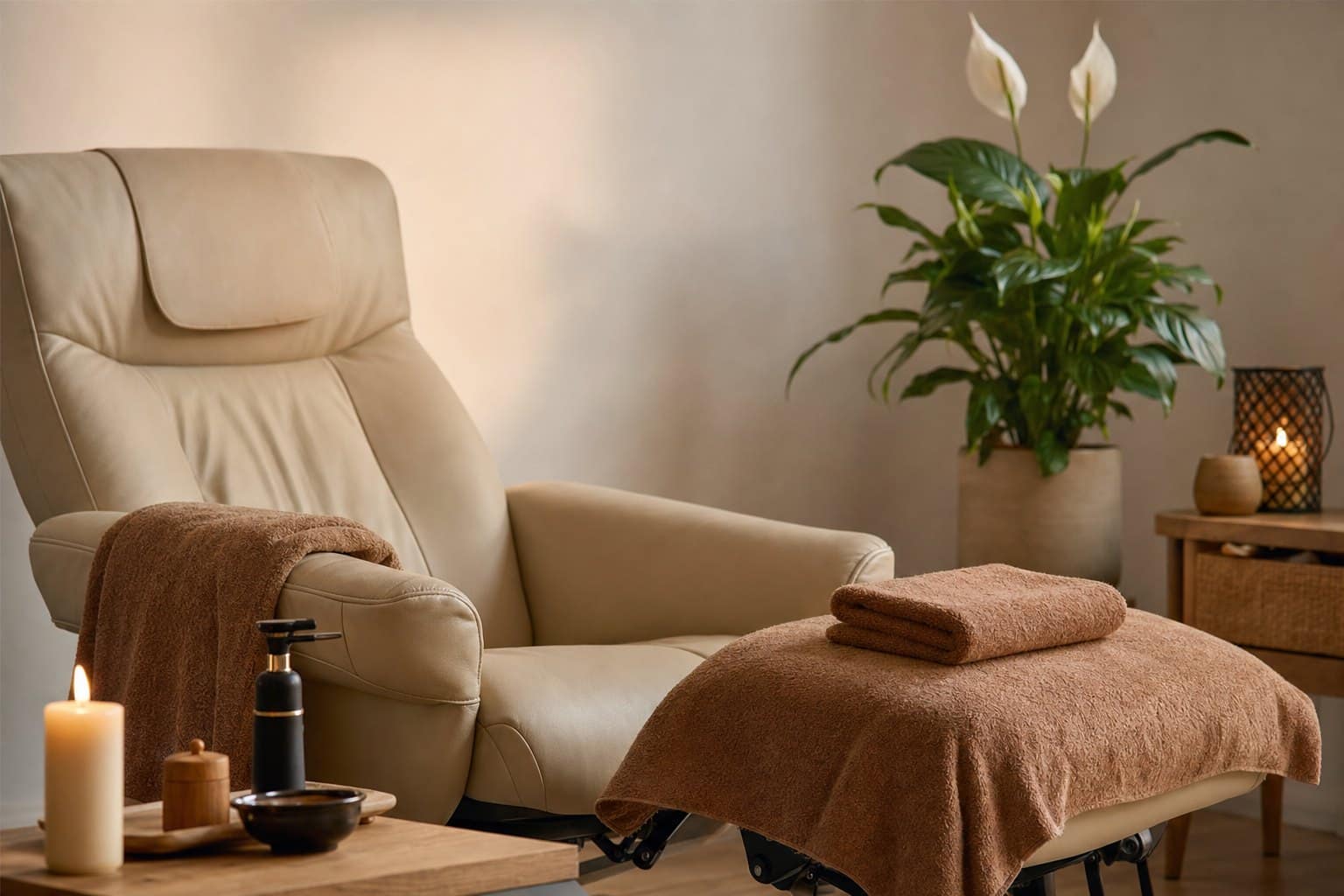
You arrive, remove your shoes and socks, and recline in a treatment chair or on a massage table. You stay fully clothed. The practitioner may briefly soak your feet in warm water, then begins working with thumbs and fingers in a series of deliberate pressure movements across the entire foot, sole, heel, toes, arch, and the sides.
Sessions typically run 30 to 60 minutes. The pressure is firm but not painful; if a particular area feels unusually tender or sensitive, a practitioner will note it (within the reflexology framework, tenderness signals a corresponding imbalance). Most people find the experience intensely relaxing within the first ten minutes.
It’s common to feel muscles in the shoulders and lower back release as the feet are worked, probably via the nervous system’s general relaxation response rather than any organ-specific pathway.
You leave feeling lighter and calm. Some people feel slightly tired afterward, which is normal. There’s minimal physical recovery needed; you can go about your day.
What the evidence says about the foot map
- Reasonable evidence for: reflexology reliably produces measurable relaxation, reduced anxiety, lower heart rate, and reduced perceived stress. Studies in clinical settings (pre-surgical anxiety, cancer care, end-of-life comfort) show consistent results for these outcomes, similar to what a good foot massage produces.
- Debated or mixed: some studies suggest reflexology may reduce specific symptoms (premenstrual tension, certain types of pain) beyond general relaxation effects, but the evidence is inconsistent and methodologically mixed. It’s plausible that sustained pressure on the feet affects the nervous system in ways we don’t fully understand; it’s also plausible that the relaxation effect is the whole story.
- Not established / overstated: the core claim that foot points specifically map to and therapeutically treat particular organs or organ systems has not held up in research. When tested, for example, practitioners “reading” which organ is affected based on foot tenderness without patient input, results are no better than chance. The relaxation benefits are real; the organ-correspondence mechanism is not established.
Benefits regular clients report
People who use reflexology regularly tend to describe:
- Deep stress relief, one of the most consistently reported effects; many people find it more relaxing than a full-body massage because of how much tension accumulates in the feet
- Reduced anxiety, useful as a calming complement during stressful periods, medical treatment, or grief
- Better sleep, likely downstream of the relaxation response
- Relief from tired or aching feet, particularly for people who stand all day, wear restrictive shoes, or have plantar fasciitis (though it’s not a treatment for the condition itself)
- Headache reduction, reported by some regular clients; possibly linked to general tension release
These are believable outcomes given the known effects of skilled touch, relaxation response, and parasympathetic activation. They don’t require an organ-map theory to be real.
Who reflexology is for, and who should skip it
Good fit: Anyone who carries chronic tension in their feet or lower body; people who find full-body massage too exposing or intense; those wanting a calming, low-investment complementary treatment during medical care; people looking for a gentle, affordable wellness habit.
Use caution or skip if:
- Foot injuries, fractures, or recent surgery, direct pressure on an injured area is contraindicated; inform the practitioner before booking
- Deep vein thrombosis (DVT) or blood clots in the legs, pressure massage in this area is potentially dangerous
- Pregnancy, especially first trimester, certain reflex points are traditionally considered stimulating for the uterus; check with your midwife or OB, and work with a practitioner who has prenatal reflexology training if you proceed
- Active foot infections, open wounds, or severe varicose veins, all contraindications for direct pressure work
- Gout flare-up, the foot will be too inflamed and tender
Reflexology is among the lower-risk bodywork modalities for healthy adults. The main caution is not using it as a substitute for medical care.
What a reflexology session costs
Expect to pay $50, $90 for a 45, 60 minute session with a certified reflexologist in most US cities. Spa packages may bundle it with other treatments. Some massage therapists offer reflexology as an add-on at a lower price point. Community wellness centers or training schools occasionally offer sessions at $25, $40.
Foot reflexology tools for home use (balls, rollers, mats) cost $10, $40 and can replicate some of the physical relief, though not the full skilled-touch experience.
How to choose a good reflexologist
- In the US, look for certification from the American Reflexology Certification Board (ARCB) or completion of a recognized reflexology training program (minimum 200+ hours)
- Ask whether they have experience with your specific concern, prenatal, post-surgical comfort, chronic pain, if applicable
- A good practitioner will ask about your health history and contraindications before starting, not after
- Avoid any practitioner who claims reflexology can diagnose or treat specific disease, it’s not a diagnostic tool and cannot replace medical investigation
- The session should feel firm and focused, not ticklish or light; if technique feels random, that’s worth noting
For sessions that combine pressure-point work with whole-body technique, Thai massage and bodywork often includes foot and energy-line work in a similar tradition. Acupuncture shares some theoretical roots (meridian-based influence at distal points) with better-studied evidence for specific outcomes. For a circulatory complement, lymphatic drainage massage is gentle, targeted, and well-suited alongside reflexology.
FAQ: reflexology
Is reflexology the same as a foot massage? Structurally similar, but a trained reflexologist works a specific mapped protocol across all areas of the foot rather than focusing on wherever feels tight. The theoretical framework differs, though in practice the experience overlaps considerably.
Can reflexology diagnose health problems? No, and any practitioner claiming otherwise is outside the evidence. The “tenderness = organ imbalance” reading is part of the reflexology framework, not a validated diagnostic method.
How often should I go? For general relaxation and stress relief, monthly or as often as feels right and affordable. There’s no evidence that more frequent sessions produce compounding organ-health benefits; the relaxation benefit is real per session regardless.
Will reflexology hurt? It shouldn’t be painful, though firm pressure on the arch, heel, or toes can feel intense. Unexpected tenderness in a point is sometimes described as a “good pain”, like working a tight muscle. Communicate with your practitioner throughout.
The honest summary on reflexology
Reflexology is a genuinely relaxing, pleasant foot treatment with real stress-relief and anxiety-reduction value. The organ-map theory it’s built on hasn’t held up to research, which means it doesn’t make sense to use it as a way to “treat” your liver or kidneys.
On relaxation terms, though, it delivers consistently, and for many people it’s one of the more enjoyable ways to spend an hour unwinding. Judge it by how it actually makes you feel, not by claims about what it’s supposedly healing in the background.