Paddleboard Yoga (SUP Yoga) Explained: What It's Like on the Water
SUP yoga is a joyful, slightly humbling outdoor experience, not a shortcut to better yoga, but a genuinely fun reason to get moving.
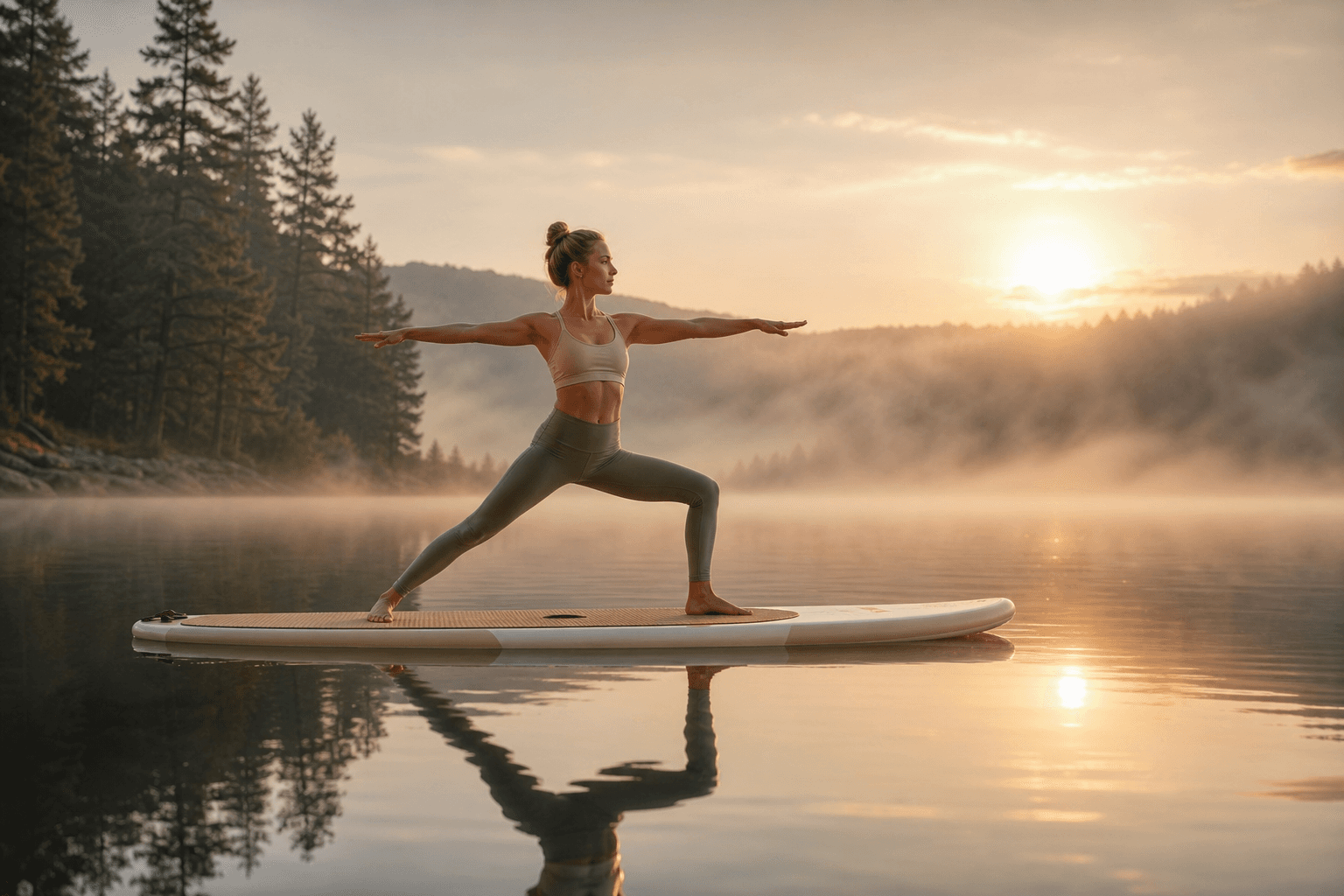
Short answer: SUP yoga is ordinary yoga adapted to a wide paddleboard on calm water, usually 45 to 60 minutes, and most people fall in at least once. The unstable surface genuinely increases core and lower-limb engagement, though it is not better yoga. You need to be able to swim.
SUP yoga is the version of yoga where falling into the water is not a failure, it is basically part of the experience. Classes happen on calm lakes, bays, and sheltered ocean inlets, on wide, stable paddleboards that still manage to rock at the worst possible moment. Most participants fall in at least once.
Most participants also love it. That combination tells you something useful about what kind of activity this is.
What SUP yoga is
Stand-up paddleboard yoga, commonly called SUP yoga, is a yoga practice performed on a wide, inflatable or hard-shell paddleboard floating on calm water. Boards used for yoga are typically wider and longer than surf-style SUPs, 32, 36 inches wide, to maximize stability.
The practice emerged in the early 2010s as stand-up paddleboarding became widely popular in coastal and lake communities. Yoga instructors began adapting mat-based flows for the water environment, and the format spread quickly through beach towns and outdoor wellness centers. Today it appears wherever there is calm water and warm weather: Hawaii, the Florida Keys, the Great Lakes, mountain reservoirs, urban riverways.
SUP yoga is not a distinct yoga style, it adapts poses from hatha, vinyasa, or yin yoga to the board. The water surface introduces an unstable element that changes how poses feel and what muscles engage, but the yoga itself is familiar.
What a class on the water is like
You meet at a dock, beach, or boat launch. The instructor covers board basics, how to kneel, how to stand, how to fall safely and re-board, before anyone paddles out. You will likely spend 5, 10 minutes paddling to a calm anchored area or tethering boards together in a raft.
The class itself typically runs 45, 60 minutes. Poses begin seated or kneeling, child’s pose, seated forward folds, gentle twists, before progressing to standing if conditions allow. Downward dog on a rocking board is its own experience. Warrior poses require serious core engagement just to maintain. Some instructors teach entirely from the knees to keep the session accessible.
Savasana (lying flat) on the water, with the board gently rocking, is frequently cited as the best part. You feel the sun, hear water, and float. It is genuinely restoring in a way that gym-mat savasana is not.
Plan to get wet. Either from intentional entries or from losing a pose. Wear a swimsuit or quick-dry clothes and apply sunscreen before you arrive. Most sessions include a brief flat-water paddle as a warm-up or cool-down.
What the evidence says about SUP yoga
- Reasonable evidence for: The balance challenge of an unstable surface meaningfully increases core and lower-limb muscle activation compared to the same pose on a stable mat, this is well-documented for balance-board and unstable-surface training generally, and applies to SUP yoga. Outdoor exercise in natural settings (particularly near water) is consistently associated with improved mood and reduced stress in research on blue-space environments. Any yoga practice, performed consistently, supports flexibility, balance, and stress reduction.
- Debated or mixed: Whether SUP yoga provides meaningfully superior core training versus a well-taught mat class that deliberately focuses on core stability. The instability is real, but advanced mat-yoga classes can match or exceed the demand.
- Not established / overstated: That SUP yoga is a superior form of yoga generally, or that the water environment unlocks unique spiritual or physical benefits beyond what the outdoor setting, novelty, and movement combination naturally produce. It is a very enjoyable variant, not a breakthrough.
Benefits paddlers report
- Noticeably more core and hip engagement during familiar poses
- A strong sense of presence and mindfulness, the board enforces it
- Mood lift from being outdoors near water and moving in sunlight
- Laughter, playfulness, and reduced self-consciousness about “doing yoga right”
- A refreshing contrast to indoor practice that renews motivation
Who SUP yoga is for, and who should skip it
SUP yoga suits adults who can swim, are comfortable in open water, and have basic yoga familiarity (though true beginners are often welcome). It is especially appealing if regular mat yoga has started to feel routine or if you just want to spend an outdoor morning doing something active and fun.
Skip or get clearance first if you: cannot swim or are uncomfortable in open water, have vertigo or significant balance disorders, have recent knee, hip, or shoulder injuries (falling and re-boarding can stress those joints), or have cardiovascular conditions that make unexpected physical exertion a concern. The sessions are typically moderate intensity, but unexpected balance challenges can spike heart rate briefly.
Sun exposure is significant, use broad-spectrum SPF 30+ and reapply. Dress for the water temperature, not just air temperature.
If SUP yoga sounds appealing, you might also enjoy exploring the full range of yoga styles to find an indoor practice that complements it, or pilates reformer work for the core stability training that carries over well to unstable-surface yoga.
What a paddleboard yoga class costs
- Drop-in group class (board included): $35, $65
- Drop-in class (own board): $20, $35
- Private or small-group session: $70, $120 per person
- Resort or retreat package: Highly variable; often $60, $100 per session within a larger wellness day or multi-day retreat
SUP yoga is inherently seasonal and location-dependent. In warm climates it runs year-round; in northern areas it runs May, September. Prices tend to be higher at coastal resorts than at inland lake operations.
How to choose a good class
Look for instructors who are both certified yoga teachers (RYT-200 minimum) and have specific SUP yoga training or certifications. Paddleboard safety knowledge matters: the instructor should brief participants on how to fall safely, how to re-board, and what to do if they drift from the group.
Class size should be small, 8, 12 students is a common maximum for safety and instruction quality. Confirm that personal flotation devices (PFDs) are available, even if optional. Check that the location is genuinely calm water; choppy conditions significantly increase difficulty and fall risk. Ask whether boards are included in the fee and what the equipment condition is.
FAQ: SUP yoga
Do I need to know yoga already? Some prior yoga experience helps, but most intro SUP yoga classes welcome complete beginners. Instructors modify poses for kneeling or seated versions, and the water environment actually reduces the pressure to look perfect.
What if I can’t swim? Swimming ability is important. Even on calm water, falling in is likely, and you need to be comfortable in the water. Most providers require that participants can swim or have access to a life jacket for the duration.
Will the board flip? Yoga-specific SUP boards are very wide and stable. They rock but rarely flip on calm water. What causes people to fall is unexpected weight shifts during transitions between poses.
Should I learn SUP first or yoga first? Neither is strictly required, but a couple of mat yoga sessions beforehand helps you recognize pose names during class. Basic board stability (paddling, standing) is usually covered in the pre-class briefing.
The honest summary on SUP yoga
SUP yoga is an outdoor movement experience worth trying if you enjoy being near water and want a fresh take on yoga. The core challenge is real, the mood benefit from outdoor exercise near water is well-supported, and the novelty factor consistently makes it memorable.
It will not transform your yoga practice or build fitness faster than a good mat class, but as a reason to spend a morning outside, moving, laughing, and occasionally falling into a lake, it is hard to beat.