Yoga styles explained: how to pick the right one for what you actually want
Hatha, vinyasa, yin, restorative, ashtanga, hot, what each is, and who it fits.
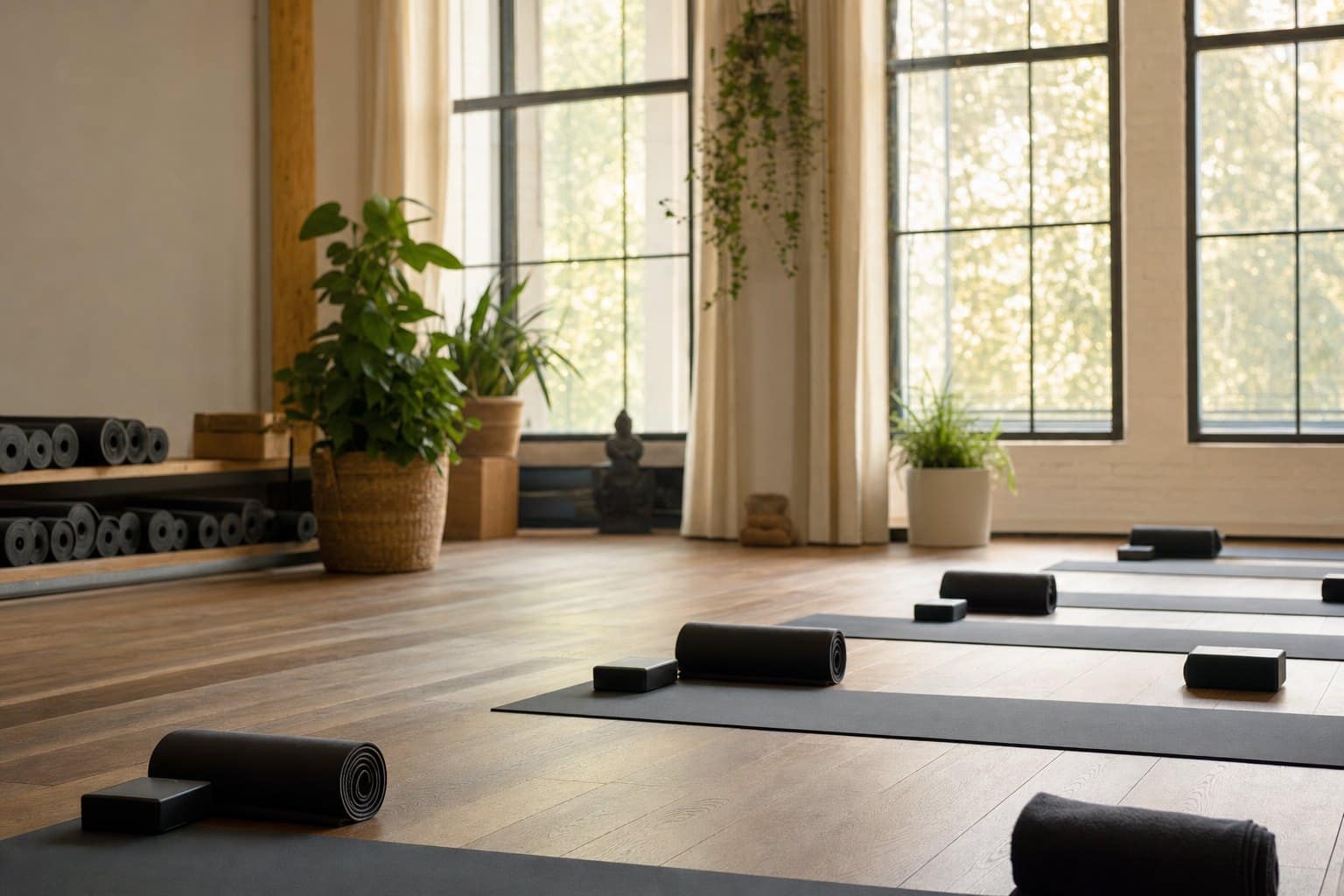
Short answer: There is no best yoga style, only the right one for what you want that day. Restorative or yin to calm down and sleep; vinyasa, ashtanga or hot for a genuine workout; hatha first if you are unsure. Drop-ins run $18 to $30. Picking the wrong style is the most common reason people quit.
“Yoga” covers wildly different experiences, from a sweaty hour of fast-paced movement to an hour of barely moving at all. Picking the wrong style is the single most common reason people conclude that yoga isn’t for them. Here’s a practical map of the main styles, what each one actually delivers, and how to match one to what you’re looking for.
What yoga actually is
Yoga as practiced in Western studios descends primarily from Hatha yoga, a tradition of physical postures (asanas), breath work (pranayama), and meditation that developed in India over several centuries. The specific styles available in most studios are largely 20th-century systematizations: Ashtanga was codified by Sri K.
Pattabhi Jois in Mysore in the 1940s; Bikram and hot yoga emerged later; yin yoga, though drawing on ancient Taoist and Indian traditions, was formalized as a style in the West in the 1980s.
The styles differ primarily in pace, intensity, purpose, and how long postures are held. A common confusion: “yoga” is not a single difficulty level. Restorative yoga and ashtanga are both “yoga” in the same way that a walk and a marathon are both “running.”
What each yoga class is like
Every style shares some structure: a warm-up or centering, a main sequence of postures, and a closing rest (savasana). What happens in between varies dramatically.
In a hatha class, you move deliberately between standing, seated, and lying postures at an unhurried pace, holding each pose for several breaths. The teacher offers alignment cues and modifications. Expect to feel stretched and slightly worked but not breathless. Sessions typically run 60, 75 minutes.
In a vinyasa class, poses link together in continuous flow synchronized to breath, inhale into one shape, exhale into the next. The pace depends on the teacher, but most vinyasa classes produce a genuine cardiovascular effect and some sweat. You won’t hold postures long; the challenge is coordination and endurance. 60, 75 minutes.
In yin yoga, you hold passive poses for 2, 5 minutes each, targeting the connective tissue (fascia, tendons, ligaments) rather than the muscles. It’s quiet and deliberate and can feel uncomfortable in a stretchy way, the long holds reach into places brief stretching doesn’t touch. Not a workout; deeply relaxing and occasionally emotional. 60, 75 minutes.
Restorative yoga uses props, bolsters, blankets, blocks, to fully support the body in each position so that no muscular effort is required. You might hold five poses in a full class. The purpose is nervous-system downshift. It’s the most passive style and the most like structured rest.
Ashtanga follows a fixed sequence of postures (the Primary Series is the standard entry point) performed at a brisk pace with a specific breath count for each pose. It’s physically demanding, disciplined, and repetitive by design, the idea is that consistency with the same sequence produces refinement over time. Traditional Mysore-style ashtanga is self-paced with individual teacher adjustments; led classes move everyone through the sequence together.
Hot yoga is any style, often vinyasa or a fixed sequence, taught in a heated room (95, 105°F, sometimes with added humidity). The heat increases range of motion and dramatically amplifies intensity. Sweating is substantial; hydration is non-negotiable. Hot yoga has its adherents and its critics; the evidence that the heat itself adds physiological benefit beyond the practice is limited.
What the evidence says about yoga
Yoga research is extensive but heterogeneous, different styles studied with different populations and designs.
- Reasonable evidence for: reduced anxiety and stress across styles; improved flexibility and balance; pain reduction in chronic low-back pain (hatha and vinyasa have the most evidence here); improved sleep quality; modest cardiovascular benefit from more vigorous styles; positive effects on mood and depressive symptoms.
- Debated or mixed: whether yoga is superior to other low-impact exercise for most physical outcomes, how much benefit is from movement vs. the breath and meditative components, and whether hot yoga offers benefits beyond non-heated practice at equivalent intensity.
- Not established / overstated: “detox through sweat,” yoga as primary treatment for serious medical conditions, and claims that specific poses cure specific organ problems. Yoga is a valuable wellness and fitness practice with genuine mental and physical benefits; it is not medicine.
Benefits practitioners report by style
What people actually report varies by style. Vinyasa and ashtanga practitioners tend to emphasize improved strength, body composition, and mental focus. Yin and restorative practitioners describe better sleep, reduced chronic tension, and a quieter baseline anxiety. Hatha students often cite a feeling of “being in their body” and improved posture.
Across styles, the most consistent theme is the integration of movement and breath, the quality of attention yoga brings to physical experience. People who’ve never been able to meditate often find that yoga’s physical engagement provides the anchor that makes mental settling possible.
Who yoga is for, and who should skip it
There is a yoga style suitable for almost every body and goal. The matching is the skill.
If you want to relax or sleep better: restorative or yin. If you want a genuine workout: vinyasa, ashtanga, or hot. If you’re new to yoga: hatha first, then explore once you know basic poses. If you’re tight from desk work: yin for connective tissue, with some hatha or vinyasa for muscular strength. If you want both movement and meditation: a slower vinyasa or hatha class with a mindful teacher. If you want something physically unusual and playful: aerial yoga suspends poses in fabric hammocks, removing floor-based limitations; paddleboard yoga takes practice onto water, adding balance challenge and novelty.
Talk to your doctor or a knowledgeable teacher if you have a recent joint injury (especially knees, wrists, or spine), osteoporosis, glaucoma (our glaucoma guide covers which poses raise eye pressure), or uncontrolled blood pressure. Inversions are contraindicated for several conditions; modifications are almost always available. Our guide to acid reflux and hiatal hernia covers why inversions are the wrong shape for that reader. Our guide to wellness with osteoporosis covers the spinal flexion question, and our guide to scoliosis and yoga, Pilates or massage covers curves. For the opposite problem, too much range, our hypermobility guide covers what to ask for.
For comparison with a complementary movement practice, Pilates (reformer vs. mat) shares yoga’s emphasis on controlled movement and body awareness but focuses more specifically on core strength and spinal alignment.
What yoga classes cost
Drop-in studio classes in the US typically run $18, $30 per session. Monthly unlimited memberships at independent studios average $100, $180; at large chains (CorePower, Y7, etc.) memberships run $130, $200/month. Many studios offer 2-week or 30-day intro specials at significant discounts, usually $30, $60, which is the best way to try multiple classes and teachers before committing.
Online yoga is excellent and genuinely affordable: Yoga with Adriene (YouTube, free) and platforms like Glo, Alo Moves, or Peloton Yoga ($15, $25/month) offer full libraries across all styles.
Gear needed: a mat ($25, $100), grippy socks for hot yoga (optional), and comfortable clothing. Props (blocks, strap, bolster) are provided in studios; restorative practice at home benefits from a bolster ($40, $80).
How to choose a good class or teacher
Start by naming your goal, not by picking a style you’ve heard of. “I want to calm down” and “I want to build strength” point to different classes even at the same studio.
Look for a teacher who:
- Verbally cues alignment rather than only demonstrating
- Offers modifications in every class without being asked
- Doesn’t use hands-on adjustments without asking first
- Paces the class appropriately to its stated level
Avoid studios where the only “modification” offered is to try harder. A good teacher’s beginning class should feel like a real class, not a dumbed-down one.
For your first class: arrive 10 minutes early, tell the teacher you’re new and mention any injuries. Take every modification. Don’t compare yourself to anyone in the room, including where you were last month. Yoga has a steep initial awkwardness curve that flattens quickly.
FAQ: yoga styles
Is yoga a workout? It depends entirely on the style. Ashtanga, power vinyasa, and hot yoga are genuinely demanding. Restorative yoga is the opposite. Most styles fall somewhere in between, offering moderate physical challenge with significant stress and flexibility benefits.
Can I do yoga if I’m not flexible? Yes, inflexibility is a reason to do yoga, not a reason not to. Every pose has modifications, and flexibility improves with consistent practice. The first few classes will feel limited; that’s normal and temporary.
What’s the difference between a yoga class and a yoga session on an app? A good in-person teacher offers real-time adjustments and can modify for your body. Apps offer convenience, variety, and accessibility. Most serious practitioners do both. Starting with in-person classes to learn alignment is wise; apps work well once you know the basics.
How often should I practice? Two to three times per week produces noticeable change in flexibility and stress within a month. Daily practice accelerates results. Even once per week is better than nothing and produces real benefit over time.
The honest summary on yoga styles
There is no best yoga, only the right style for your goal that day. The mismatch between expectation and style is what sends people home convinced yoga isn’t for them.
Match the style to whether you want to calm down or work out, start with hatha if unsure, try a few teachers before deciding the practice isn’t for you, and remember that the first two classes are almost always the hardest.
The value of the practice is real; finding your version of it just takes a little experimentation.