Aerial Yoga Explained: What to Expect in a Hammock Yoga Class
Aerial yoga is playful, accessible, and genuinely good for flexibility, minus the miracle claims.
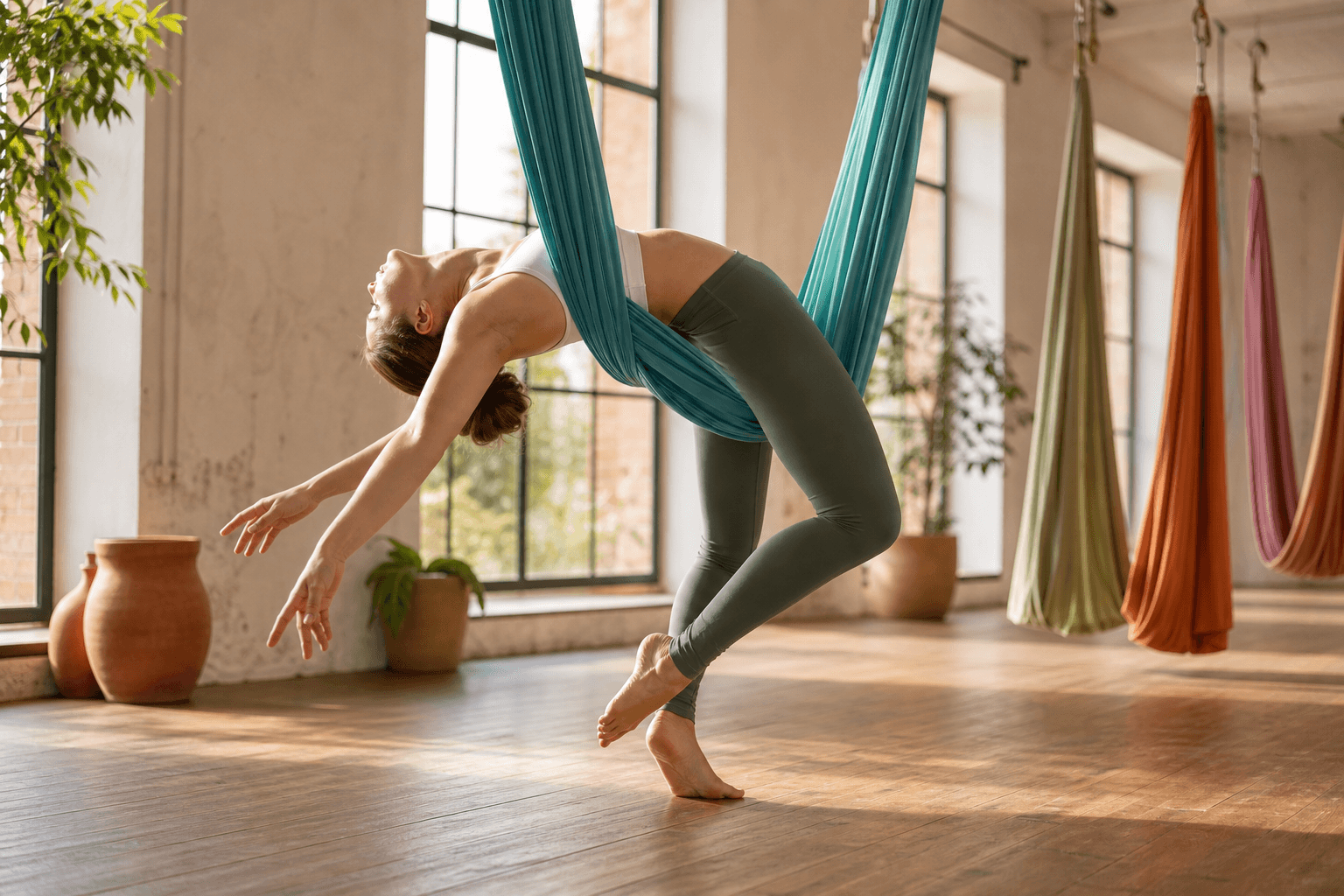
Short answer: Aerial yoga uses a fabric hammock rigged at hip height to support yoga poses, so most of a class stays close to the ground. Classes run 60 to 75 minutes and cost $20 to $35 drop-in. It improves flexibility, core engagement and mood, much like any gentle yoga; it will not fix your spine.
Aerial yoga looks more dramatic than it feels. The silk hammock swaying from the ceiling suggests circus school, but most classes keep you close to the ground, using the fabric as a gentle prop rather than an apparatus for acrobatics. If you have been curious about aerial yoga but assumed it required serious upper-body strength or gymnastic experience, it almost certainly does not.
What aerial yoga is
Aerial yoga, also called anti-gravity yoga, hammock yoga, or suspension yoga, is a yoga style that uses a fabric hammock (typically nylon or silk) rigged from a ceiling anchor at hip height to support the body during poses. The hammock offloads some body weight, making certain stretches and inversions accessible that would be difficult on a mat, and allows full spinal decompression in supported hangs.
The practice was developed in the early 2000s, with Christopher Harrison’s AntiGravity Yoga method becoming one of the most widely licensed formats. Teachers adapt traditional yoga postures, Pilates movements, and acrobatic elements for the hammock context. Most studios teaching aerial yoga do not require students to leave the ground at all, the hammock sits at hip height and acts as a support tool throughout.
What a hammock class is like
You arrive to a studio with individual hammocks spaced several feet apart. The instructor guides you through a warm-up, often standing alongside the hammock with hands on the fabric, before moving into postures.
Early in class, most poses stay close to the ground: supported warrior poses, hip openers with one leg resting in the hammock, seated forward folds with the fabric acting as a gentle assist. As class progresses, you might move into more novel territory: a supported backbend with your hips in the hammock, a gentle inversion where your feet go up and your head hangs freely, or a “cocoon” where you wrap the fabric around yourself entirely and sway.
Classes typically run 60, 75 minutes. The hammock handles most of the balance and load challenge, so the session is moderate intensity, not a vigorous cardio workout, but demanding enough for core and upper-body engagement. Most people feel a pleasant full-body stretch and a mood lift. The inversions, even mild ones, tend to make people laugh.
What the evidence says about aerial yoga
- Reasonable evidence for: The benefits aerial yoga provides are largely the benefits of any gentle yoga or light movement practice, improved flexibility, mild core engagement, stress reduction, and improved mood. Inversions (even gentle, supported ones) temporarily increase blood flow to the upper body and head, which many people find clarifying. The playful, novel environment reliably supports positive mood outcomes, similar to other enjoyable movement experiences.
- Debated or mixed: Whether aerial yoga builds significantly more flexibility or core strength than well-taught mat yoga is unclear; no large controlled trials exist. Some practitioners report that the hammock’s assistance in spinal decompression (hanging inversions) relieves back tension, but clinical evidence for this specific claim is limited.
- Not established / overstated: Claims that aerial yoga reverses spinal compression, cures back pain, or provides cardiovascular or detox benefits meaningfully beyond other yoga styles are not supported. It is a fun, accessible movement modality, not a medical intervention.
Benefits people report from aerial yoga
- Noticeable improvement in shoulder and hip flexibility over time
- Core engagement from stabilizing in the hammock, especially during transitions
- Reduced sense of tightness in the spine after supported inversions
- Strong mood lift and sense of play, described frequently as “joyful”
- Accessible entry point for people who find floor-based yoga uncomfortable on joints
Who aerial yoga is for, and who should skip it
Aerial yoga works well for most healthy adults, including beginners. It is particularly appealing if mat yoga has felt inaccessible due to wrist, knee, or ankle discomfort, the hammock takes pressure off those joints.
Skip or get clearance first if you: are pregnant (inversions are contraindicated), have high or low blood pressure (inversions can temporarily spike or drop pressure), have glaucoma or eye pressure conditions (our guide to wellness with glaucoma covers why inversions are the specific problem), have recent surgery or disc injuries, or are prone to vertigo (the hanging sensation can trigger it). Let the instructor know about any of these before class, good studios require a health intake form.
Most aerial yoga studios set a weight limit (typically 250, 300 lb based on the hardware rating); check in advance if this applies to you.
What aerial yoga costs
- Drop-in class: $20, $35 at most urban studios
- Class pack (5, 10 classes): $90, $200, reducing per-class cost
- Monthly unlimited membership: $80, $150 at studios that specialize in aerial
- Private session or intro workshop: $60, $120
Aerial yoga tends to cost more than mat yoga because the equipment, rigging, and lower class-size ceilings add overhead for studios.
How to choose a good class or studio
Look for instructors with specific aerial yoga certifications (AntiGravity, Unnata, or equivalent). A good intro class spends time on hammock safety, how to check the rigging point, how to exit the hammock safely, and when to stop an inversion. Class sizes should be small enough for the instructor to give hands-on attention; 8, 12 students per teacher is reasonable.
Wear fitted, full-length clothing, the hammock grips bare skin uncomfortably and can chafe. Avoid anything with buckles or zippers. Do not eat heavily in the two hours before class.
If you enjoy aerial yoga, you might also find value in mat and reformer Pilates, which builds similar core stability in a grounded format, or in exploring the broader range of yoga styles to find what fits your body.
FAQ: aerial yoga
Do I need to be flexible or strong to start? No. Most intro classes are designed for beginners with no prior yoga or circus experience. The hammock assists rather than demands; flexibility and strength develop with practice.
Is aerial yoga safe for people with back pain? For mild, general back tension, many people find it helpful. For diagnosed disc issues, nerve compression, or post-surgical backs, check with your doctor first. A good instructor will modify poses for you.
How is aerial yoga different from aerial silks? Aerial silks (used in circus performance) involve climbing, wrapping, and performing drops from height. Aerial yoga keeps you close to the ground using a hammock as a prop, it is far more accessible and not remotely as dangerous.
Will one aerial yoga class make me sore? Possibly in the upper arms, core, and inner thighs, the hammock creates novel resistance patterns. The soreness is typically mild and resolves in 24, 48 hours.
The honest summary on aerial yoga
Aerial yoga is a genuinely fun way to practice movement, and the hammock makes flexibility and mild inversions accessible to people who find mat-only yoga limiting. The benefits it provides, flexibility, core engagement, mood lift, stress relief, are real, and largely the same benefits any enjoyable movement practice provides.
It is not superior to mat yoga, and it will not fix your spine or detox anything. But if you want a joyful, low-stakes way to get moving and try something new, it is a very good option.