Halotherapy Explained: Salt Rooms, Salt Caves, and Honest Expectations
Salt therapy has real relaxation value, the respiratory cure claims deserve more skepticism.
Short answer: Halotherapy is breathing dry, pharmaceutical-grade salt aerosol, typically for 45 to 60 minutes in a salt room. The reliable effect is relaxation, with some suggestion of mild, temporary congestion relief. A 2014 Cochrane review found insufficient evidence for COPD or chronic bronchitis, and the FDA has approved it for no medical condition.
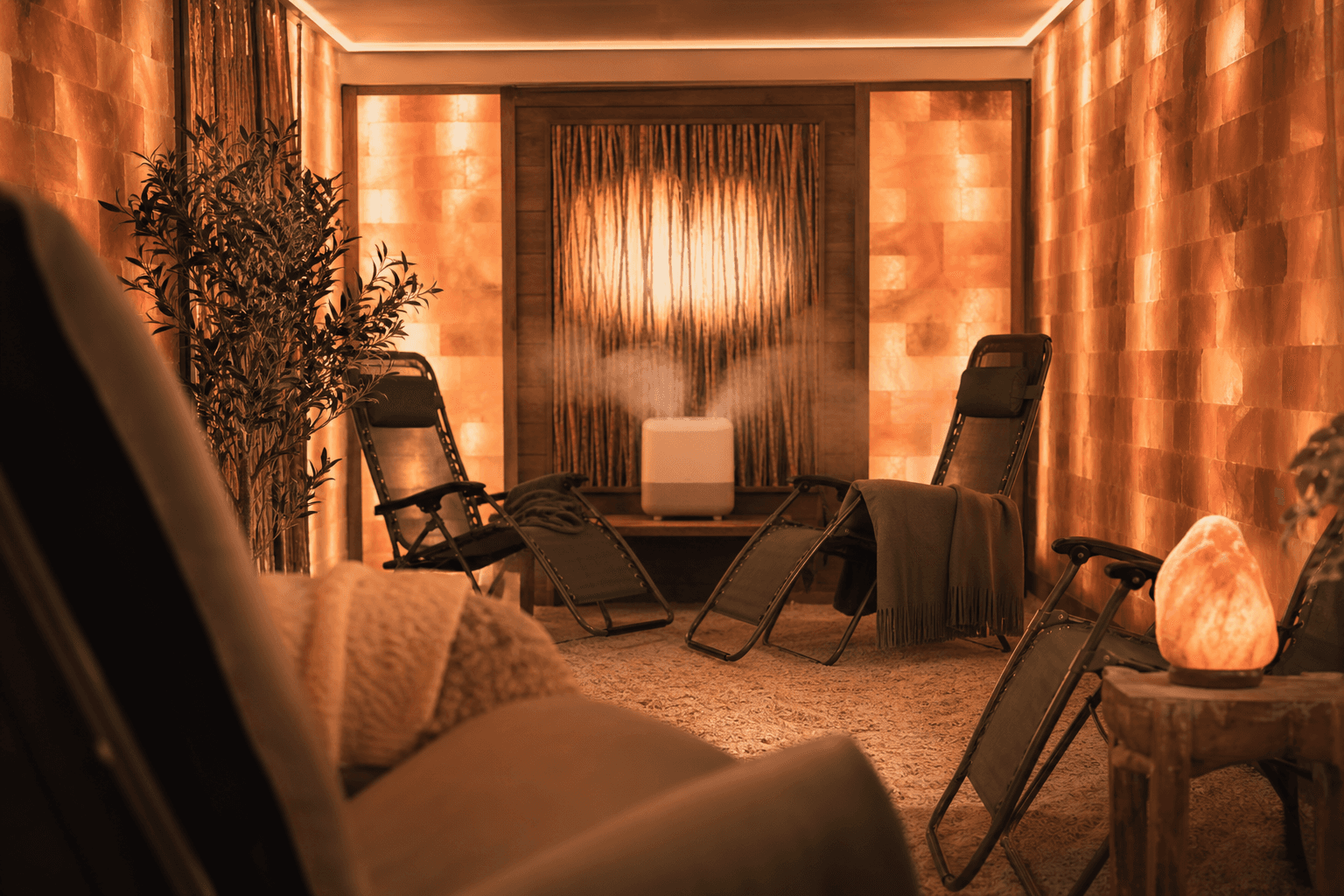
Walk into a halotherapy center and you’ll usually find glowing Himalayan salt walls, reclining chairs, and a machine quietly dispersing a fine salt mist into the air. It feels genuinely peaceful in there. The question is whether the salt is doing much, or whether the quiet room is doing most of the work.
What it is
Halotherapy (“halo” from the Greek for salt) is the therapeutic use of inhaled dry salt aerosol. It comes in two forms: active halotherapy, where a device called a halogenerator crushes pharmaceutical-grade salt into microscopic particles (1, 5 microns) dispersed into an enclosed room; and passive halotherapy, where you simply sit in a natural salt cave or a room lined with salt blocks, breathing the ambient air.
The practice traces back to mid-19th-century Poland, where a physician named Feliks Boczkowski noticed that salt mine workers (who breathed fine salt dust all day) had remarkably low rates of respiratory illness. Modern salt therapy spas extrapolate from this observation to claim the practice treats asthma, COPD, allergies, eczema, psoriasis, and general immune function.
The proposed mechanism: fine salt particles are inhaled deep into the respiratory tract, where salt’s hygroscopic properties draw moisture into mucus, theoretically loosening it and making it easier to clear. Salt also has mild antimicrobial properties. These are real effects in concentrated medical contexts, saline nebulization is a legitimate treatment for cystic fibrosis, for instance.
What a session is like
You’ll enter a room that looks somewhere between a spa and a cave, depending on the facility. The air has a faintly salty, clean smell. Most people wear comfortable loose clothing, the salt is fine enough that it can settle on fabric. You’ll recline in a zero-gravity chair, often with soft music or guided meditation audio playing.
The halogenerator runs continuously, maintaining a specific salt concentration in the air. Sessions typically run 45, 60 minutes. Some facilities offer children’s rooms with play areas. You breathe normally; there’s no breathing technique to learn.
Most people find it deeply relaxing, similar to a meditation session in a quiet, sensory-reduced environment. Some report a mild salty taste or slight throat clearing during or after the session. You might feel a mild post-session looseness in the chest or sinuses, though this is highly variable.
Salt rooms keep temperatures cool (around 68°F) and humidity very low (under 50%), which contributes to the crisp, refreshing feeling.
What the evidence says
This is where honesty matters most for halotherapy, because the gap between marketing claims and research findings is substantial.
- Reasonable evidence for: Subjective relaxation and stress reduction, consistent across users, likely driven by the quiet environment, low stimulation, and deliberate breathing. Some small studies and case reports suggest salt aerosol may provide mild, temporary relief of respiratory congestion symptoms in healthy adults.
- Debated or mixed: Whether halotherapy provides clinically meaningful benefit for mild asthma beyond a placebo or relaxation effect. A handful of small studies show improved spirometry scores after multiple sessions, but most have serious methodological limitations (no blinding, small samples, no controls). A 2014 Cochrane review found insufficient evidence to recommend halotherapy for COPD or chronic bronchitis. Evidence for eczema and psoriasis is anecdotal at best.
- Not established / overstated: Treating asthma or COPD as a primary therapy, “boosting immunity,” eliminating allergens from the body, treating skin conditions systemically, or detoxification of any kind. The salt concentrations in a spa halogenerator are much lower than the saline nebulization doses used in clinical respiratory medicine, direct comparisons to medical saline therapy are misleading. The FDA has not approved halotherapy for any medical condition.
The experience itself is genuinely pleasant. The cure claims are not backed by the science that exists.
Benefits people report
- Deep relaxation, often more effective than a standard spa environment
- Temporary relief of sinus congestion or stuffiness, particularly after head colds
- A sense of easier breathing during and shortly after a session
- Skin that feels softer (likely from the humidity-controlled environment as much as the salt)
- Calm and mental clarity similar to a meditation session
Who it’s for, and who should skip it
Halotherapy is a reasonable wellness option for anyone who wants a quiet, restorative experience and is curious about the respiratory-comfort angle. It’s not a replacement for prescribed asthma medications, antihistamines, or any medical respiratory treatment.
Skip halotherapy or get medical clearance first if you:
- Have severe or active asthma, inhaled irritants can trigger attacks
- Have COPD, emphysema, or other serious chronic lung disease
- Have tuberculosis or any active respiratory infection
- Have open wounds or severe skin infections (salt can irritate)
- Are pregnant (limited data; consult your doctor)
Talk to your doctor before using halotherapy as a supplement to, never a replacement for, prescribed respiratory medications.
What it costs
- Single 45, 60 min session: $25, $60 depending on facility and market
- Session packages (5, 10 sessions): Often discounted to $20, $45 per session
- Monthly membership plans: $80, $150/month for unlimited or frequent sessions
Children’s sessions are sometimes cheaper ($15, $30). High-end urban facilities trend toward the top of the range; standalone halotherapy-specific studios may be more affordable than hotel spas.
Home Himalayan salt lamps and salt inhalers are also sold, but the salt particle size and concentration produced by these devices is far below what a clinical halogenerator delivers, they’re decorative, not therapeutic.
How to choose a good provider
Look for facilities using pharmaceutical-grade sodium chloride (not just Himalayan pink salt, which has trace impurities). Ask whether they use a certified halogenerator and what the particle size is, 1, 5 microns is the therapeutic target range.
Check that the salt room is kept clean and that halogenerators are serviced regularly. A reputable facility will not claim halotherapy cures or treats diagnosed medical conditions, that’s a flag for overselling.
Halotherapy pairs naturally with other restorative spa modalities. For comparison of similarly relaxing, evidence-light-but-pleasant experiences, see therapeutic sauna guide and float tank guide.
FAQ: halotherapy
Can halotherapy replace my asthma inhaler? No. Halotherapy is a complementary wellness activity, not a medical treatment. Never reduce or stop prescribed respiratory medication based on a salt room experience.
Is a salt room the same as being near the ocean? Ocean air does carry salt aerosol and has been associated historically with respiratory benefits. However, ocean salt concentration and the specific particle size are different from a controlled halogenerator environment, it’s a related but not identical experience. Beach walks are free, though.
How many sessions do I need to feel something? Most people report a pleasant, calming effect from a single session. The respiratory benefit claims, where they appear in studies at all, usually involve multiple sessions per week for 4, 8 weeks, and the evidence even then is limited. For relaxation purposes, one session is enough to evaluate whether you enjoy it.
Is passive salt cave the same as a halogenerator room? No. Natural salt caves have ambient salt aerosol from the walls but at much lower concentrations than an active halogenerator room. Both are considered halotherapy, but active halotherapy delivers a controlled, higher concentration of salt particles.
The honest summary
Halotherapy is a genuinely relaxing spa experience with thin but not-zero evidence for mild respiratory comfort. The environment, quiet, cool, low-stimulation, does real work for stress and relaxation regardless of what the salt particles are doing. The claims about treating asthma, COPD (our COPD guide covers what does have evidence), allergies, and immune function significantly outpace the research.
Go for the experience; be honest with yourself (and your doctor) about what it can and cannot do.