Aromatherapy explained: what essential oils actually do (and don't do)
Some aromatherapy benefits are genuinely well-supported. Others are wildly overstated. Here's the honest breakdown.
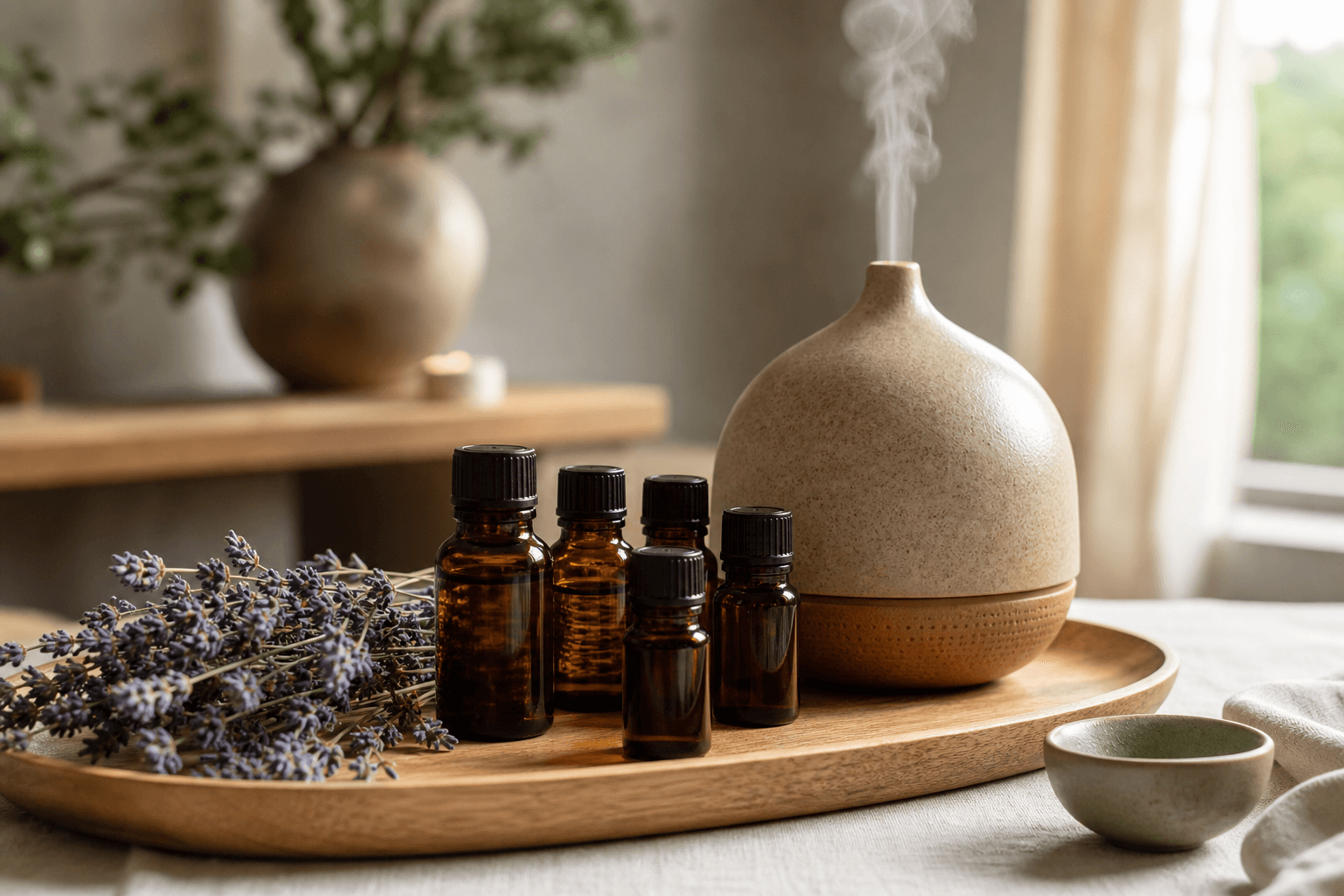
Short answer: Lavender for anxiety and sleep, topical peppermint for tension headache, and peppermint or ginger inhalation for nausea are the best-supported uses, and the effects are real but modest. Detox, cancer treatment, curing infections and immune-boosting claims are not supported. Dilute to 1 to 3 percent in a carrier oil.
Aromatherapy sits in a peculiar position: it has a body of real, peer-reviewed research behind some of its applications, and it also has one of the most aggressively overstated marketing landscapes in wellness. Separating those two things is the point of this guide.
What aromatherapy is
Aromatherapy is the therapeutic use of essential oils, concentrated aromatic compounds extracted from plants, to influence mood, comfort, and, in some applications, physiological function. The oils are used primarily through inhalation (diffuser, steam, direct sniff) or topical application to the skin (diluted in a carrier oil).
Ingestion is occasionally practiced in some clinical traditions but carries meaningful risks and should not be done without professional guidance.
Essential oils are not the same as fragrance oils (which are synthetic). They are concentrated plant extracts, the aromatic volatile compounds of leaves, flowers, bark, rinds, or roots. “Lavender essential oil” is steam-distilled from Lavandula angustifolia flowers; it contains dozens of identifiable compounds including linalool and linalyl acetate, which have been studied independently.
Aromatherapy has roots in ancient Egyptian, Greek, and Chinese herbal medicine, and was formalized in the 20th century by French chemist René-Maurice Gattefossé, who coined the term after experiencing lavender’s tissue effects firsthand (and published a book in 1937). Modern clinical aromatherapy is practiced primarily by nurses and massage therapists in integrative care settings.
What an aromatherapy session is like
In a spa or wellness setting:
- Assessment. A therapist asks about your goals (relaxation, alertness, sleep, nausea relief), preferences, and any skin sensitivities or allergies.
- Oil selection. One or several oils are chosen and, for topical use, blended into a carrier oil (jojoba, sweet almond, coconut) at a safe dilution, typically 1, 3%.
- Application. In an aromatherapy massage, the blend is worked into the skin. In a standalone session, you may inhale from a personal inhaler, a diffuser, or a steam bowl. Some spas offer aromatherapy add-ons (pillow spray, diffuser in the room, oil applied to pressure points).
- The response. Most people notice mood shift within minutes of inhalation, relaxation with lavender and chamomile, alertness with peppermint and eucalyptus, uplift with citrus oils.
At-home use follows the same logic: diffuse in a room, add to a bath (always diluted in a carrier first, oils don’t mix with water alone), or blend for a self-massage.
What the evidence says about essential oils
- Reasonable evidence for:
- Lavender for anxiety and sleep, among the most replicated findings in aromatherapy. Multiple RCTs show lavender inhalation reduces pre-procedure anxiety, improves subjective sleep quality, and lowers agitation in dementia care. A standardized oral lavender preparation (Silexan) has shown efficacy for generalized anxiety in several European trials, though that’s a pharmaceutical, not a DIY essential oil.
- Peppermint for headache, topical peppermint oil applied to the forehead has been found comparable to low-dose acetaminophen for tension headaches in at least two controlled trials. The mechanism is likely menthol’s cooling effect on pain receptors.
- Peppermint and ginger for nausea, inhalation studies in postoperative and chemotherapy-induced nausea show meaningful symptom reduction. This is one of the better-supported clinical applications.
- Rosemary for alertness, some evidence for improved cognitive performance and alertness; effect sizes are modest.
- Debated or mixed: lavender’s effects on sleep and anxiety in healthy populations (effect sizes vary with study quality); whether aromatherapy benefits in clinical settings are due to the oil specifically or to the attentive care and relaxation context of delivery.
- Not established / overstated: that essential oils “detoxify” the body, treat cancer, cure infections in the way antibiotics do, or repair organ function. Claims that specific oils “kill” internal pathogens or “boost” the immune system in clinically meaningful ways go far beyond what the evidence shows. Aromatherapy is a legitimate complementary practice; it is not medicine.
Benefits people report from essential oils
The most consistently reported effect is mood shift, a reliable, fast-acting change in how you feel in a room or a moment. Many people use lavender as part of a sleep routine; peppermint to sharpen focus during work; citrus oils (lemon, bergamot, orange) to lift mood on difficult days. These reported effects are modest and temporary, but modest and temporary can be genuinely useful.
In massage and spa contexts, aromatherapy enhances the overall sensory quality of the experience, and that enhancement is real even if it’s difficult to separate from placebo.
Who aromatherapy is for, and who should skip it
Aromatherapy is appropriate for most healthy adults in standard inhalation or topically diluted forms. But there are meaningful safety considerations that the wellness industry often undersells:
Skin safety:
- Essential oils must be diluted in a carrier before skin application. Undiluted (“neat”) application can cause chemical burns, sensitization, and contact dermatitis, including from popular oils like cinnamon, clove, oregano, and even tea tree at high concentrations.
- Some oils, especially citrus oils (bergamot, lemon, lime, grapefruit), are photosensitizing: applying them before sun exposure can cause severe burns and lasting pigmentation changes. Avoid sun for 12, 24 hours after topical use.
- If you have sensitive skin, eczema, or known plant allergies, patch-test before using any new oil.
Pregnancy: Many essential oils are contraindicated in pregnancy, especially in the first trimester. This includes clary sage, rosemary, peppermint (in high doses), and others. If pregnant, consult a midwife or OB before using essential oils.
Children: Young children are significantly more sensitive to essential oils. Several oils, eucalyptus and peppermint in particular, should not be used near the face of children under 6. Avoid diffusing strong oils in rooms where infants sleep.
Pets: This is a real and underappreciated risk. Cats are especially vulnerable, they lack liver enzymes to metabolize many aromatic compounds, and essential oils (especially tea tree, eucalyptus, clove, citrus) can cause serious toxicity from diffuser exposure. If you have cats, research any oil before diffusing in your home. Dogs are somewhat more tolerant but can still be affected by concentrated exposure.
Never ingest essential oils without explicit guidance from a trained clinical aromatherapist or naturopathic physician. This advice includes “food grade” labeling, concentration and preparation matter enormously.
What aromatherapy costs
- Aromatherapy add-on at a spa (added to a massage or facial): $10, $25 extra
- Standalone aromatherapy session (inhalation therapy, pressure-point application): $40, $90
- DIY starter kit (diffuser + 4, 6 oils): $30, $80. Quality varies significantly; look for GC/MS-tested oils with clear botanical names and country of origin on the label.
- Individual essential oils: $8, $35 for common oils; some (rose absolute, neroli, sandalwood) run $30, $100+ for small amounts due to botanical cost.
How to choose a good practitioner or experience
For spa aromatherapy: ask whether the therapist has training in clinical aromatherapy, the National Association for Holistic Aromatherapy (NAHA) and the Alliance of International Aromatherapists (AIA) certify practitioners. A trained aromatherapist will ask about medications and health conditions before applying oils, and will not make disease-treatment claims.
For DIY: buy from brands that publish GC/MS (gas chromatography/mass spectrometry) test results, this verifies purity and composition. Well-regarded suppliers include Tisserand, Plant Therapy, and Rocky Mountain Oils. Avoid brands whose marketing leads with disease claims.
Aromatherapy integrates naturally with Ayurveda and panchakarma treatments, where specific oils have been used as part of therapeutic protocols for centuries, a useful context if you’re exploring aromatherapy in a traditional medicine framework.
FAQ: essential oils
What’s the best essential oil for anxiety? Lavender has the most clinical evidence, specifically for acute anxiety and pre-procedure stress. Bergamot and chamomile have supporting evidence. For daily use, the “best” oil is one you respond to positively, individual preference matters in aromatherapy.
Can I put essential oils directly on my skin? No, not safely. Always dilute in a carrier oil first, a 1, 2% dilution (roughly 6, 12 drops per ounce of carrier) is appropriate for most adults in regular use. Exceptions apply for small spot applications of some gentler oils, but undiluted application should not be the default.
Does aromatherapy actually work, or is it all placebo? Some of it is clearly more than placebo, the peppermint headache research used double-blind designs; the lavender anxiety data replicates across cultures and settings. Some of it is primarily placebo, which is not nothing; a reliable way to shift your mood is useful. The honest answer is “both, depending on the application.”
Are expensive oils better? Price does not reliably indicate quality. Some oils are expensive because the plant material is genuinely costly to produce (rose, jasmine). Others are marked up for branding. Focus on third-party testing and sourcing transparency, not price.
The honest summary on aromatherapy
Aromatherapy has a real, if modest, evidence base: lavender for anxiety and sleep, peppermint for headache and nausea, citrus for mood. The safety considerations, skin dilution, photosensitivity, pet and child exposure, pregnancy cautions, are underappreciated and worth taking seriously.
As a complement to massage, a ritual wind-down, or a sensory layer to your environment, it’s a legitimate and low-cost tool. As a treatment for serious illness, it is not.