Location guide: Best wellness retreats near Denver and the Colorado Rockies for 2026
Where to reset within a few hours of Denver, how altitude changes the experience, and how to choose the right one for your week.
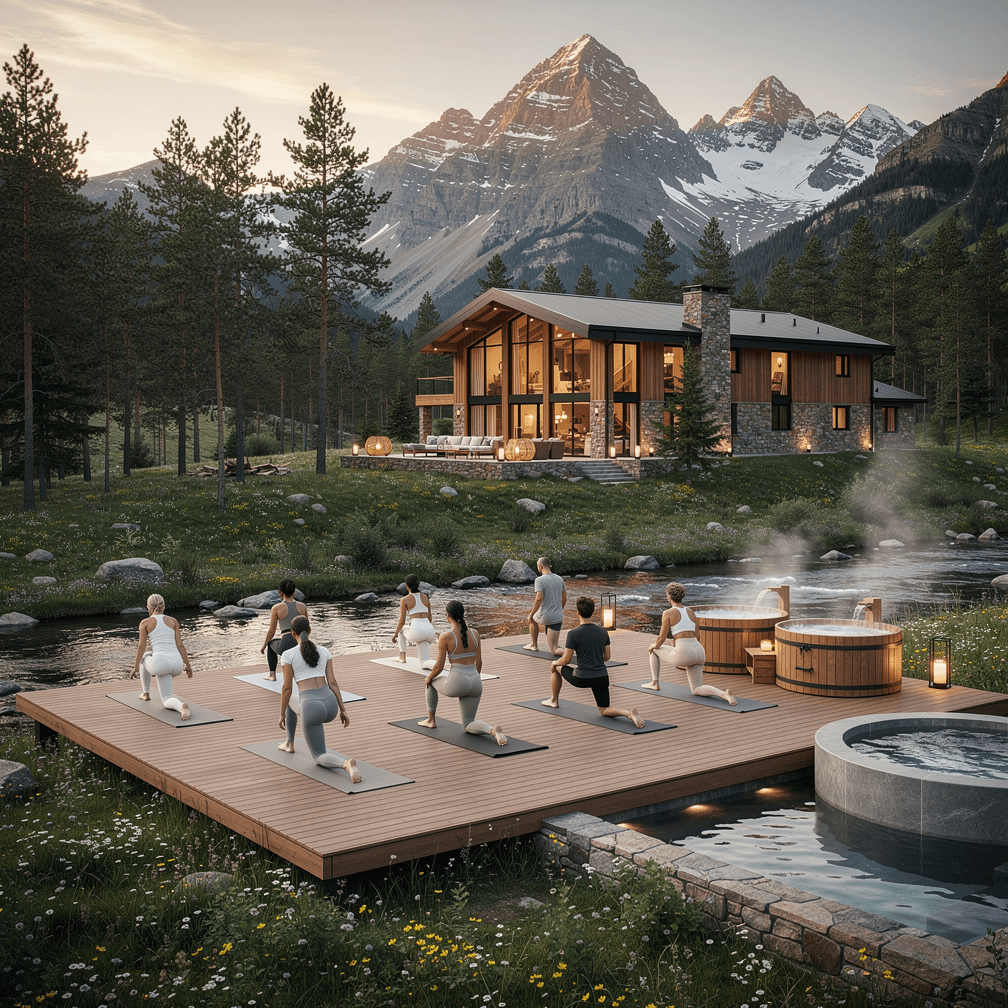
Short answer: Real mountain quiet sits within a two-hour drive of Denver, which is already at 5,280 feet. Pick hot-springs valleys like Glenwood Springs, Buena Vista or Pagosa if you are depleted, Boulder foothills yoga for a short tune-up, and Estes Park high country for silence. Above 7,000 feet expect a poor first night.
If you can get to Denver, you can be standing in real mountain quiet within two hours. That short drive is the whole appeal of the Colorado Rockies for a reset: thin alpine air, hot springs older than the highways, and enough distance from your inbox that your shoulders actually drop.
This guide covers what a wellness retreat near Denver tends to look like in 2026, what changes at altitude, and how to choose one without overpaying or guessing. We curate and research these regions; we tell you what we’d tell a friend, including when a place isn’t the right fit.
Why Denver and the Rockies work for a reset
Denver itself sits at 5,280 feet, and most mountain retreats climb well past that. The payoff is scenery and silence that hits fast. The catch is that altitude is real, and a good retreat plans around it instead of pretending it away.
The terrain gives you a few distinct moods within a single weekend’s drive. Front Range foothills near Boulder and Golden are the easiest to reach. Hot-springs valleys around Glenwood Springs, Buena Vista, and Pagosa are built for soaking and slow days. The high country near Vail, Breckenridge, and Estes Park trades convenience for genuine alpine stillness.
Most people coming through Denver International have an easy arrival. Pick a retreat within a two to three hour drive and you keep your travel day short, which matters more than it sounds when you’re trying to rest.
What altitude actually does to a retreat
This is the part competitors skip, so we’ll be plain about it.
Above roughly 7,000 feet, most people sleep worse the first night or two, get dehydrated faster, and feel breathless on mild climbs. None of that is dangerous for healthy travelers, but it shapes what a good retreat schedules early.
The well-run programs go gentle on day one. Easy movement, lots of water, no 6 a.m. summit hike before your body has adjusted. If a Rockies retreat front-loads intense exertion at elevation, that’s a small red flag worth asking about before you book.
A practical move: spend your first night in Denver or Boulder before climbing higher. One night at moderate altitude takes the edge off the adjustment.
How to choose the right format
The region offers more variety than most people expect. Match the format to the week you’ve actually had.
Hot-springs and soak-focused retreats
Best if you’re depleted rather than restless. The valleys around Glenwood Springs and the southern San Juans pair mineral soaking with quiet lodging. Days are slow on purpose. You’ll move between hot water, cold air, simple food, and sleep.
If you’ve come to love contrast therapy at home (the same instinct behind a cold plunge Austin regulars build their week around, or a long sauna Austin session after work), a hot-springs retreat is the natural mountain version of that rhythm, just with geology doing the heating.
Yoga and meditation in the foothills
Best near Boulder, where the teacher pool runs deep. These tend to be shorter, two to four nights, and easy to reach. Good for a first retreat or a tune-up rather than a full reset.
High-country silence and nature immersion
Best if your problem is noise, not exhaustion. Programs near Estes Park and the high passes lean into long walks, unstructured quiet, and time outdoors. Plan for the altitude adjustment described above.
Multi-day mountain reset
A proper multi day wellness retreat in the Rockies usually runs four to seven nights and blends movement, bodywork, real food, and downtime. This is the format to choose when you want to come home genuinely changed for a few weeks, not just rested for a Monday.
When the Rockies aren’t the right call
We’d rather you book the right thing than the nearby thing.
If altitude has given you trouble before, or you want guaranteed warmth and easy breathing, a lower-elevation option may serve you better.
A wellness retreat Texas Hill Country guests favor sits near sea level with a gentler climate, and a Sedona wellness retreat offers red-rock desert calm at a more moderate altitude than the high Rockies. We cover those regions too, and the honest answer is sometimes “go there instead.”
Winter also reshapes the math. From roughly November through April, mountain passes and ski-town pricing change what’s reachable and what it costs. A late-spring or summer 2026 window tends to give you the widest, calmest choice.
What to ask before booking a Colorado retreat
A short list that saves money and disappointment:
- How does the schedule handle altitude on day one and two?
- What’s the exact elevation of the property?
- What’s included versus extra (meals, airport transfer from Denver, treatments)?
- What’s the cancellation policy, and when does it kick in?
- Who’s actually leading the sessions, and what’s their background?
Good operators answer these without hedging. If you’re weighing the best wellness retreats 2026 has on offer in this region, those five answers tell you more than any photo gallery.
Booking it without the guesswork
When you book a wellness retreat online, the friction is usually trust, not availability. You can see the price; you can’t always see whether it fits. That’s the gap we try to close with plain notes on who each place suits and who it doesn’t.
Browse and Find & Book Services when a retreat is the right match for your week and budget. Run a retreat or mountain property near Denver yourself? Run Your Business with us on a per-booking basis, nothing upfront, so our incentive stays aligned with sending you guests who actually fit.
The Rockies reward people who plan for the altitude and pick the format honestly. Do that, and a two-hour drive from Denver buys you one of the better resets in the country.
Related reading on retreat destinations
What's actually in Denver, by the numbers
From our own mapping of 122 day-wellness venues in Denver, CO. Categories come from venue names, so a place that offers a plunge without saying so in its name is counted only as a general studio — treat these as a floor, not a census.
| Category | Venues | Share of city |
|---|---|---|
| General wellness & recovery | 34 27.9% | |
| Massage & bodywork | 28 23% | |
| Sauna & bathhouse | 24 19.7% | |
| Pilates | 19 15.6% | |
| Cold plunge / contrast | 18 14.8% | |
| Yoga | 17 13.9% | |
| Acupuncture | 16 13.1% | |
| Red light | 13 10.7% |