Polar plunge safety: cold shock, how long to stay in, and who should sit it out
The danger in a New Year's Day plunge is not hypothermia, it is the first minutes: the gasp, the racing heart and the jump in blood pressure. Here is what the National Weather Service and the research say, and how to plunge without the risky parts.
Short answer: The dangerous part of a polar plunge is the first few minutes, not the cold that sets in later. The National Weather Service (NWS) says cold shock, an involuntary gasp, fast breathing and a jump in heart rate and blood pressure, lasts the first 2 to 3 minutes or more, and can be as severe in 50 to 60°F water as in 35°F water. Walk in rather than dive, keep your head above water, stay near the shore with other people, get out early and warm up fast. If you have a heart or blood pressure condition, talk to a doctor before you go.
A polar plunge is a short dip in winter water, often on New Year’s Day and often for charity. The plunge itself is brief, which is exactly why people underestimate it: the body’s most dangerous reaction to cold water happens in the first seconds and minutes, long before anyone gets truly cold.
This guide covers what happens to the body in cold water, how long to stay in, who should check with a doctor first and how to warm up afterwards. It is general information, not medical advice.
What happens when you hit cold water
The NWS describes three dangers of cold water, in the order they arrive:
- Cold shock, in the first 2 to 3 minutes or more. Sudden immersion can trigger “involuntary gasping, rapid breathing or hyperventilating.” If your head is under, that gasp can pull in water. Cold water also “can cause a sudden spike in heart rate and blood pressure,” which the NWS says “can cause heart failure and stroke for vulnerable people,” and the shock can cause panic that makes clear thinking hard.
- Physical incapacitation, within seconds to minutes. The NWS says loss of muscle control in the arms, hands and legs “can be felt within seconds of entering cold water,” and gets worse the longer you stay and the colder the water.
- Hypothermia, later. It begins when core body temperature drops to 95°F (35°C). The NWS says body temperature keeps dropping after the first minutes of cold shock, so the longer you stay in, the closer you get.
The water does not have to be icy. The NWS says cold shock “can be just as severe and dangerous from water temperatures of 50-60°F (10-15°C) as it is from water at 35°F (2°C),” and that gasping and rapid breathing can be triggered by water as warm as 77°F (25°C).
Should you put your head under?
No, keep your face and head above the water. Researchers Michael Shattock and Mike Tipton proposed in The Journal of Physiology in 2012 that going under cold water and holding your breath sets two strong reflexes against each other: the cold shock response, which speeds the heart, and the diving response, which slows it. They found that cold water submersion “can induce a high incidence of cardiac arrhythmias in healthy volunteers,” and suggest this “autonomic conflict” may explain some deaths that were blamed on drowning or hypothermia in vulnerable people.
Diving or dunking also makes the first gasp happen with your mouth under water. Walking in, at your own pace, keeps both risks down.
How long should you stay in a polar plunge?
Briefly. The cold shock phase lasts the first 2 to 3 minutes or more, and loss of muscle control can start within seconds, so a plunge is an in-and-out event, not a swim.
If you are tempted to stay and swim, remember that the NWS says control of the arms, hands and legs can start to go within seconds, and those are what you need to get yourself out. Stay where you can stand.
Who should talk to a doctor first
Cold shock is a cardiovascular event: a sudden rise in heart rate and blood pressure. The NWS says it can cause heart failure and stroke in vulnerable people. Check with a doctor before plunging if you have:
- a heart condition or a heart rhythm problem: see our guide to sauna and cold plunge with atrial fibrillation;
- high blood pressure: see sauna, cold plunge and blood pressure;
- any condition or medicine your doctor has told you affects your heart or blood pressure;
- a pregnancy: see our pregnancy guide.
Our cold plunge safety guide covers the wider list.
How to plunge more safely
- Never plunge alone. The NWS says the loss of muscle control in cold water “makes self-rescue or staying afloat without assistance virtually impossible,” which is why help nearby matters.
- Walk in, do not dive. Keep your head above water and let the gasp pass before you go deeper.
- Stay where you can stand, close to shore.
- Get out early. Leave while you still have full control of your hands and legs.
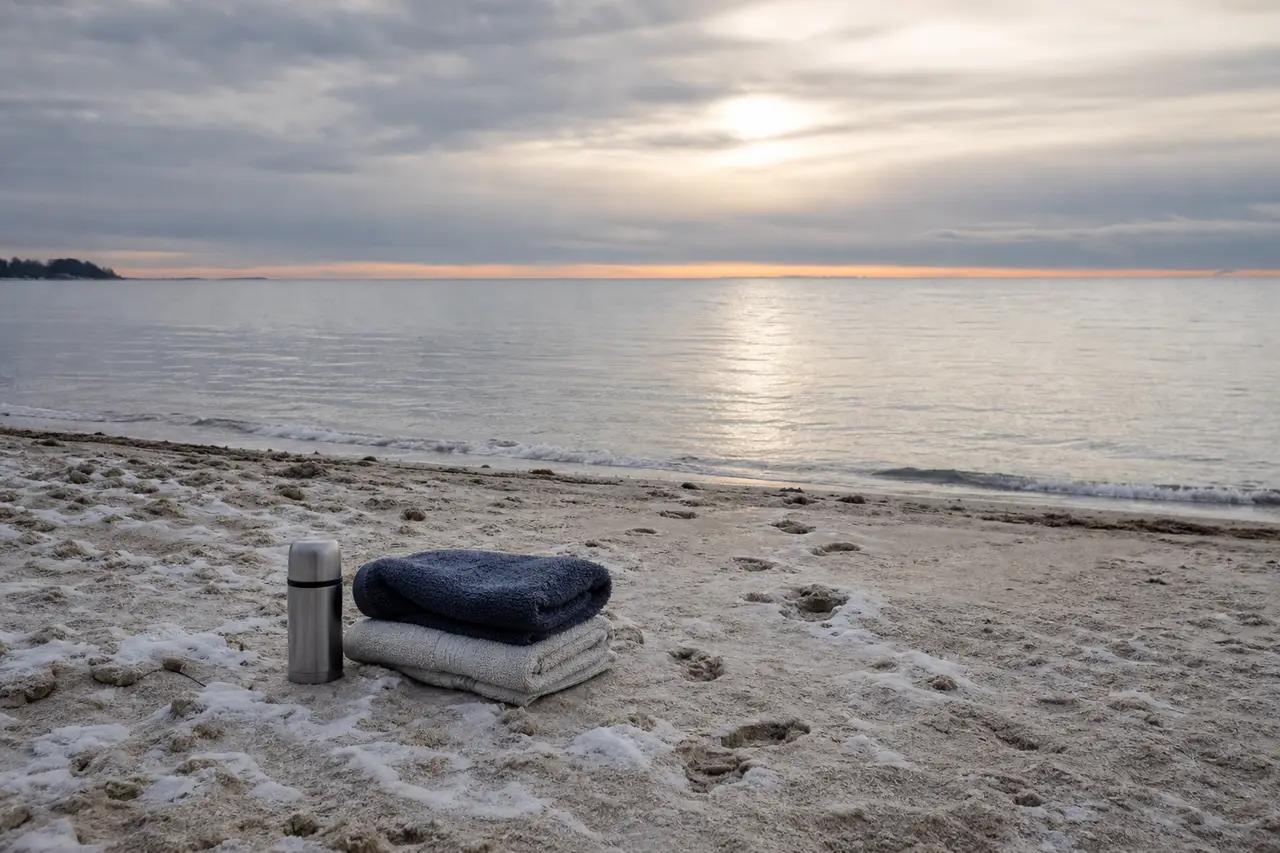
- Warm up straight away. The NWS advises getting “into a warm, dry, protected environment as quickly as possible” after cold water, and warns that “even removed from cold water, a victim’s core temperature can continue to drop.” Bring a towel, dry layers, a hat and something warm to drink, and change out of wet clothes first.
Does it get easier with practice?
Yes, the shock itself shrinks. A 2024 systematic review and meta-analysis in the Journal of Thermal Biology found that repeated cold water immersion reduces the cold shock response, with the habituation appearing after about four immersions, and concluded that this may reduce drowning risk. That is why regular winter swimmers build up gradually rather than starting in deep, open water.
A 2020 narrative review of cold water swimming by Knechtle and colleagues reached the same balance: practiced regularly and gradually by experienced, healthy people, it “appears to bring health benefits,” but “there is a risk of death in unfamiliar people,” from the initial cold shock, from swimming failure as the arms tire, or from hypothermia.
As for the health claims, a 2017 review by Tipton and colleagues in Experimental Physiology found that the evidence for the different claimed benefits of cold water immersion varies, and that in some cases the supporting data “remain at the level of anecdotal speculation.” Our cold plunge benefits guide goes through what holds up.
New Year’s Day plunges
The best-known US event is the Coney Island Polar Bear Club’s New Year’s Day Plunge in Brooklyn. The club, which says it is the oldest winter bathing club in the US, has run the plunge since 1903, and it is open to the public by registration and raises money for Coney Island community organizations. The 2026 plunge ran from 11 a.m. to 1 p.m. on January 1 on Coney Island Beach; check the club’s event page for the next one.
If you would rather practice somewhere controlled first, a cold plunge tub at a studio lets you feel the cold shock in water you can step straight out of. Our guide to cold plunge temperature and time covers how cold studios run their tubs.
FAQ: polar plunge safety
Is a polar plunge dangerous? It can be for some people. The main risk is cold shock in the first minutes: an involuntary gasp and fast breathing that can lead to inhaling water, and a spike in heart rate and blood pressure that the NWS says can cause heart failure and stroke in vulnerable people. Walking in, keeping your head up, staying near other people and getting out early lower the risk.
How long should you stay in a polar plunge? Briefly, in and out. Cold shock lasts the first 2 to 3 minutes or more, and the NWS says loss of muscle control in the arms and legs can start within seconds. Get out while you still have full control of your hands and legs.
What water temperature causes cold shock? Colder than many people think. The NWS says cold shock can be as severe in 50 to 60°F (10 to 15°C) water as in 35°F (2°C) water, and that gasping can be triggered by water as warm as 77°F (25°C).
Can a polar plunge cause a heart attack? Cold shock raises heart rate and blood pressure suddenly, and the NWS says that can cause heart failure and stroke for vulnerable people. Researchers have also linked going under cold water while holding your breath to heart rhythm disturbances. If you have a heart or blood pressure condition, ask a doctor first.
Should you put your head under the water? No. Keep your head and face above water. Submerging while the cold shock is running sets two heart reflexes against each other, and the first gasp is safer with your mouth in the air.
How do you warm up after a polar plunge? Get dry and warm quickly: towel off, change out of wet clothes, add dry layers and a hat, and get indoors or into a warm car. The NWS warns that core temperature can keep dropping after you leave cold water.
Does a polar plunge get easier? Yes. A 2024 meta-analysis found that the cold shock response shrinks with repeated immersions, after about four, which is why winter swimmers build up slowly.
The bottom line on polar plunge safety
A polar plunge is safest when it is short, in shallow water and with other people around, and riskiest when it turns into a dive or a swim. The danger is the cold shock in the first minutes, not the cold you feel later: walk in, keep your head up, stay where you can stand, get out early and warm up straight away. If your heart or blood pressure is a concern, ask a doctor before January 1.
Want Google to show you more from Tendground? Add us as a preferred source.