Pranayama Explained: Yogic Breathing Techniques, What They Do, and What to Watch Out For
Not all breathing exercises are the same, some calm, some energize, and some carry real cautions.
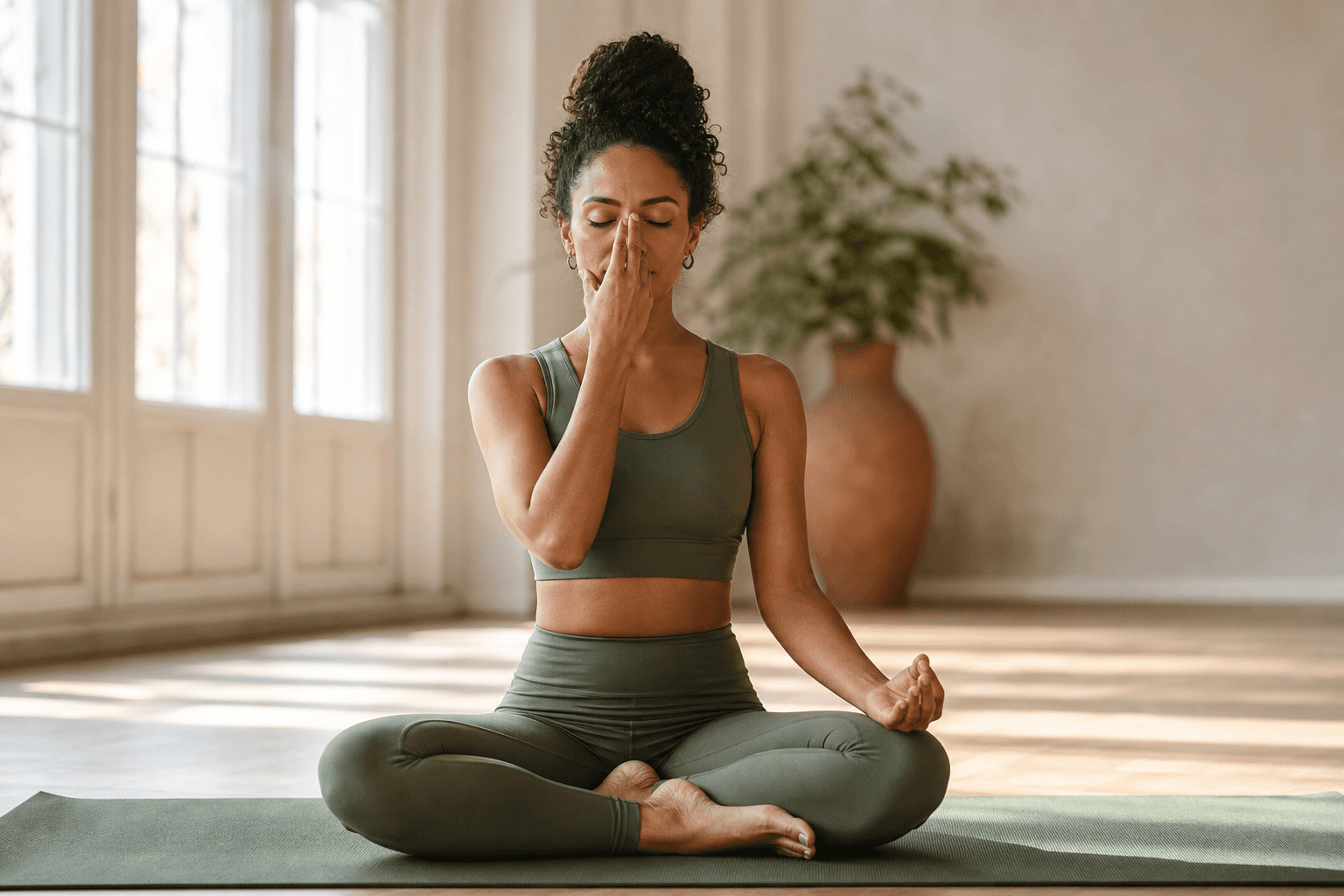
Short answer: Pranayama is the yogic regulation of breath, and it splits in two. Slow, gentle techniques like alternate nostril and long-exhale breathing are among the safest, best-evidenced tools for stress. Rapid pumping and breath retention, Kapalabhati, Bhastrika, Kumbhaka, carry real contraindications: heart, respiratory, epilepsy, pregnancy, glaucoma. Start with the calm ones.
Pranayama is the yogic science of breath, the deliberate regulation of how you breathe to influence the state of your nervous system, mind, and body. It’s one of the eight limbs of classical yoga, and it ranges from gentle belly-breathing techniques that are among the safest, most evidence-backed self-regulation tools available, to intensive breath-retention and hyperventilation practices that require careful instruction and carry real contraindications.
The word gets used loosely in wellness culture. This guide separates the well-supported from the overstated, the gentle from the intense, and gives you a clear picture of what pranayama actually involves.
What pranayama is
Prana in Sanskrit means life force or vital energy; ayama means extension or regulation. Pranayama, literally “extension of the life force,” refers to a systematic set of breathing practices developed within the classical yoga tradition, codified most extensively in texts like the Hatha Yoga Pradipika (14th century) and later Swami Sivananda’s and B.K.S. Iyengar’s modern systematizations.
The underlying principle, that breath patterns directly influence physiological and mental states, is not mystical. It is mechanistically grounded: breath rate and depth affect the autonomic nervous system, CO2/O2 balance, heart rate variability, and the balance between sympathetic (stress) and parasympathetic (rest-and-digest) arousal. How you breathe genuinely changes how you feel, and pranayama formalizes that relationship into teachable techniques.
The practices range widely in intensity and purpose:
- Calming/parasympathetic practices: Nadi Shodhana (alternate nostril breathing), Bhramari (humming bee breath), Ujjayi (victorious breath), Sitali (cooling breath)
- Energizing/activating practices: Kapalabhati (skull-shining breath, rapid diaphragmatic pumps), Bhastrika (bellows breath, rapid forceful breathing)
- Advanced with breath retention: Kumbhaka (held breath phases, integrated into various practices)
These categories matter for safety, calm practices and activating practices have very different risk profiles.
What a pranayama session is like
Pranayama is typically practiced seated, cross-legged on the floor, in a chair, or in Vajrasana (kneeling). Good posture matters because breath mechanics are partly postural; a collapsed chest limits full diaphragmatic movement.
A basic pranayama session might look like this: You begin with a few minutes of natural breath observation to establish baseline awareness. You then move through one or two specific techniques, for a beginner, this might be 5, 10 minutes of Nadi Shodhana (alternate nostril breathing), closing one nostril with the hand and breathing through each side alternately on a 4-4 or 4-4-8 count.
Calming practices feel settling, slightly slowing, and often produce a noticeable shift in mental noise within a few minutes. Activating practices like Kapalabhati involve rapid rhythmic pumps of the lower belly that feel more effortful and physically engaging, you’ll likely feel warmth, tingling, and heightened alertness afterward.
Sessions in a yoga class typically run 10, 20 minutes as a precursor to asana or as a standalone sequence. Dedicated pranayama practice (without asana) is common in traditional Hatha yoga lineages and can run 30, 60 minutes.
Breath retention techniques (Kumbhaka) are not beginner practices, they extend held breath phases beyond what’s comfortable, change blood chemistry, and should be learned in person with an experienced teacher.
What the evidence says about yogic breathing
-
Reasonable evidence for: Slow, deep breathing (including diaphragmatic pranayama techniques) reducing physiological markers of stress, heart rate, blood pressure, cortisol, sympathetic nervous system activity. This is among the best-documented effects in breathwork research. Alternate nostril breathing (Nadi Shodhana) has specific small-study support for reducing anxiety and improving cardiovascular measures. Slow-paced breathing at roughly 5, 6 breaths per minute (characteristic of resonance frequency breathing and some pranayama) maximizes heart rate variability, a reliable physiological marker of parasympathetic tone. Ujjayi breath used during yoga appears to enhance vagal tone, consistent with its calming reputation.
-
Debated or mixed: Whether pranayama techniques produce meaningfully different outcomes than other forms of controlled, slow breathing (like box breathing, 4-7-8 breathing, or resonance breathing). The specific technique may matter less than the principle of slowing and deepening the breath. Research on Kapalabhati and Bhastrika is mixed, some studies show cognitive and mood benefits; the risk profile of these techniques in people with respiratory or cardiovascular conditions is underexplored in research, though clinically evident.
-
Not established / overstated: That pranayama “detoxifies” the body in any literal physiological sense. That it cures respiratory disease (some evidence of benefit for mild asthma management as an adjunct, but not as treatment). That Kapalabhati or forceful breathing techniques are appropriate general wellness tools without contraindication screening. Claims that pranayama extends lifespan or directly “clears energy channels” are philosophical assertions, not empirical findings.
Benefits people report from breath practice
- Noticeably faster shift out of stress states, many people find alternate nostril breathing or slow exhalation breathing produces a felt calm within 3, 5 minutes
- Improved sleep when practiced before bed (particularly long exhale techniques)
- Reduced panic-like symptoms and improved capacity to tolerate anxiety (slow breathing is a core component of many anxiety treatment protocols)
- Greater body awareness and connection to internal states
- Enhanced focus and mental clarity after energizing practices like Kapalabhati (though the intensity may be uncomfortable for some)
- Improved endurance and breath efficiency for athletes who practice pranayama regularly, some supporting evidence exists
Who pranayama is for, and who should skip it
Gentle pranayama, slow diaphragmatic breathing, alternate nostril breathing, humming breath, is among the safest and most accessible wellness practices available. It is appropriate for almost anyone and can be adapted for people with physical limitations.
Important distinctions for more intense techniques:
Kapalabhati, Bhastrika, and any practice involving prolonged breath retention are a different category. These are not beginner practices and carry real contraindications:
- Cardiovascular conditions: rapid forceful breathing significantly increases heart rate and intrathoracic pressure. People with heart disease, uncontrolled hypertension, or a history of cardiac events should not practice Kapalabhati or Bhastrika without physician clearance
- Respiratory conditions: these techniques are inappropriate for people with active asthma attacks, COPD exacerbations, or any acute respiratory illness
- Epilepsy: hyperventilation can lower seizure threshold; people with epilepsy should avoid breath-retention and rapid breathing techniques (our epilepsy guide covers why)
- Pregnancy: practices involving breath retention or abdominal pumping (Kapalabhati) are contraindicated in pregnancy; gentle diaphragmatic and alternate nostril breathing are generally considered safe
- Glaucoma: breath retention increases intraocular pressure and is contraindicated
- Anxiety or panic disorder: some people find rapid breathing techniques triggering rather than helpful, start with slow, calming techniques and introduce activating techniques gradually and with guidance
For intense breathwork formats that combine extended hyperventilation with emotional processing (like Holotropic Breathwork or Rebirthing), see our guide to rebirthing breathwork for a full caution breakdown.
Talk to a healthcare provider before beginning intensive pranayama if you have any respiratory, cardiovascular, or neurological condition.
What learning pranayama costs
- Yoga classes that include pranayama: $15, $30 drop-in; most yoga classes in the US include at least brief pranayama instruction
- Dedicated pranayama classes or workshops: $20, $60; some yoga studios offer pranayama-focused sessions
- Online courses: $30, $150 for structured programs (teachers like Adriene Mishler on YouTube teach basic pranayama for free; formal courses on platforms like YogaGlo or Alchemy of Breath run $50, $150)
- Books: B.K.S. Iyengar’s Light on Pranayama is the authoritative classical text (~$25); Breath by James Nestor is an accessible science-based modern introduction
- Apps: Insight Timer, Breathwrk, and others offer free guided pranayama sessions
For gentle techniques, self-guided learning from books or free online resources is entirely adequate. For advanced practices involving breath retention, in-person instruction is strongly recommended.
How to learn pranayama and choose a teacher
Start with Nadi Shodhana (alternate nostril breathing), it’s well-documented, gentle, and most people find it accessible in a single session. Countless free guided versions are available on YouTube. For a foundation in basic pranayama, any certified yoga teacher (RYT 200 or above from Yoga Alliance) with specific pranayama training can guide you safely through the calming techniques.
For more advanced practices, look for teachers trained in traditional Hatha yoga lineages, Iyengar, Sivananda, Ashtanga, or Kundalini yoga traditions all include systematic pranayama training. Ask specifically about the teacher’s training in pranayama; it is not uniformly covered in basic yoga teacher training.
Pranayama integrates naturally with meditation. If you’re drawn to combining breath with contemplative practice, see our guides to mindfulness meditation and yoga nidra for complementary approaches.
FAQ: pranayama breathing
What’s the difference between pranayama and other breathwork modalities like Wim Hof or Holotropic Breathwork? All involve deliberate breath regulation, but the approaches and risk profiles differ meaningfully. Classical pranayama includes both calming and activating techniques and is traditionally taught progressively with contraindication awareness. Wim Hof Method combines extended hyperventilation with cold exposure; rebirthing breathwork involves sustained circular hyperventilation for emotional processing. Both have stronger cautions and fewer safety guardrails than gentle pranayama. They are not the same practice.
Can I do pranayama if I have asthma? Gentle, slow pranayama, particularly diaphragmatic breathing and Nadi Shodhana, has some evidence of benefit as an adjunct for mild stable asthma, and is generally considered safe. Forceful techniques (Kapalabhati, Bhastrika) should be avoided. Always check with your doctor first.
How long until I notice effects? Calming techniques like slow exhalation breathing can produce a noticeable shift in 3, 5 minutes. Regular daily practice (10, 20 minutes) over 4, 8 weeks shows measurable changes in HRV, stress markers, and self-reported anxiety in the available research.
Do I need to be a yoga practitioner to do pranayama? No. Pranayama is a standalone practice with no prerequisite. You don’t need to practice yoga postures to benefit from breath regulation. The techniques are seated, require no flexibility, and transfer directly to non-yoga contexts.
The honest summary on pranayama
Pranayama is one of the most evidence-backed areas of the broader wellness landscape, particularly for its calming techniques and stress physiology effects. The key is knowing which kind you’re doing: gentle, slow, diaphragmatic breathing practices are safe, accessible, and reliably effective for stress and anxiety.
Intense, rapid, or breath-retention techniques carry real contraindications that the wellness industry often underplays. Start calm, learn gradually, and bring more intensity into the practice only with proper instruction and an honest look at your health profile.