Hyperbaric Oxygen Therapy: FDA-Approved Uses vs. Wellness Hype
HBOT is a serious medical treatment for specific conditions, and an aggressively marketed wellness trend for many others.
Short answer: HBOT has FDA approval for 14 medical conditions, including non-healing diabetic wounds, decompression sickness, carbon monoxide poisoning and radiation injury, and for those it works. The anti-aging, brain-optimization and athletic-recovery claims sold at $100 to $250 a session are not established, and mild 1.3 ATA chambers run below research pressures.
Hyperbaric oxygen therapy (HBOT) is one of those treatments that lives in two completely different worlds. In one world, it’s a serious, FDA-recognized medical treatment used to heal non-healing wounds, treat decompression sickness, and address carbon monoxide poisoning.
In the other, it’s a $200-per-session wellness offering marketed to athletes, executives, and anyone interested in anti-aging or cognitive performance. Those two worlds deserve to be clearly separated.
What hyperbaric oxygen therapy is
Hyperbaric oxygen therapy involves breathing 100% pure oxygen inside a pressurized chamber, typically at 1.5 to 3 times normal atmospheric pressure. At that pressure, your lungs absorb far more oxygen than they could at sea level, and that oxygen dissolves directly into the blood plasma (not just red blood cells).
The result is significantly elevated oxygen delivery to tissues throughout the body, including areas with compromised blood flow.
The mechanism is well-understood medically: hyperoxygenation promotes wound healing, kills anaerobic bacteria, reduces inflammation in specific injury contexts, and stimulates the formation of new blood vessels (angiogenesis) in damaged tissue. These are real, documented effects, which is why HBOT earned FDA clearance for specific, well-studied conditions.
Hard-sided chambers (used in hospital and medical-clinic settings) operate at the higher, medically meaningful pressures. Soft-sided or “mild” hyperbaric chambers (common in wellness spas and some clinics) operate at lower pressure, typically 1.3 atmospheres, and may not deliver the same physiological effect as medical-grade HBOT. This distinction matters significantly when evaluating claims.
What an HBOT session is like
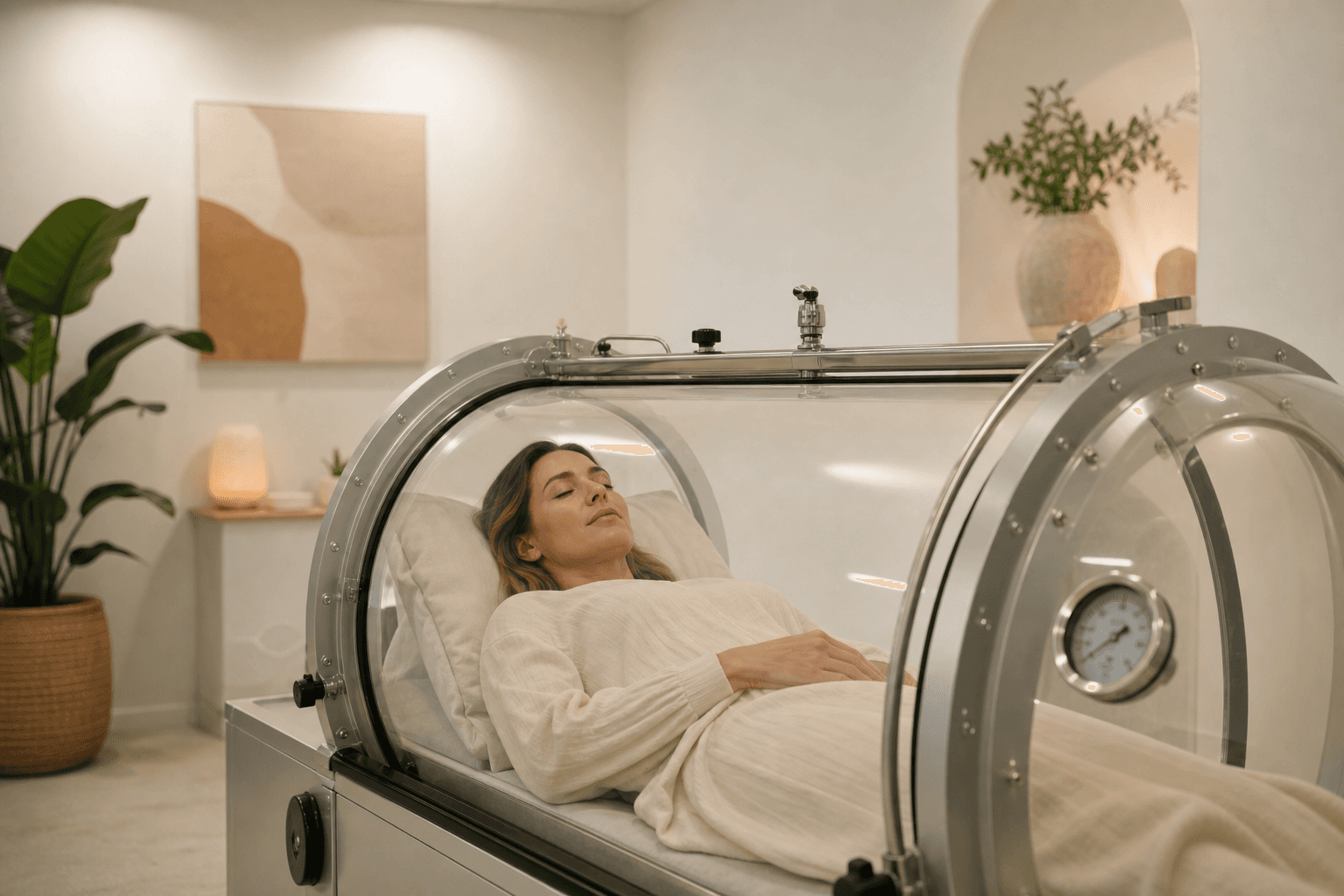
You’ll enter a chamber that looks something like a clear capsule or a small submarine compartment. Hard-sided chambers can be large enough for multiple people. Soft-sided chambers are often solo, roughly sleeping-bag-sized.
You wear comfortable, loose clothing (no synthetic fabrics or petroleum-based products, which are fire hazards with pure oxygen). You may wear a mask or hood delivering oxygen. The chamber is pressurized gradually over 10, 15 minutes, you’ll feel pressure in your ears similar to an airplane descent and may need to swallow or equalize.
The pressurized portion of a session lasts 60, 90 minutes. You can read, listen to audio, or simply rest. Depressurization is gradual as well. Most medical protocols involve multiple sessions, 20 to 40 or more, depending on the condition being treated.
After a session, some people report feeling energized, and others report mild fatigue or ear pressure. These are normal.
What the evidence says about HBOT
This section matters more for HBOT than almost any other modality on this site, because the gap between the FDA-approved uses and the wellness marketing claims is enormous.
FDA-approved / strong evidence for (medical HBOT): Air or gas embolism; carbon monoxide poisoning; decompression sickness (“the bends”); diabetic foot wounds and non-healing skin grafts; radiation tissue injury (radionecrosis); severe anemia where transfusion is impossible; thermal burns; osteomyelitis (bone infection); necrotizing infections. These indications have strong clinical trial data and clear physiological rationale.
-
Debated or mixed (emerging research, not yet standard of care): Post-COVID cognitive symptoms, traumatic brain injury (TBI) rehabilitation, and some stroke recovery applications are areas of active, legitimate research. Some small trials show promising results; none have been large enough or replicated enough to change clinical guidelines. Results are genuinely interesting but not conclusive.
-
Not established / overstated (wellness marketing claims): Anti-aging, longevity enhancement, general “brain optimization,” athletic performance enhancement for healthy people, hangover recovery, autism treatment, Lyme disease, general immune boosting, and cancer therapy. These claims are widely marketed in wellness HBOT clinics and lack adequate clinical evidence. The FDA has specifically warned consumers that HBOT is not approved for these uses and that misleading marketing “can lead consumers to forgo proven medical treatments.” Mild-pressure soft-sided chambers used in many wellness settings also operate below the pressures used in validated medical research, making extrapolation from medical HBOT evidence unreliable.
Benefits people report from HBOT
- Accelerated healing of diabetic foot ulcers and post-surgical wounds (for patients under medical supervision)
- Faster recovery from decompression sickness
- Improved energy and mental clarity (reported subjectively in wellness contexts, not well-validated)
- A sense of deep rest and relaxation during the session itself
- Athletes report faster perceived recovery from hard training sessions (controlled evidence is not robust)
Who HBOT is for, and who should skip it
Medical HBOT is genuinely valuable for patients with FDA-approved indications, if your doctor has recommended it for wound healing or radiation injury, the evidence is on your side.
Wellness HBOT for healthy people is a different calculation: the risk is low (at mild pressures), but the evidence of benefit is also low, and the cost is high.
Contraindications, skip HBOT or get medical clearance if you:
- Have untreated pneumothorax (collapsed lung), this is an absolute contraindication
- Have had recent ear surgery or a perforated eardrum
- Have a history of seizures, oxygen toxicity at high pressures can lower seizure threshold
- Are pregnant (limited safety data; generally avoided)
- Take certain medications (cisplatin, doxorubicin, disulfiram) that interact with high oxygen
- Have significant claustrophobia (chambers are enclosed and pressurized)
- Have a cold or sinus congestion (makes pressure equalization painful)
For medical HBOT, always work with a physician-supervised program. Talk to your doctor before using HBOT as a supplement to any ongoing medical treatment.
What HBOT costs
Medical HBOT (hospital or wound care center):
- Often covered by insurance for FDA-approved indications (check your plan)
- Out-of-pocket rates: $250, $500+ per session without coverage
Wellness HBOT (spa or standalone clinic):
- Single session: $100, $250 depending on market and chamber type
- Package deals (10, 20 sessions): often discounted to $75, $180 per session
- Monthly memberships: $300, $600/month for frequent access
Soft-sided mild-hyperbaric chambers for home use: $4,000, $25,000. These operate at the lower pressures and are not FDA-cleared as medical devices for any specific condition, they’re sold as wellness products.
For comparison, other recovery-focused wellness modalities like cryotherapy and red light and infrared therapy are considerably less expensive per session.
How to choose a good HBOT provider
For medical indications: insist on a physician-supervised program at a wound care center, hospital, or accredited hyperbaric medicine clinic. The Undersea and Hyperbaric Medical Society (UHMS) accredits facilities and publishes approved indications. Hard-sided chambers operating at true medical pressures (2, 3 ATA) are the standard of care.
For wellness use: be skeptical of any facility that markets HBOT as a treatment for specific diseases without physician supervision. Verify what pressure the chamber actually reaches, 1.3 ATA (common in mild chambers) is notably different from 2.0+ ATA used in medical settings. Ask whether a medical professional is involved in intake assessment.
Avoid providers who make any claim about HBOT treating cancer, autism, Lyme disease, or slowing aging, these are not evidence-based uses and the FDA has flagged them specifically.
FAQ: hyperbaric oxygen therapy
Is wellness HBOT the same as medical HBOT? Not necessarily. Medical HBOT uses hard-sided chambers at 2, 3 atmospheres of pressure with pure oxygen. Many wellness clinics use soft-sided chambers at 1.3 atmospheres, a lower pressure that may not achieve the same physiological effects documented in medical research. The equipment, protocols, and oversight are different.
Can HBOT speed up athletic recovery? Some elite athletes use it and report benefit. The controlled evidence is not strong enough to confidently say it outperforms good sleep, nutrition, and conventional recovery tools. It’s low-risk at mild pressures if you can afford it, but it isn’t established practice in sports medicine.
Will insurance cover HBOT? For FDA-approved medical indications, most major insurers do cover HBOT, you’ll need a physician referral and documented medical necessity. For wellness use, it is not covered.
How many sessions do I need? Medical protocols typically involve 20, 40 sessions, often daily, over several weeks. Wellness facilities often sell packages of 10, 20. There’s no consensus on session frequency for non-medical uses because there’s no established therapeutic goal to work toward.
The honest summary on HBOT
Hyperbaric oxygen therapy is a genuinely powerful medical tool for a specific list of FDA-approved conditions, wounds, decompression sickness, radiation injury, and others. For those patients, it works.
For healthy people visiting wellness clinics hoping for anti-aging, cognitive enhancement, or athletic recovery benefits, the evidence simply does not support the price tag or the marketing claims. If your doctor has recommended it, trust the science.
If a wellness clinic is promising it will optimize your brain or slow your aging, ask them to show you the randomized controlled trials.
And if you are considering buying a chamber, our guide on home hyperbaric chambers covers the pressure gap between the clinical treatment and the home version.