Yoga nidra: the 'sleep' that isn't sleep, and why people swear by it
Non-sleep deep rest, what a session is, what it does, and how to try it tonight.
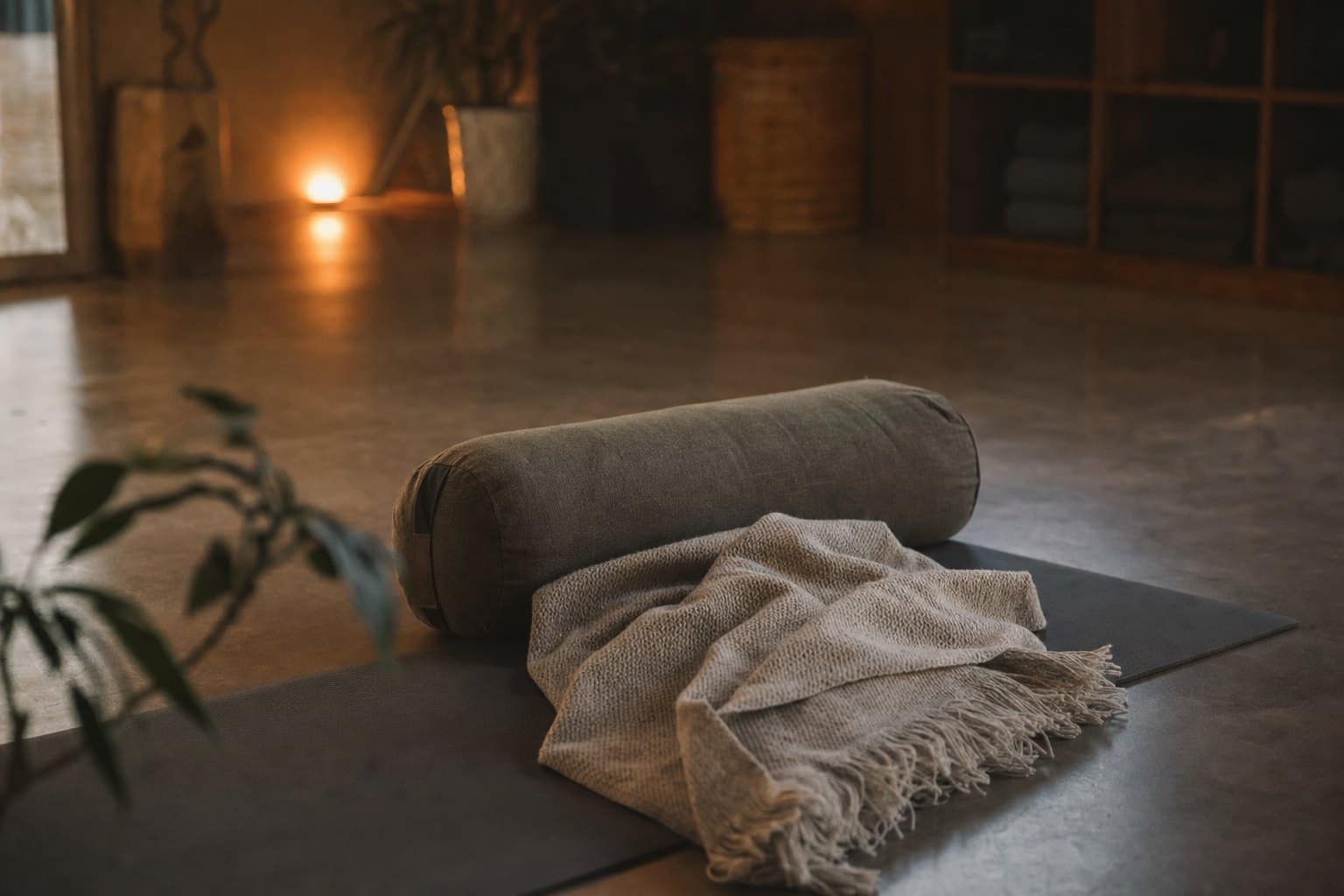
Short answer: Yoga nidra is a guided lying-down rest practice, 10 to 45 minutes, in which a voice walks your attention through the body while you stay between waking and sleep. Reasonable evidence for stress, anxiety and sleep quality. It supplements sleep rather than replacing it, and plenty of recordings are free.
Yoga nidra, “yogic sleep,” now also popularized as NSDR (non-sleep deep rest), is probably the easiest high-yield rest practice you haven’t tried yet. You lie down, follow a voice, and do nothing else. No flexibility required, no experience needed, no discomfort.
And yet practitioners describe it as more restorative than a nap, more accessible than silent meditation, and a genuine shift in how depleted they feel by end of day.
What yoga nidra is
Yoga nidra is a guided, lying-down practice rooted in the Tantra and Samkhya schools of yoga, systematized in the 20th century by Swami Satyananda Saraswati and more recently popularized in secular form as NSDR by researchers and practitioners including Andrew Huberman. The structure is consistent across traditions: a teacher or recording guides your awareness through the body, breath, sensations, and sometimes imagery while you remain in a state between waking and sleep, deeply relaxed but not unconscious.
Sessions typically run 10, 45 minutes. Shorter recordings (10, 20 minutes) work well as midday resets; longer sessions (30, 45 minutes) are used for deep recovery or sleep preparation. The traditional practice includes a sankalpa (a short, positive intention repeated at the start and end), body scanning (rotation of consciousness), breath awareness, pairs of opposite sensations, and guided imagery, before a gradual return to waking.
The NSDR label strips the Sanskrit and focuses on the physiological: a practice that guides the brain into a deeply relaxed, theta-dominant state without crossing fully into sleep.
What a yoga nidra session is like
You’ll need a quiet space, something to lie on, and a blanket. Eye mask optional but helpful.
You begin on your back, savasana, with legs slightly apart and arms relaxed at your sides. The guide’s voice leads you through an initial settling, then a slow rotation of awareness through different body parts: right hand, thumb, index finger, middle finger… moving systematically through the whole body.
This sounds mechanical but has an almost hypnotic quality; your attention narrows to each named point and the rest of the room dissolves.
From there, most sessions move into breath awareness, then pairs of sensations (heaviness/lightness, warmth/coolness) that keep the mind engaged without effort. Longer sessions add a visualization phase, an inner journey through landscapes or images. Finally, the guide brings you back gently, wiggling fingers, deepening breath, opening eyes.
Most people feel as if they briefly napped without losing awareness. Some drift in and out of light sleep; a few fall asleep entirely. Either outcome is fine, even falling asleep signals that your system needed the rest. The key quality is the descent without disappearing: you feel yourself relax through layers that ordinary sleep bypasses quickly.
What the evidence says about yoga nidra
- Reasonable evidence for: reduced anxiety and stress (multiple studies show significant decreases in cortisol and self-reported anxiety); improved sleep quality, particularly in people with insomnia or sleep disturbance; reduced emotional reactivity; enhanced recovery from mental fatigue. Neuroimaging studies show theta-wave dominance during deep yoga nidra, a state associated with creativity, memory consolidation, and deep rest.
- Debated or mixed: the degree to which yoga nidra outperforms other relaxation practices (progressive muscle relaxation, body-scan meditation), and whether NSDR specifically accelerates motor skill or learning consolidation (early research is intriguing but small).
- Not established / overstated: claims that yoga nidra “replaces” sleep (it doesn’t, it supplements it), heals trauma directly, or produces the same physiological restoration as full sleep cycles. It’s a rest practice, not a sleep replacement.
Benefits people report from yoga nidra
The most consistent reports: feeling less depleted after a session than before, being able to fall asleep more easily that evening, reduced physical tension (especially in the face, jaw, and shoulders), and a general sense of having “reset” without the grogginess that sometimes follows a nap.
People who meditate report that yoga nidra takes them into relaxation states they find hard to reach through seated practice, the lying posture and guided structure remove the effort that keeps anxious or restless minds from settling. Shift workers, new parents, and high-stress professionals use shorter NSDR recordings as midday tools when sleep isn’t possible but depletion is real.
Interestingly, the practice is used clinically in some trauma-informed settings, the body-scan structure can support nervous-system regulation, though this is specialist territory and not the same as a standard rest session.
Who yoga nidra suits, and who should skip
Yoga nidra suits almost everyone: beginners, older adults, people who’ve never meditated, people who find seated meditation impossible because of restlessness or physical discomfort. It requires no flexibility, no equipment beyond a floor and a blanket, and no silence discipline.
It’s particularly valuable for people with high stress loads, chronic fatigue, insomnia (used as a wind-down practice), anxiety, and those in heavy physical training who want mental recovery alongside physical rest.
Be aware: a small number of people find the body-scan structure activating rather than calming, especially those with trauma histories related to body sensation. If that resonates, trauma-sensitive yoga nidra recordings (which exist) or mindfulness meditation may suit better. Talk to your therapist before using it therapeutically for trauma.
There’s no meaningful physical contraindication to yoga nidra. It is as gentle as practices get.
What yoga nidra costs
Yoga nidra can be entirely free. Dozens of high-quality guided sessions are available on YouTube, Insight Timer, and Spotify at no cost. Dedicated apps (Insight Timer has hundreds of free recordings; paid tiers run $60, $100/year) give you more filtering options.
Studio classes, typically embedded in yoga or meditation offerings, run $15, $30 per session in most US cities, or are included in yoga studio memberships. A standalone 45-minute yoga nidra workshop might run $25, $50. Online courses and teacher training programs exist for those who want to deepen the practice, ranging from $50 for a short course to several hundred dollars for certified teacher training.
How to choose a good session or teacher
For home practice, the main filter is voice quality and pacing. Try a few recordings and notice which voice helps you descend rather than think about the voice. Pacing matters: too fast and the rotations feel rushed; too slow for your current state can create restlessness. Satyananda-lineage recordings tend to be classical and longer; NSDR recordings tend to be shorter and stripped of Sanskrit.
For in-person classes, look for a teacher who:
- Explains the structure so you know what to expect
- Maintains a consistent, unhurried pace without fillers
- Doesn’t oversell (“this will heal your trauma in one session”)
- Offers a proper warm-up and a slow return at the end
A sound bath can be a useful complement, both practices aim for the same edge-of-sleep rest state, and some studios pair them in a single session.
FAQ: yoga nidra
Can I fall asleep during yoga nidra? Yes, and it’s fine. Falling asleep means you needed the rest. The practice is most useful when you stay at the edge, deeply relaxed but aware, but sleep isn’t failure.
How is yoga nidra different from just lying down and resting? The guided rotation of attention is what distinguishes it. Unguided lying-down rest tends to let the mind wander into rumination or dozing. Yoga nidra keeps attention moving in a way that induces the theta state more reliably than passive rest.
Do I need to know anything about yoga? No. Yoga nidra is entirely floor-based and guided. You don’t need to know any poses, Sanskrit, or yoga history to benefit.
How long until I notice something? Many people feel something in the first session, a heaviness, a sense of “landing,” unusual calm afterward. Consistent use over a week or two tends to make the descent faster and the post-session calm more reliable.
The honest summary on yoga nidra
Yoga nidra is the lowest-effort, highest-yield rest practice available. It’s free to try tonight, accessible to anyone regardless of fitness or experience, and backed by enough evidence to take seriously, particularly for stress, sleep, and nervous-system recovery. It’s not a cure, not a therapy, and won’t replace sleep.
What it will do, reliably, is give your nervous system a very deep rest in a very short time. If you’re depleted and don’t know where to start, start here.
The closest active cousin is progressive muscle relaxation, where you tense and release each muscle group in sequence rather than simply scanning it.