Sauna on Abilify, Risperdal or Zyprexa: what the labels say about heat
All three labels carry the same warning: antipsychotics can disrupt the body's ability to cool itself. A sauna is not banned, but it is exactly the kind of heat the warning describes, so it needs a shorter, better planned version.
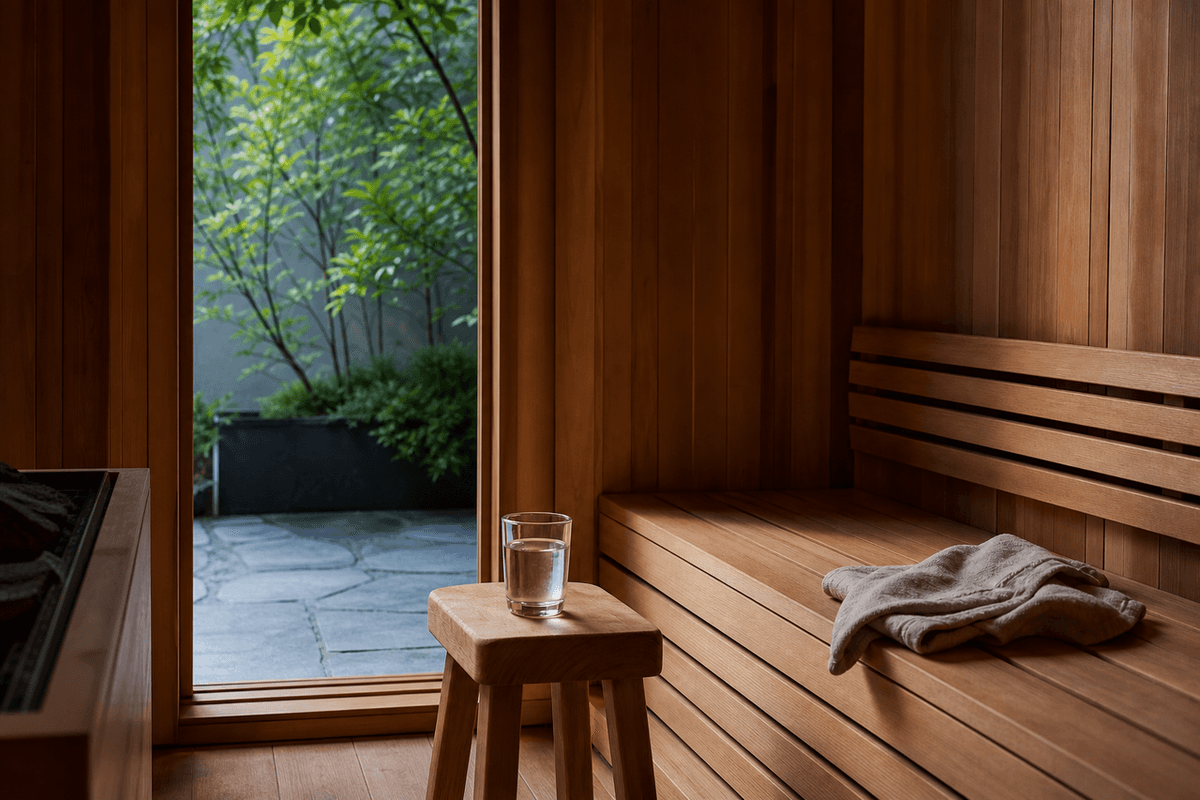
Short answer: None of the three labels forbids a sauna. All three warn that antipsychotics can disrupt the body’s ability to bring its core temperature down, and advise care with extreme heat, hard exercise and dehydration. The Risperdal label adds that both overheating and abnormally low body temperature have been reported. So if you use a sauna on aripiprazole, risperidone or olanzapine, keep it short and cooler, drink water, get up slowly, never go alone, and talk it through with your prescriber first.
A sauna on Abilify, Risperdal or Zyprexa is possible, and the labels are the reason to do it differently. The Abilify (aripiprazole) label says disruption of the body’s ability to reduce core body temperature has been attributed to antipsychotic agents, and advises appropriate care for people who will be exercising strenuously, exposed to extreme heat, taking other drugs with anticholinergic activity, or dehydrated. The Zyprexa (olanzapine) label uses the same words.
The Risperdal (risperidone) label goes a step further. It says both hyperthermia and hypothermia have been reported with oral Risperdal, and advises caution for people who will be exposed to temperature extremes. A sauna is one extreme. A cold plunge is the other.
This is general information, not medical advice, and it gives no dosing advice. Whether a sauna fits your treatment, and anything about your dose or its timing, belongs to your prescriber.
What the Abilify, Risperdal and Zyprexa labels say about body heat
The warning is written for the whole class, so it applies to all three.
Each label tells prescribers to counsel patients about heat. Abilify’s patient counseling section is headed Heat Exposure and Dehydration and says patients should be advised about appropriate care in avoiding overheating and dehydration. Risperdal’s says the same.
The Zyprexa label is the most practical of the three. It says patients should call their doctor right away if they become severely ill and have some or all of these symptoms of dehydration: sweating too much or not at all, dry mouth, feeling very hot, feeling thirsty, and not being able to produce urine. That list is worth memorising before a first sauna.
Olanzapine also has anticholinergic effects, which the Zyprexa label lists as its own warning, and the class warning names other anticholinergic drugs as one of the conditions that add to the heat risk. Sweating is how you cool down in a hot room, and anticholinergic drugs reduce it: an oxybutynin label, for example, warns of heat prostration due to decreased sweating when anticholinergic medicines meet high temperatures. Our guide to heat, cold and common medications explains why that matters more than most people expect.
What the heat-wave research shows
There is no study of saunas on these drugs. The evidence comes from summer heat.
In a case-control study of the August 2003 French heat wave, Martin-Latry and colleagues in European Psychiatry in 2007 found that people admitted to an emergency department for heat stroke or hyperthermia were more likely than controls to be taking antipsychotics (odds ratio 4.6) or anticholinergic drugs (odds ratio 6.0). The cases were old, with a mean age of 83, so the numbers do not transfer directly to a healthy adult in a spa.
An older study makes the more hopeful point. Bark in Psychiatric Services in 1998 compared deaths of New York psychiatric inpatients during heat waves from 1950 to 1984 with the general population. The patients carried about twice the risk overall, but by 1980 to 1984 the gap had closed, which the author read as a sign that preventive measures work.
Layton and colleagues in PLOS ONE in 2020 studied 9,721 older Medicare patients with chronic conditions and a heat-related hospitalisation. They looked at heat-sensitising medications, antipsychotics included, and found that several of those drug classes carried a moderately raised risk of heat-related hospitalisation even outside heat waves.
None of this says a sauna is dangerous on these drugs. It says the body’s heat defences are weaker, and that planning makes the difference.
Sauna on Abilify, Risperdal or Zyprexa: shorter, cooler, not alone
Plan the session around the two things the labels flag: heat you cannot shed, and blood pressure that drops when you stand.
Keep the first sessions short and sit on a lower bench, where the air is cooler. Leave at the first sign of feeling unwell rather than finishing a round you planned. Drink water before and after, and go with someone who knows what you are taking.
The standing part matters as much as the heat. The Abilify label says it may cause orthostatic hypotension, a drop in blood pressure on standing, and lists dehydration among the conditions that make it worse. It also warns that antipsychotics, Abilify included, may cause sleepiness, postural hypotension and motor and sensory instability that can lead to falls. The Risperdal and Zyprexa labels carry orthostatic hypotension warnings too.
A hot room widens blood vessels, and a wet floor is the worst place to faint. Sit for a minute before you get up, stand in two stages, and hold a rail. Our guide to what to do if you feel faint in a sauna covers the moment itself.
Hot yoga and training in the heat on antipsychotics
This is the version the labels describe most directly.
The class warning names strenuous exercise and exposure to extreme heat as separate conditions that raise core temperature. Hot yoga and heat training stack both, and add sweat loss on top. If you want to try it, start with an ordinary room temperature class, and raise the heat question with your prescriber before a heated one.
Cold plunges on Risperdal and the other antipsychotics
The Risperdal label is the one that names cold: it says hypothermia, abnormally low body temperature, has been reported with oral Risperdal. The Abilify and Zyprexa labels speak of disrupted temperature regulation in the context of heat.
A brief plunge is not the same as a long cold exposure, but a body that regulates its temperature less well is a reason to keep it short, get out at once if you feel strange, and warm up gradually afterwards. Our guide to who should avoid cold plunging covers the rest of the list.
The warning signs that mean stop and get help
Two lists from the labels are worth knowing.
The first is Zyprexa’s dehydration list above: sweating too much or not at all, dry mouth, feeling very hot, feeling thirsty, and not passing urine. If you feel that way after heat, get out, cool down and call your doctor.
The second is rarer and more serious. The labels describe neuroleptic malignant syndrome, a rare reaction to antipsychotic drugs whose signs include very high fever, muscle rigidity, altered mental status and an irregular pulse or blood pressure. The labels list heat stroke among the conditions doctors must tell it apart from. Confusion, stiffness and a high temperature together are an emergency, whatever caused them.
Abilify, Risperdal, Zyprexa and heat at a glance
| Practice | Fine as is | Needs adjusting | Avoid |
|---|---|---|---|
| Sauna | Nothing without a plan | Short sessions, lower bench, water, a companion | Long rounds alone, or staying in after you feel unwell |
| Hot tub, hot bath | Nothing without a plan | Short soaks, slow climb out, water | Falling asleep in hot water |
| Hot yoga, heat training | Room temperature classes | Ask your prescriber first | Hard training in a heated room without advice |
| Cold plunge | Nothing without a plan | Brief dips, warm up gradually | Long cold exposure, especially on Risperdal |
| Other anticholinergic drugs | Nothing without advice | Ask your pharmacist about the combination | Adding heat to several sweat-reducing drugs |
| Hot weather | Shade, water, rest | Extra care on heat-wave days | Treating a sauna as the answer to a heat wave |
What is oversold about saunas on antipsychotics
The claim that you can sweat a medication out, or detox from it, has no support in these labels or anywhere we could find. Sweating in a sauna is fluid loss, and dehydration is one of the conditions the labels warn about, not a cure for anything.
The mood claims deserve care too. Some small studies look at heat and depression, and our guide to whether a sauna helps with depression and mood weighs them. None of them is a reason to change a treatment plan, and none tested people taking these drugs.
What belongs to your prescriber
Whether heat suits you at your current dose, and how your other medicines add up, is a question for your prescriber or pharmacist. So is anything about when you take a dose.
Tell them if you take other drugs with anticholinergic effects, blood pressure medicines, or anything else that makes you sleepy. Our sedating medication guide and our quetiapine (Seroquel) guide cover two close relatives of this question, and our bipolar disorder guide covers the condition side. The one-page medication and heat checklist is a good thing to bring to that conversation.
FAQ: saunas and hot tubs on Abilify, Risperdal or Zyprexa
Can I use a sauna on Abilify? The Abilify label does not forbid it. It warns that antipsychotics can disrupt the body’s ability to lower its core temperature and advises care with extreme heat and dehydration, and it says Abilify may cause orthostatic hypotension. Keep sessions short, drink water, stand up slowly, go with someone, and ask your prescriber first.
Is a hot tub safe on Risperdal? Hot water raises core temperature much like a sauna, and the Risperdal label advises caution for people exposed to temperature extremes. Keep soaks short, climb out slowly because of the label’s orthostatic hypotension warning, and never fall asleep in hot water.
Can I do hot yoga on Zyprexa? The Zyprexa label names strenuous exercise and extreme heat as conditions that raise core temperature, and hot yoga combines both. Start with room temperature classes and ask your prescriber before a heated one. If you feel very hot, stop sweating, or feel very thirsty, stop and cool down.
Can I do a cold plunge on Risperdal or Abilify? The Risperdal label says abnormally low body temperature has been reported with oral risperidone, so keep plunges brief and warm up gradually. The Abilify label’s warning is about heat, but its advice about disrupted temperature regulation is a reason for the same caution. Ask your prescriber before regular cold exposure.
The bottom line on saunas and antipsychotics
The Abilify, Risperdal and Zyprexa labels share one warning that matters here: these drugs can weaken the body’s ability to cool itself, and heat, hard exercise and dehydration add to the risk. A sauna is allowed, but it is the situation the warning was written for.
Make it short, keep water close, get up slowly, and do not go alone. Treat feeling very hot, very thirsty, or strangely dry as a reason to get out, and confusion or stiffness with a high temperature as an emergency.
And have the conversation first. Your prescriber knows your dose, your other medicines and your health, which is everything a label cannot.