Hypermobility and Ehlers-Danlos: why flexibility is the trap, not the goal
The studio praises the deep fold, the stretch therapist levers you further, the adjuster cracks a joint that already moves too far. For a hypermobile body every one of those is the injury, and the useful work looks like the opposite.
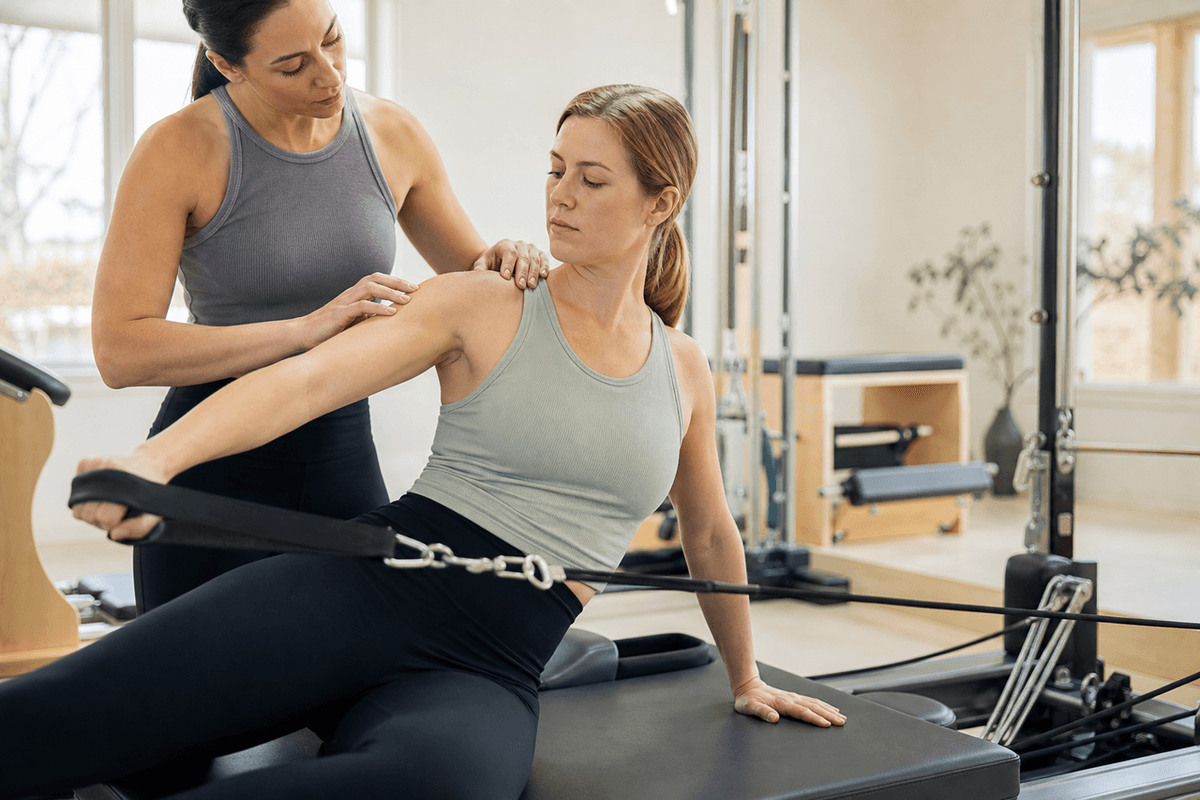
The honest verdict first: a hypermobile joint reaches the end of its range easily and gets hurt there, and the wellness industry prizes exactly that range. What helps is the opposite of flexibility: strength, control and a better sense of where the joint is, built gradually within a managed range with someone who knows the condition.
That means Pilates with an informed instructor is often a natural fit, yoga is possible with “stop before end range” and a teacher who has been told, and massage is fine at moderate pressure with no assisted stretching and no joint manipulation, especially of the neck. It also means the class compliment “you’re so flexible” is a warning, not praise.
This is general information, not medical advice. Which type of hypermobility you have, and whether it comes with the connective tissue changes that need a specialist, is a clinician’s call.
What hypermobility, HSD and hEDS actually are
A spectrum, diagnosed in a clinic, not a party trick.
Joint hypermobility means joints that move past the usual range. For many people it is harmless and even useful. For others it comes with pain, fatigue, joints that slip or dislocate, and injuries that keep recurring. Castori and colleagues in the American Journal of Medical Genetics Part C in 2017 describe it as a spectrum, from hypermobility without symptoms, through hypermobility spectrum disorders, to hypermobile Ehlers-Danlos syndrome, a connective tissue condition.
Malfait and colleagues in the American Journal of Medical Genetics Part C in 2017 set out the international classification of the Ehlers-Danlos syndromes. The hypermobile type is diagnosed on clinical criteria, with no genetic test, which is why it belongs with a specialist rather than a quiz. The Beighton score you may have read about is a clinician’s screening tool, not a self-diagnosis.
The classification also separates the vascular type, in which blood vessels themselves are fragile. That is a different level of caution, and for anyone with a vascular or other rarer diagnosis, medical direction comes before any hands-on work at all.
Why flexibility is the trap
Ligaments doing the job muscles should.
In a typical body the ligaments and joint capsule stop a movement at a sensible range, and the muscles work inside it. In a hypermobile body that stop arrives late or not at all, so the joint travels further, the ligaments take strain they are not built for, and the muscles around the joint work harder to hold it together, which is part of why fatigue and pain follow.
End range is where the damage happens: the shoulder that slips in a deep backbend, the knee that hyperextends in a standing pose, the wrist that gives in a plank. Ruemper and Watkins in the Journal of Dance Medicine and Science in 2012 found that in contemporary dance students, the population the industry treats as the ideal, joint hypermobility was associated with more injuries. The body that looks best in the pose is the one most likely to be hurt by it.
The physiotherapy answer follows from that. Engelbert and colleagues in the American Journal of Medical Genetics Part C in 2017 set out the rationale: joint stability, strength and proprioception, built gradually, avoiding loading at end range, with pain and fatigue treated as part of the picture rather than as excuses. Palmer and colleagues in Physiotherapy in 2014 reviewed the trials and found that exercise improves pain and function, on low-quality evidence, with no single type of exercise shown to beat the others.
What that program looks like for you belongs with a physiotherapist who knows hypermobility, and we are not handing out one for joints nobody here has examined. Our comparison of massage and physical therapy covers why only one of those changes what a joint can hold.
Yoga: what to ask for, and what to ignore
Stop before the end, hold with muscle, and tell the teacher.
Yoga is not off the table. It has to be taught to your body rather than to the room. The useful cues are the ones that pull you back from the end of a range: a soft bend in the knees and elbows, holding a pose with the muscles rather than hanging on the joint, and coming out of a shape at the point where it starts to feel like nothing. Deep backbends, loaded end-range poses and being adjusted deeper by hand are the ones to decline.
Long passive holds deserve a mention, because yin and restorative classes look gentle and ask you to hang in a stretch for minutes, which is exactly the loading a hypermobile ligament does not want. Tell the teacher before class, every time, and treat “you’re so flexible” as your cue to do less.
Our guide to yoga styles helps pick a class that spends its time on control rather than depth, and our comparison of yoga and Pilates explains why many hypermobile people start with the second.
Pilates and strength work
Control inside the range is the whole point.
Pilates is built around control, endurance and moving a limb without losing the trunk, which is close to what the physiotherapy literature asks for. That makes it a frequent recommendation for hypermobile bodies, with one condition: the instructor has to know. “An instructor who knows hypermobility” means someone who shortens your range on purpose, cues you to stop before the lock, and does not celebrate the extra centimetres. Our reformer versus mat comparison covers the formats.
Strength training in a gym belongs in the same conversation, since load builds the stability this body lacks, and the same rule applies: within range, with someone watching the joints rather than the numbers.
Massage, Thai stretching and adjustments
Pressure is fine. Leverage and cracking are not.
Massage at moderate pressure on muscle is generally welcome, because the muscles around unstable joints work overtime and ache accordingly. Tell the therapist you are hypermobile and, if it applies, that you bruise easily or your skin is fragile, which some types of Ehlers-Danlos bring. Our guide to the types of massage covers which styles rely on pressure and which on movement.
Movement is the problem. Thai massage and assisted-stretching studios use the practitioner’s body weight to take you further into a range, which is the injury mechanism performed by a professional. Our Thai massage guide already flags it as a style that needs modification, and for a hypermobile body the honest version is to skip the leverage entirely.
Joint manipulation, the adjustment that cracks, is the one to decline outright. A joint that already moves too far gains nothing from being pushed past its stop, and the neck is the most serious case. Our read on whether neck manipulation is safe puts connective tissue disorders on its list of reasons for extra care, and this is why.
Fatigue, pain and the POTS overlap
The joints are rarely the whole story.
Many hypermobile people also have symptoms on standing and in heat, a racing heart, light-headedness, the pattern of POTS, along with fatigue that does not match the effort. That changes which classes suit and how to handle a sauna, and our guide to wellness with POTS and dysautonomia covers it on its own terms.
For pacing a body that pays for exertion the next day, our guide to chronic fatigue and long COVID is the practical version.
Hypermobility and wellness at a glance
| Practice | Fine as is | Needs adjusting | Avoid |
|---|---|---|---|
| Yoga | Control-based classes with a teacher who knows | Depth, long passive holds, backbends | Being adjusted deeper by hand |
| Yin and restorative | Short holds with support | Minutes hanging in a stretch | Loading a ligament for time |
| Pilates | Often the best fit | Range shortened on purpose | Instructors who praise the extra range |
| Strength training | Builds the stability this body lacks | Within range, joints watched | End-range loading |
| Massage | Moderate pressure on muscle | Fragile skin or bruising, tell them | Nothing specific |
| Thai and assisted stretching | Nothing specific | Only without leverage | Being taken into range |
| Adjustments and manipulation | Nothing | Nothing | The neck above all |
| Sauna, heat, cold | Usually fine | The POTS questions if they apply | Nothing specific |
What is oversold
Anything that sells more range.
“Stretch out the pain” is the standard pitch, and for a hypermobile body it is precisely backwards, since the pain comes from joints that already move too much. Posture straps and correctors promise to hold you where your ligaments do not, and our read on whether posture correctors work covers why a strap changes nothing underneath. Adjustment courses sold as realignment are selling the injury mechanism as a treatment.
The quieter one is the compliment. A studio that celebrates your depth is rewarding the thing that hurts you.
What belongs to your care team
Which type, the program, and the red flags.
Diagnosis is a clinician’s job, and it matters which type you have, because the vascular and classical types change the rules for everything hands-on. The actual program of strength, control and proprioception belongs with a physiotherapist who treats hypermobility, and the trials that showed benefit were supervised, which is the version to copy.
See a clinician promptly for a joint that dislocates and will not go back, sudden severe pain, unusual bruising or wounds that heal badly, and, for anyone with a known Ehlers-Danlos diagnosis, chest or abdominal pain that is new. If you book classes or bodywork alongside proper care, check whoever you see with our credential-checking guide. We only recommend what we would send a friend to, and here that means someone who asks about your joints before they ask you to fold.
FAQ
Is yoga safe with hypermobility or Ehlers-Danlos? Yes, taught to your body: stop before end range, hold with muscle, decline hands-on adjustments and long passive holds, and tell the teacher every time. The praise for your depth is the thing to ignore.
Can I have a massage with Ehlers-Danlos? Moderate pressure on muscle is generally fine. Skip assisted stretching and any joint manipulation, and mention fragile skin or easy bruising if that is part of your type.
Is Pilates good for hypermobility? Often, because it trains control inside a range rather than range itself. The condition is an instructor who shortens your range on purpose rather than admiring it.
Should someone with hypermobility get chiropractic adjustments? No. A joint that already moves too far gains nothing from being pushed past its stop, and the neck is the most serious case.
The bottom line on hypermobility and Ehlers-Danlos
Hypermobility is a spectrum, diagnosed in a clinic, and the body on it gets hurt at end range, which is exactly where the industry sends it. Depth, leverage and adjustments are the injury mechanism dressed as treatment.
What helps is strength, control and proprioception built gradually within a managed range, usually with a physiotherapist and often through Pilates or control-based yoga with someone who knows. Massage at moderate pressure is welcome, assisted stretching and manipulation are not, and the neck is the line nobody should cross.
Which type you have, the program, and any new severe pain, dislocation or unusual bruising belong with your care team, and a studio that praises your flexibility is one to educate or leave.