Wellness with glaucoma: the yoga poses that raise eye pressure, and what is actually safe
The headstand is the pose the studio celebrates, and it roughly doubles the pressure inside the eye while you hold it. For a nerve already damaged by pressure, the inversion is the one thing on the menu to refuse, and almost everything else is open.
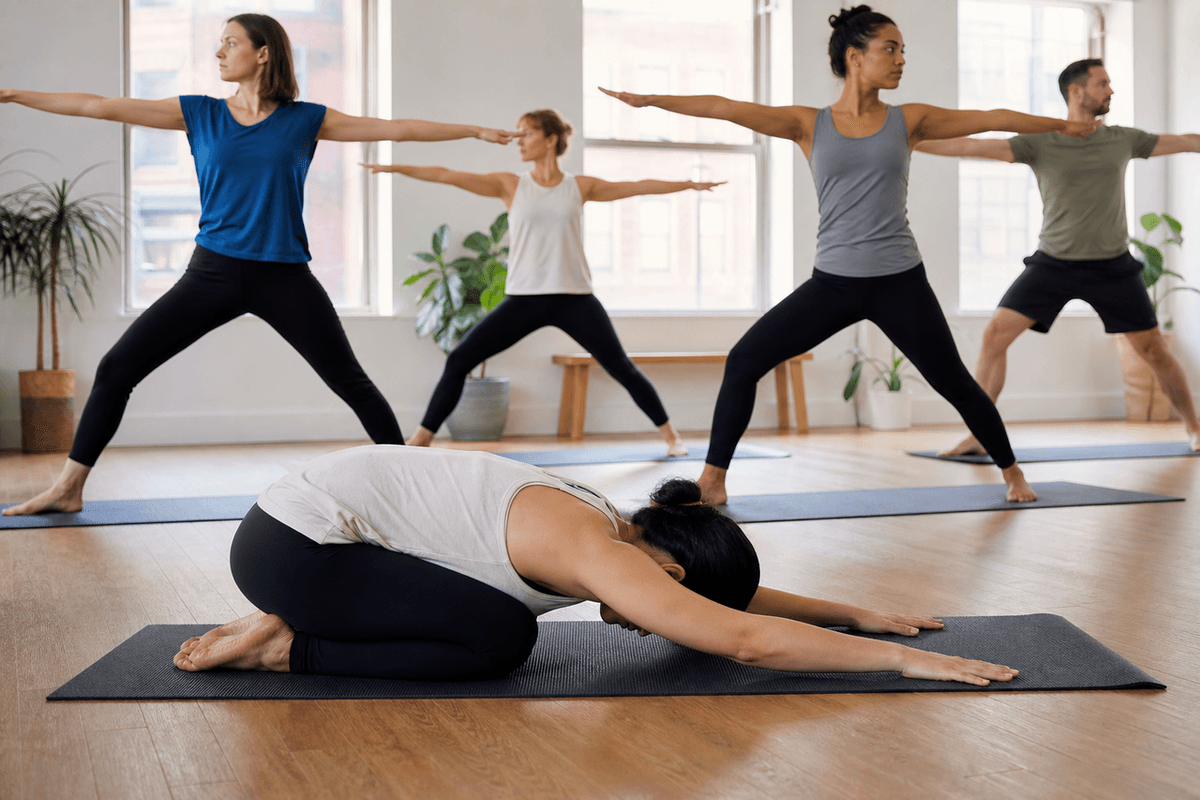
The honest verdict first: glaucoma is damage to the optic nerve, usually driven by pressure inside the eye, and the yoga poses a studio celebrates most, the headstand, the shoulder stand, the long downward dog, raise that pressure while you hold them, which has been measured. For a nerve already being damaged by pressure, inversions, breath-holding under strain and anything that presses on the eye are the things to refuse. Almost everything else on the menu is open, and the treatment that protects your sight is the drops, the laser or the surgery your ophthalmologist has prescribed.
That is a short list of no and a long list of yes. Walking, swimming, cycling and upright classes are fine and may modestly help. Saunas and cold water carry no glaucoma-specific caution. Massage is fine with the face cradle used properly and no pressure on the eyes.
This is general information, not medical advice. Glaucoma is diagnosed and managed by an ophthalmologist, and a sudden painful red eye is an emergency rather than a booking.
What glaucoma actually is
A pressure problem at the optic nerve, silent until late, and treated to lower the pressure.
Glaucoma is a group of conditions in which the optic nerve, the cable from the eye to the brain, is progressively damaged, most often because the pressure of the fluid inside the eye is higher than the nerve can tolerate. It is usually painless and unnoticed until peripheral vision has already gone, which is why it is found at eye examinations rather than by symptoms. Treatment lowers the pressure, with daily drops, laser or surgery, and the damage already done does not reverse, so the whole game is preventing more.
That framing decides the rest of this guide. Anything that raises the pressure inside the eye, even briefly and even in a healthy eye, is worth avoiding in an eye whose nerve is already losing the argument with pressure.
The yoga poses that raise eye pressure
Measured, reproducible, and head-down is the mechanism.
Baskaran and colleagues in Ophthalmology in 2006 measured intraocular pressure in yoga practitioners during the headstand and found it roughly doubled while the pose was held, returning towards normal afterwards. Jasien and colleagues in PLOS ONE in 2015 measured four common poses, downward-facing dog, standing forward bend, plough and legs up the wall, in people with and without glaucoma, and found all four raised eye pressure, the fully head-down positions most, with a similar rise in both groups.
The mechanism is gravity: when the head is below the heart, more blood sits in the veins around the eye and the pressure inside it climbs. The rise is temporary. Whether repeated temporary rises damage a glaucomatous nerve over years is not settled, and that uncertainty is exactly why ophthalmologists tend to advise skipping inversions rather than risking it.
In class terms: no headstand, shoulder stand, plough or handstand; short downward dogs rather than long ones, or a substitute with the head level; forward folds with the head above the heart, hands on blocks; and no legs-up-the-wall held for minutes. Tell the teacher, who has a substitute for every one of them. Our guide to yoga styles helps pick a class that spends its time upright, and our aerial yoga explainer already lists glaucoma as a reason to skip the inverted parts.
Breath-holding, straining and the intense styles
Pressure in the chest becomes pressure in the eye.
Bearing down, holding the breath and straining, the effort of a heavy lift or a forced exhalation against a closed throat, raises pressure in the chest and, through the veins, in the eye. That puts two things on the caution list: heavy resistance training done with breath-holding, and the forceful breathwork styles that involve long breath-holds or straining. Our breathwork safety guide already lists glaucoma among the reasons to get clearance before intense hyperventilation styles, and our pranayama explainer covers which techniques involve retention.
Slow breathing, calm meditation and ordinary exhaling are fine. Lifting is fine with breathing out on the effort rather than holding, which a decent trainer teaches anyway. Playing a wind instrument hard and blowing up balloons sit in the same category, which is more of a curiosity than a wellness question.
Massage, face cradles and pressure on the eyes
Fine, with one instruction.
Massage is welcome with glaucoma, including lying face down, provided the face cradle supports the forehead and cheekbones and nothing presses on the eyes themselves. That is how a properly set cradle works, and it is worth checking before you settle in. Facial massage, eye masks with weight in them and any technique that presses on the closed eye are the things to decline. Tell the therapist you have glaucoma and ask for no pressure on or around the eyes, which is a routine request. Our first massage guide covers how to ask.
Saunas, cold water, floats and exercise
No glaucoma-specific caution, and movement may help a little.
Heat and cold have no established effect on glaucoma, so a sauna, a steam room or a cold plunge carries only its ordinary cautions, which our guide to who should avoid cold plunging and our guide to feeling faint in a sauna cover. A float tank has you lying flat, with the head level with the heart, which is fine.
Aerobic exercise, walking, swimming, cycling, tends to lower eye pressure modestly while you do it and is encouraged. The exception is anything head-down or breath-held, and swimming goggles that press hard on the eyes are worth swapping for a looser pair. Our tai chi and qigong explainer covers an upright, calm practice with no inversions at all.
Drops, timing and the routine that protects sight
The lever that matters more than any class.
Glaucoma drops work only when they are taken, every day, on time, and missed doses are the commonest reason pressure creeps up. A retreat that scrambles your routine, a spa day that runs late, a trip across time zones, all threaten the one thing that protects your sight. Pack the drops, set the alarm, and treat the schedule as non-negotiable in the same way our guide to wellness with bipolar disorder treats sleep.
Glaucoma and wellness at a glance
| Practice | Fine as is | Needs adjusting | Avoid |
|---|---|---|---|
| Upright yoga, Pilates, tai chi | Yes | Teacher told, head above the heart | Headstand, shoulder stand, plough, long inversions |
| Downward dog, forward folds | Brief, hands on blocks | Head level with or above the heart | Long holds head-down |
| Legs up the wall | Nothing specific | A minute, not twenty | Long holds |
| Breathwork | Slow styles, calm meditation | Nothing specific | Long breath-holds, straining, intense styles without clearance |
| Resistance training | Breathing out on the effort | A trainer who teaches it | Heavy lifts with the breath held |
| Aerobic exercise, swimming | Encouraged | Looser goggles | Nothing specific |
| Massage | Yes | Cradle set on forehead and cheeks, no eye pressure | Pressure on the eyes, weighted eye masks |
| Sauna, steam, cold plunge, float | Ordinary cautions only | Nothing glaucoma-specific | Nothing specific |
| Drops on a trip | The routine that matters | Alarm, packed, time zones planned | Missed doses |
What is oversold
Eye yoga, palming and supplements that lower pressure.
“Eye yoga”, palming and exercises sold as strengthening the eye do nothing to the pressure inside it or to a damaged nerve, and supplements sold as lowering eye pressure or reversing glaucoma have no such evidence. The quieter harm is the substitution: any practice that leads someone to relax about the drops has cost them sight. Our guide to spotting a nonsense wellness claim is the filter.
What belongs to your ophthalmologist
The pressure, the drops, the check-ups, and the emergency.
Diagnosis, the target pressure, the drops or procedure, and how often to be checked belong with an ophthalmologist, and so does the answer to how careful you personally need to be with inversions, which depends on how much nerve is left. A sudden painful red eye with blurred vision, halos around lights, headache or nausea is acute angle-closure glaucoma, an emergency that needs treatment within hours, not a booking. If you book classes or bodywork alongside proper care, check whoever you see with our credential-checking guide. We only recommend what we would send a friend to, and here that means a teacher who offers the substitute before you have to ask.
FAQ
Can I do yoga with glaucoma? Yes, upright. Headstands, shoulder stands, plough and long head-down holds raise eye pressure while held, measured in trials, so skip them and keep folds with the head above the heart. Tell the teacher.
Is a sauna safe with glaucoma? Yes. Heat and cold have no established effect on glaucoma, so only the ordinary sauna and cold plunge cautions apply.
Can I get a massage with glaucoma? Yes, including face down, as long as the face cradle rests on the forehead and cheekbones and nothing presses on the eyes. Decline weighted eye masks and pressure around the eyes.
Does exercise raise eye pressure with glaucoma? Upright aerobic exercise tends to lower it modestly. Breath-holding under a heavy lift and head-down positions raise it, so breathe out on the effort and stay upright.
The bottom line on glaucoma
Glaucoma is pressure damaging the optic nerve, silent until late and managed by lowering that pressure, and the wellness menu’s celebrated inversions raise it while they are held, which trials have measured. Headstands, shoulder stands, long head-down holds, breath-holding under strain and pressure on the eyes are the short list to refuse.
Everything else is open: upright classes, walking, swimming, saunas, cold water, floats and massage with a properly set face cradle. The drops, taken on time even on a trip, are the treatment.
A sudden painful red eye with halos or nausea is an emergency, the check-ups belong with your ophthalmologist, and a teacher who offers the substitute before you ask is the one to book.