Lymphatic drainage massage: what it is, what a session is like, and what the evidence shows
A gentle, rhythmic technique with real post-surgical applications, and a lot of wellness-industry hype to sort through.
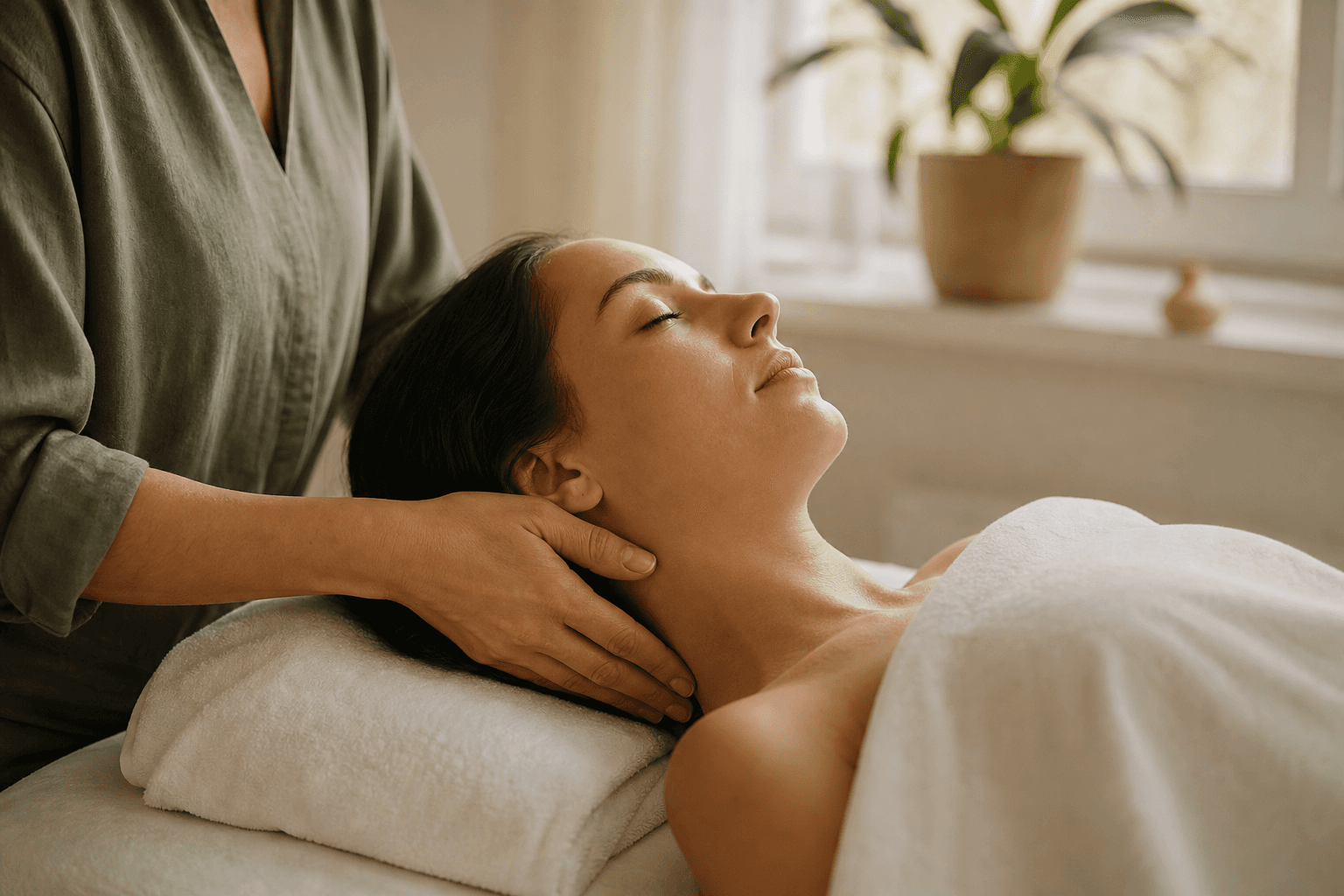
Short answer: Very light, rhythmic strokes, about the pressure of a coin, that move lymph toward the nodes. The evidence is solid for lymphedema and post-surgical swelling, where it forms part of Complete Decongestive Therapy. The detox, cellulite and slimming claims are overstated. Expect $90 to $160 for 60 minutes.
Manual lymphatic drainage (MLD) is one of the gentler modalities in the massage world, almost startlingly so the first time you experience it. It is also one of the more misunderstood, marketed simultaneously as a legitimate medical protocol for post-surgical swelling and as a vague wellness cure-all for “toxins” and bloat. The truth, as usual, sits somewhere specific.
What lymphatic drainage massage is
The lymphatic system is a network of vessels and nodes that carries lymph fluid, a clear liquid containing white blood cells and waste products, back toward the bloodstream. Unlike the circulatory system, it has no dedicated pump; it moves through muscle contraction, breathing, and small pressure changes in surrounding tissue.
Manual lymphatic drainage was developed in the 1930s by Danish practitioners Emil and Estrid Vodder, who observed that gentle manipulation of the neck’s lymph nodes seemed to reduce swelling in patients with chronic sinusitis. Their technique, later refined by other researchers, notably Michael Földi, became a formalized protocol.
Today MLD is used both as a stand-alone session in wellness settings and as a clinical component of a treatment called Complete Decongestive Therapy (CDT), which also includes compression garments and exercise.
The proposed mechanism: light, rhythmic strokes applied in specific sequences create gentle pressure waves that encourage lymph fluid to move toward the lymph nodes, where it can be filtered and re-absorbed. The strokes are deliberately superficial, lymph vessels sit just under the skin, so deep pressure is counterproductive.
What an MLD session is like
You’ll be asked to lie on a treatment table, typically in minimal clothing with draping. Intake questions usually cover recent surgeries, infections, current medications, and any swelling or tenderness.
The work itself feels almost nothing like a conventional massage. There is no kneading, no muscle work, no deep pressure. Instead, the practitioner uses their hands in slow, precise, circular or pump-like movements, starting at the neck, where the largest lymph nodes and ducts are, then working outward or downward depending on your anatomy.
Pressure is very light, sometimes described as the weight of a coin.
Sessions typically run 60 to 90 minutes. You may feel a mild warmth or a subtle sense of fluid movement; some people feel nothing at all and wonder if anything is happening. Most people report feeling deeply relaxed or even drowsy during the session. Afterward, it’s common to feel a temporary need to urinate more, a sign that fluid is being reabsorbed and processed.
For post-surgical applications (breast cancer-related lymphedema, for example), sessions are more frequent and follow a specific clinical sequence. In a wellness spa context, the approach is typically a single-session general drainage routine.
What the evidence says about lymph massage
- Reasonable evidence for: Reducing lymphedema, particularly breast cancer-related lymphedema following lymph node removal. CDT (which includes MLD) is a recognized standard of care for this condition. There is also reasonable evidence for reducing post-surgical swelling after orthopedic procedures and cosmetic surgery.
- Debated or mixed: MLD for fibromyalgia pain has some small positive trials, but study quality is inconsistent. Claims about improved immune function are plausible mechanistically but not robustly demonstrated in human trials. Reduction of general muscle soreness compared to conventional massage has limited evidence.
- Not established / overstated: “Detox”, the lymphatic system does process waste, but MLD does not meaningfully accelerate detoxification beyond what a healthy lymphatic system already does. Claims that it directly reduces cellulite are not supported by quality evidence. One-session “slimming” effects attributed to fluid redistribution are real but temporary and not the same as fat loss.
The highest-quality evidence is in clinical lymphedema management. Outside that context, MLD can be a deeply relaxing treatment, just don’t expect the cure-all marketing claims to hold up.
Benefits people report from lymphatic drainage
People who receive MLD regularly, in both clinical and wellness contexts, commonly report:
- Reduced puffiness in the face, hands, and ankles, particularly when related to fluid retention rather than chronic lymphedema
- A sense of lightness or reduced heaviness in limbs
- Improved relaxation and nervous-system downshift, similar to what you’d get from other gentle bodywork
- Faster apparent recovery after cosmetic procedures such as rhinoplasty or liposuction, where many plastic surgeons now recommend MLD as a post-op adjunct
- Some reduction in sinus congestion, consistent with the Vodders’ original observations
These benefits are real for the right person in the right context. They are not universal or guaranteed.
Who MLD is for, and who should skip it
MLD is a reasonable choice if you are recovering from surgery where your surgeon has approved bodywork, managing lymphedema under a clinician’s guidance, experiencing general fluid retention or puffiness, or simply looking for a profoundly gentle, calming bodywork experience. If you have lymphedema yourself, our guide to wellness with lymphedema covers the rest of the menu around the treatment.
Skip it or consult your doctor first if you have:
- Active infection, fever, or acute inflammation (MLD can potentially spread infection through the lymphatic channels)
- Congestive heart failure, kidney disease, or other conditions where fluid shifts could be dangerous
- Active cancer or recent cancer treatment, MLD can be appropriate in cancer care but should be coordinated with your oncology team
- Deep vein thrombosis or blood clots (risk of mobilizing a clot is a real concern)
- Untreated thyroid conditions
Talk to your doctor before booking MLD if you have any heart, kidney, or vascular condition, or if you are undergoing active cancer treatment.
What a lymphatic drainage session costs
In wellness spa settings, a 60-minute MLD session typically runs $90, $160. Ninety-minute sessions, more standard for a thorough protocol, run $130, $200+ in major US cities.
Clinical MLD administered by a certified lymphedema therapist (CLT) as part of a medical treatment plan may be covered by insurance when deemed medically necessary; out-of-pocket, clinical sessions often run $100, $180 per visit, with multiple sessions per week during intensive phases.
Retreat add-ons featuring MLD as a single post-activity session generally range from $80, $140.
How to choose a good MLD therapist
For wellness or relaxation purposes, look for a therapist who has completed formal training in the Vodder or Földi method, both have recognized certification pathways. A solid minimum is a 40-hour dedicated MLD course, though 160+ hours indicates more serious clinical training.
For clinical or post-surgical MLD, seek a Certified Lymphedema Therapist (CLT), a credential that requires extensive training beyond basic massage licensure. Ask specifically whether they have experience with your condition (post-mastectomy lymphedema vs. post-rhinoplasty swelling, for example, call for different protocols).
Red flags: practitioners who promise dramatic detox or weight-loss results from a single session, who use deep pressure (a sign they’ve confused MLD with regular massage), or who cannot explain why they’re sequencing the session the way they are. MLD has a specific logic; a trained therapist should be able to describe it clearly.
Compare with reflexology if you’re interested in other gentle, low-pressure bodywork that works indirectly through mapped points, or explore Thai massage and bodywork if you’d prefer something more active and stretching-based.
FAQ: lymphatic drainage massage
Does lymphatic drainage actually remove toxins? The lymphatic system does filter waste from tissues, but “detox” as marketed, the idea that MLD flushes harmful substances out of your body, is an oversimplification. Your liver and kidneys handle most detoxification. MLD supports the lymphatic system’s normal function; it doesn’t supercharge detox in a clinically meaningful way.
How many sessions do I need to see results? For post-surgical swelling, therapists often recommend 3, 6 sessions in the first few weeks following a procedure. For lymphedema management, it may be a longer-term or ongoing protocol. For general wellness or relaxation, many people feel a benefit after a single session, though effects on fluid retention may last only a few days.
Is lymphatic drainage safe during pregnancy? MLD can be appropriate during pregnancy, some practitioners specifically train in prenatal MLD for swelling in the legs and ankles. However, certain lymph node areas (groin, abdomen) require modified technique, and you should clear it with your OB first. Work only with a practitioner who has prenatal MLD experience.
Can lymphatic drainage help with chronic fatigue or fibromyalgia? Some people with fibromyalgia and chronic fatigue report that MLD’s gentle, non-stimulating touch is easier to tolerate than conventional massage and leaves them feeling less post-session soreness. Small studies on MLD for fibromyalgia show modest positive results, but evidence is not strong enough to recommend it as a primary treatment. It may be a worthwhile complement to a broader care plan.
The honest summary on lymphatic drainage
Manual lymphatic drainage has a legitimate clinical track record for post-surgical and lymphedema management, that part of the marketing is real. As a general wellness treatment, it offers genuine relaxation and may reduce temporary puffiness, but the “detox” and slimming claims are overstated.
For the right person, especially those recovering from surgery or dealing with lymphedema under clinical guidance, it is a well-supported, low-risk modality. For everyone else, it is a unusually gentle, calming form of bodywork that won’t hurt and may feel quite restorative, as long as expectations stay grounded.