Yoga vs stretching: what's the difference, and which should you do?
At the level of a single hamstring, they look identical. The difference is everything around the stretch: the strength, the breath, the intention, and whether you are doing it in a class or on your bedroom floor for free.
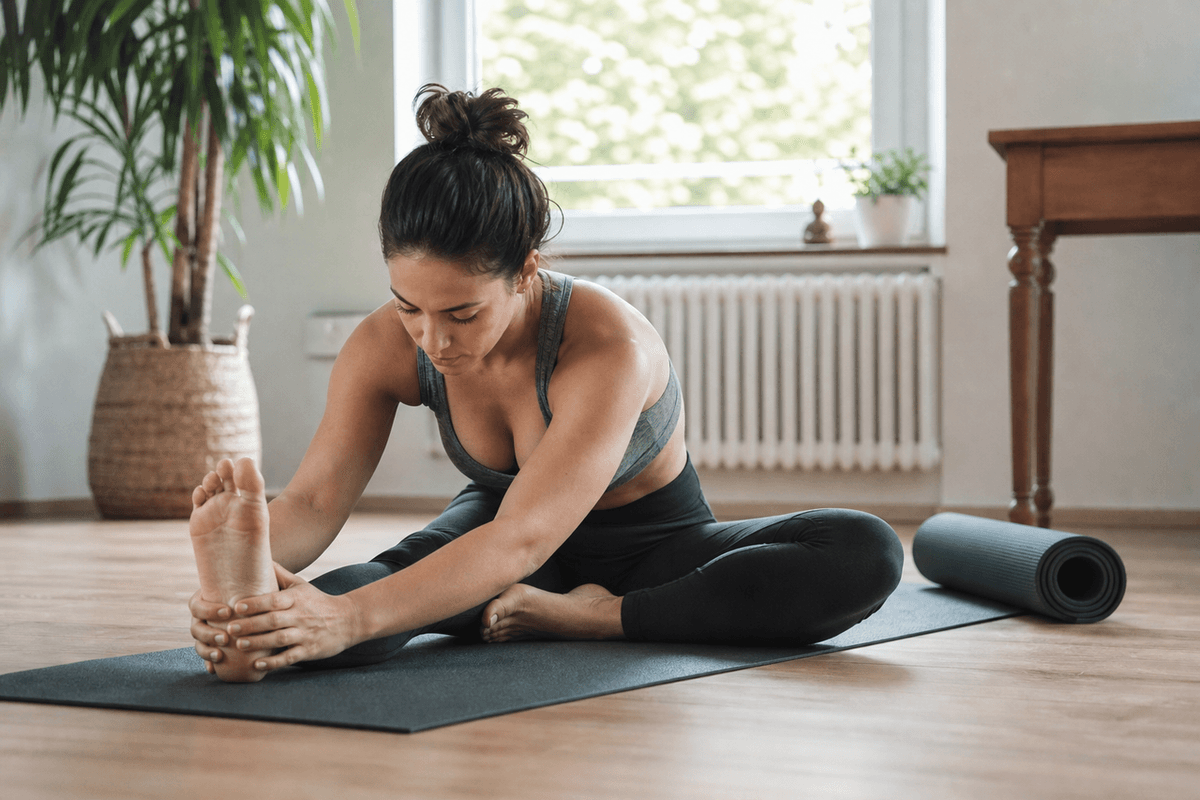
Short answer: For flexibility alone they work about equally: a 2011 trial comparing a yoga class against a conventional stretching class found both improved outcomes similarly. Yoga adds strength, balance, breath and calm in a structured class; stretching is free, targeted and takes five minutes. Pick the one you will still be doing in three months.
Stretching is one ingredient: lengthening a muscle to improve flexibility, and you can do it free at home. Yoga is a whole practice that includes stretching but adds strength, balance, breathing, and a mind-body element, usually in a structured class.
For the narrow goal of getting more flexible, they work about equally well, and the evidence bears that out. Where yoga pulls ahead is everything else it bundles in. Where plain stretching wins is simplicity and cost.
So choose by your goal and, honestly, by which one you will actually keep doing.
What is the actual difference?
Scope. Stretching is a component, yoga is a system.
Stretching means holding or moving a muscle to its lengthened position to improve range of motion. That is the whole job. It can be static, holding a position, or dynamic, moving through it.
Yoga contains plenty of stretching, but a class also asks you to hold your bodyweight in strength-demanding positions, balance, coordinate movement with breath, and often includes a calming, attentional element. The stretch is one thread in a larger fabric.
Put simply, all yoga involves stretching, but stretching is not yoga. Our yoga benefits overview covers the fuller scope.
For flexibility, is one better?
Not really, and there is a neat study on exactly this.
A trial by Sherman and colleagues (Archives of Internal Medicine, 2011), run for back pain, compared a yoga class against a conventional stretching class. Both improved outcomes, and they worked about equally well as each other. For the flexibility component specifically, structured stretching holds its own against yoga.
This makes sense, because the flexibility gain comes from regularly taking muscles through their range, which both do. The extra elements of yoga add other benefits, but they do not make you more flexible than dedicated stretching would.
So if flexibility is your only goal, stretching is a legitimate, cheaper route. Our assisted stretching guide covers the paid version of that route.
What does yoga add that stretching doesn’t?
Strength, balance, breath, and a mental component.
Holding a plank, a chair pose, or a warrior sequence builds real muscular strength and endurance that passive stretching does not. Balancing poses train stability and body awareness. And the breath-and-attention element gives yoga a genuine stress-reduction and mind-body dimension that a hamstring stretch does not have.
For back pain, general wellbeing, and stress, that bundle is why yoga tends to get studied and recommended. Our yoga and back pain guide covers that evidence.
If you want more than flexibility from your floor time, yoga delivers more per session. That is its real advantage.
What does plain stretching win on?
Cost, simplicity, and precision.
Stretching is free, needs no class, no studio, and no schedule, and you can do exactly the muscles you care about, the tight hip from cycling, the stiff neck from a desk, in five focused minutes. No booking, no travel, no membership. Our memberships guide covers why not to overbuy.
It is also easier to be consistent with, because a five-minute home routine has almost no barrier, while a class requires getting there. For a specific, targeted flexibility goal, stretching is often the more practical tool.
The trade-off is that you lose the strength, balance, guidance, and calm that a good class provides.
So which should you choose?
Match it to your goal, then to your reality.
If you want flexibility plus strength, balance, and stress relief, and you like the structure and guidance of a class, choose yoga. If you want targeted flexibility, on your own schedule, for free, choose stretching. Many people do both: a class or two a week plus short daily stretches for problem areas.
Then apply the honesty test. The best practice is the one you will actually keep doing. A free home stretch you do daily beats a yoga membership you attend twice. Our weekly recovery routine guide covers fitting either into a sustainable week, and our yoga versus Pilates guide covers the other neighbouring choice.
Neither prevents injury on its own, so do not pick based on that claim. Strength work is what the evidence supports for injury resistance.
The bottom line on yoga vs stretching
Stretching is the flexibility ingredient, free and simple. Yoga is the whole meal, adding strength, balance, breath, and calm in a structured class. For flexibility alone they are about equal, so let your broader goals and your honest consistency decide.
Pick the one you will still be doing in three months. That matters more than which is theoretically superior.
To find a yoga or movement studio near you, start with our city wellness maps.