Is assisted stretching worth it? What the evidence actually says
Assisted stretching studios sell a relaxing, effective-feeling hour. The feeling is real. The bigger claims, about injury prevention and performance, are where the evidence quietly disagrees.
Short answer: Worth it for range of motion and a relaxing guided hour, not for injury prevention or performance. Stretching reliably increases usable range, which is well supported. It does not cut injury rates the way strength training does, and a long static stretch before explosive effort can briefly reduce power.
Assisted stretching genuinely improves your range of motion and, for most people, feels wonderful. Those are real benefits and reasonable things to pay for. What the evidence does not support is the bigger sell: that stretching prevents injury or improves athletic performance.
So it is worth it if you want to feel looser, move more comfortably, and enjoy a relaxing hour where someone else does the work. It is not worth it if you are buying it as injury insurance or a performance edge.
Like a lot of wellness, the honest value is in how it makes you feel and function day to day, not in the claims on the wall.
What is assisted stretching?
Someone else moving your body through stretches you would not push yourself into.
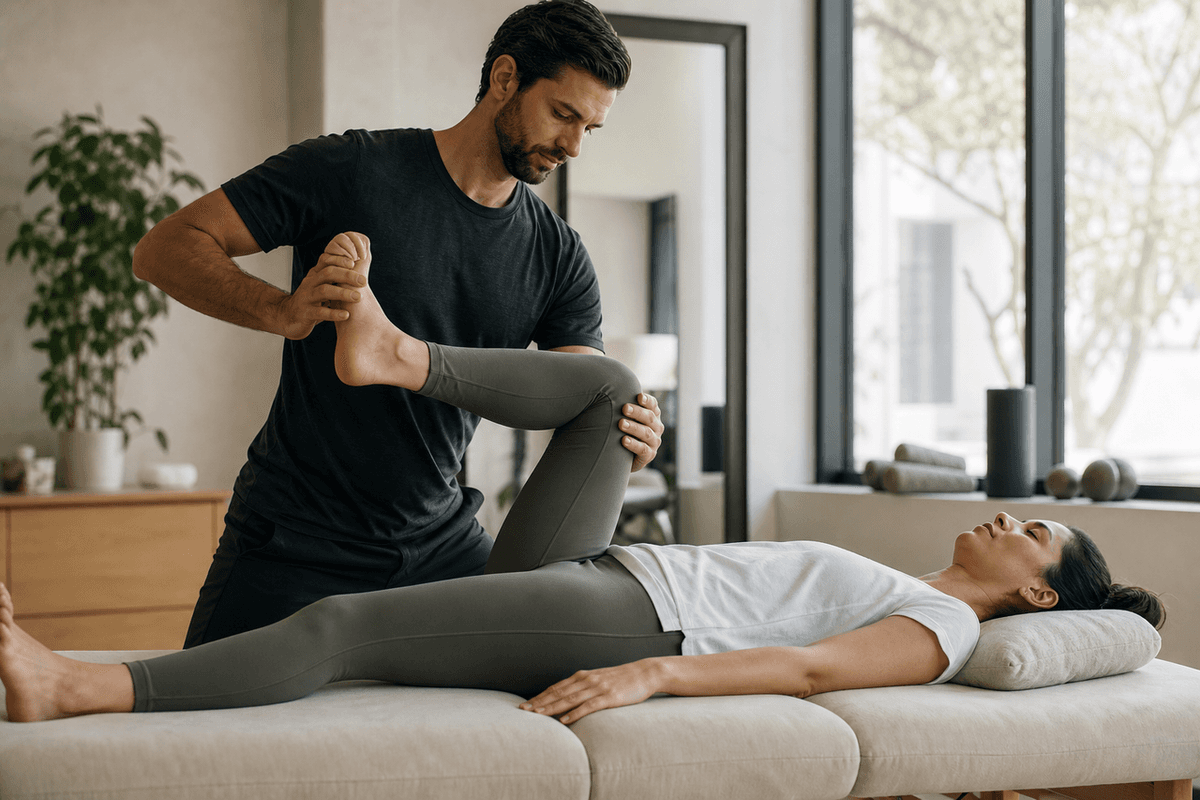
In a session, a practitioner positions and moves your limbs through their range while you relax, often using techniques where you gently contract and then release a muscle so it can lengthen further. Because you are not the one holding the stretch, you tend to relax more and reach a greater range than you would alone.
Dedicated studios have turned this into a service, typically 25 to 50 minute sessions. It sits alongside massage and recovery work as a hands-on, passive experience.
The relaxation is genuine, and being guided by someone who knows what they are doing is more pleasant and often more effective than stretching alone. Our studio checklist covers judging a new place.
Does it actually improve flexibility?
Yes, this part is well supported.
Stretching, including the assisted, contract-relax style, reliably increases range of motion. That is one of the most consistent findings in the whole exercise-science literature. If you are stiff, a course of stretching will measurably loosen you, and assisted work can get you there comfortably.
Whether the change is your muscles physically lengthening or your nervous system simply tolerating a greater range is still debated, but the practical result, more usable range, is real either way.
So for the specific goal of moving more freely, feeling less stiff, and touching your toes, it works. That is a legitimate reason to do it.
Does it prevent injury?
This is the big claim, and the evidence does not support it.
The idea that stretching before or after activity prevents injury has been tested repeatedly and largely failed. A well-known systematic review by Lauersen and colleagues (British Journal of Sports Medicine, 2014) found that stretching programmes did not meaningfully reduce injury rates, while strength training clearly did.
Earlier reviews reached the same conclusion: stretching does not prevent the common overuse and muscle injuries it is sold to prevent. If injury prevention is your goal, the evidence points to strength work, not a stretching membership.
This matters because injury prevention is often the headline reason people buy sessions. It is the weakest part of the case.
Does it improve athletic performance?
No, and static stretching right before power activities can slightly hurt it.
There is good evidence that a prolonged static stretch immediately before an explosive effort, sprinting or lifting, can temporarily reduce power output. This is why warm-ups shifted toward dynamic movement rather than sitting in long stretches.
Over the longer term, being more flexible does not translate into better performance for most sports, and beyond the range your activity actually needs, extra flexibility does little. Our massage recovery guide covers the same pattern: things that feel restorative often do not measurably improve performance.
If you enjoy it and it helps you move, good. Just do not expect it to make you faster or stronger.
So who is it actually good for?
People who are stiff, sedentary, or simply want the experience.
If you sit all day and feel tight, if a specific restriction bothers you, if you are older and want to keep range as you age, or if you just find it relaxing and it gets you moving, assisted stretching is a reasonable, pleasant thing to buy. Those are real, honest reasons.
It is also a gentle entry point for people intimidated by a yoga or Pilates class. Our yoga versus Pilates guide covers those alternatives, which build strength and mobility together and often cost less per session.
If budget is tight, most of the flexibility benefit is available from stretching yourself for free, with a follow-along routine. You lose the relaxation and the guidance, not the range.
The bottom line on assisted stretching
Assisted stretching reliably improves range of motion and feels great, which is worth paying for if that is what you want. It does not prevent injury or boost performance, whatever the marketing says.
Buy it for comfort, mobility, and a relaxing guided hour. For injury-proofing, spend the money on strength work instead.
To find a stretching or recovery studio near you, start with our city wellness maps.