Your first float tank session: what to expect
An hour alone in warm, silent salt water sounds either blissful or like a claustrophobic nightmare. Here's what actually happens, and how to make it the former.
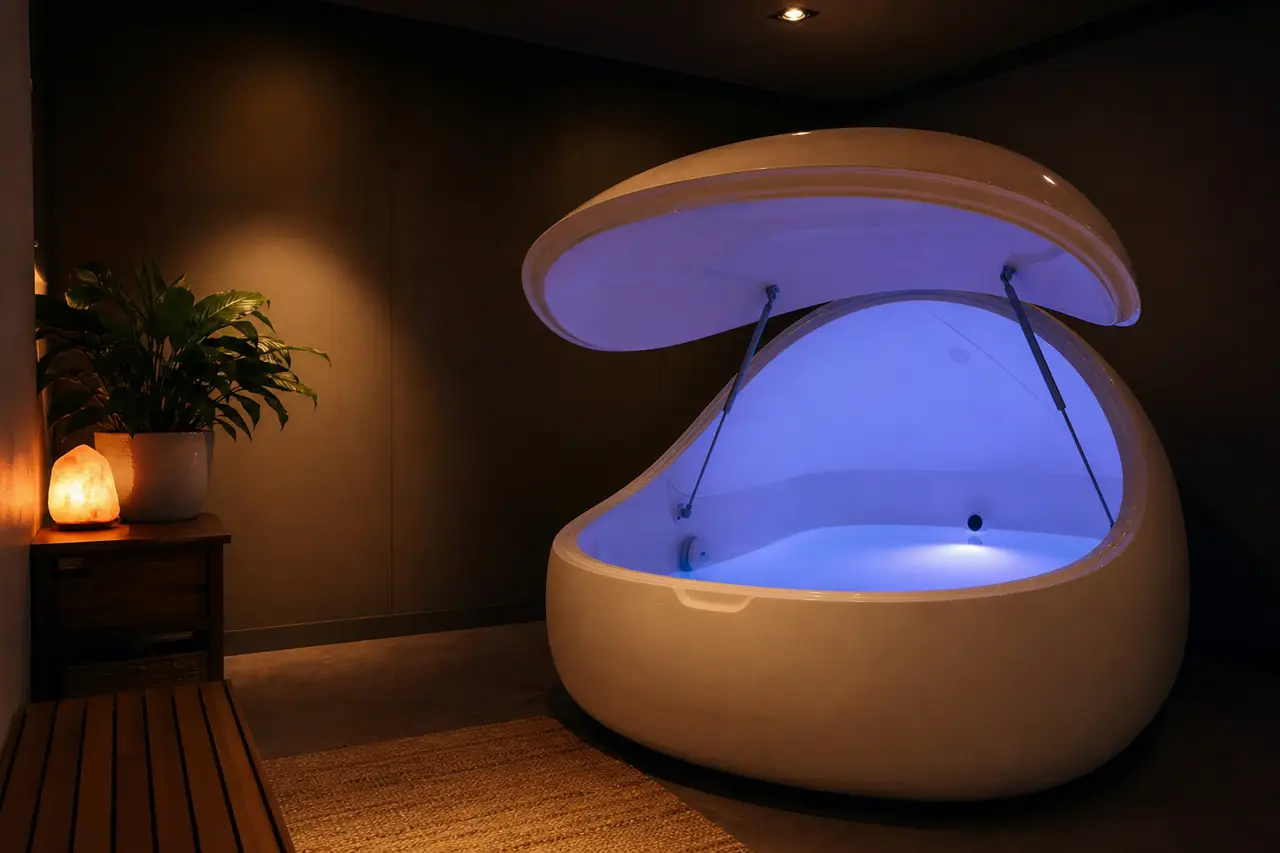
Short answer: An hour lying in about ten inches of body-temperature water holding 800 to 1,000 pounds of Epsom salt, in the dark and quiet. The first ten minutes feel restless, then it settles into a floaty calm. You can open the tank and leave whenever you want. The honest benefit is deep rest.
Your first float tank session is an hour lying in shallow, body-temperature water so saturated with Epsom salt that you float effortlessly, in a dark, quiet tank or room.
Expect the first ten minutes to feel a little restless as your mind and body settle, and the rest to become surprisingly calm once you stop trying. You are in full control the whole time, the tank does not lock, the light is often adjustable, and you can get out whenever you want.
Most first-timers come out relaxed and a bit spacey, and the honest benefit is deep rest, not a mystical event.
What actually happens in the tank?
You shower, put in earplugs, and get into water that is only about ten inches deep but holds around 800 to 1,000 pounds of dissolved Epsom salt, which makes you float like a cork with no effort.
The water and air are kept near skin temperature, so the boundary between your body and the water fades. Then the lid closes or the room darkens and the sound cuts out.
With no light, sound, or effort to hold yourself up, your nervous system has very little to process, which is the whole point: sensory input drops toward zero and your body gets a rare chance to fully let go.
What will the hour feel like?
In two phases, usually. The first ten minutes or so can feel fidgety: you notice your breathing, an itch, a worry, the strangeness of it. That is normal and it passes. Once you stop fighting it, most people drift into a floaty, half-meditative calm, and some doze.
The hour tends to go faster than you expect. You may lose track of where your body ends, see gentle visuals in the dark, or simply feel profoundly relaxed. None of it is pushed on you; the tank just removes distraction and lets your own state surface.
For the fuller picture of the practice and its evidence, our float tank benefits explainer has the honest read.
Practical tips for a good first float
A few things that make or break it. Do not shave right before, the salt stings any nick sharply. Cover small cuts with the petroleum jelly most centers provide.
Do not touch your face with salty hands, and if salt water gets in your eyes it burns, so keep a fresh-water spray or towel within reach (centers provide one). Eat a little beforehand so hunger does not distract you, but skip caffeine, which fights the calm.
And go in with no agenda; trying hard to relax is the surest way not to.
Who should be cautious about floating?
Floating is safe for most people, but skip it or check with a doctor if you have open wounds or a skin infection (the salt and shared water), severe claustrophobia (though open-room floats and adjustable lids help a lot), epilepsy, kidney problems, or if you are in the first trimester of pregnancy.
If low blood pressure makes you faint easily, stand up slowly afterward. Most centers ask you not to float drunk or high, for good reason.
The bottom line on float tanks
Warm salt water, dark, quiet, an hour of nothing asked of you: that is a float, and it is a legitimate deep-rest tool, not magic. Ride out the restless first ten minutes, stop trying, and let it happen. If a full float feels like a lot, a sound bath is a gentler, eyes-closed way into the same kind of quiet.