Ayurveda & panchakarma: what a retreat involves, and how to approach it wisely
Doshas, diet, and deep-cleanse protocols, the genuinely useful parts and the claims to keep in perspective.
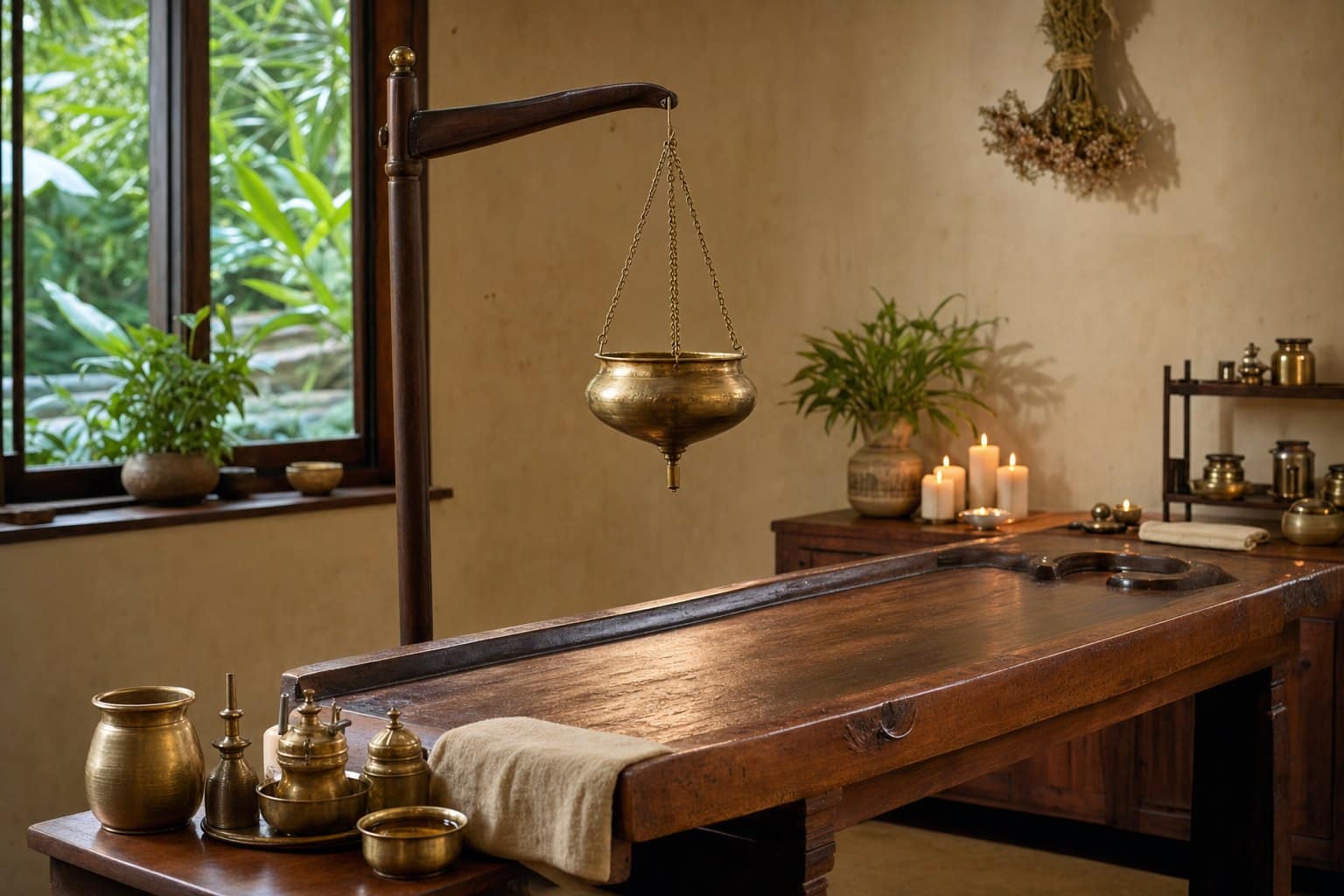
Short answer: Panchakarma is Ayurveda’s residential reset, typically 7 to 21 days of warm-oil treatments such as abhyanga and shirodhara, simple food, herbal therapies and enforced rest. The rest, diet and bodywork are genuinely restorative. The detox claim is not supported, the dosha model has no physiological basis, and imported herbal products have tested positive for heavy metals.
Ayurveda is one of the oldest surviving whole-system health traditions, with more than two thousand years of documented practice, and panchakarma retreats are its intensive reset protocol.
Done well, at a reputable center, the experience can be genuinely restorative, but the field also attracts a fair amount of inflated marketing and a few genuine safety concerns. Here’s how to get the value without suspending your critical faculties.
What Ayurveda and panchakarma are
Ayurveda is a traditional Indian system of medicine that frames health in terms of three constitutional types called “doshas”, vata, pitta, and kapha, and uses that framework to personalize diet, daily routine, herbal formulas, sleep, and bodywork. The goal is balance: reducing excess, strengthening deficiency, and building resilience over time rather than suppressing symptoms.
Panchakarma (“five actions”) is Ayurveda’s intensive purification and rejuvenation program, a structured multi-day protocol involving warm-oil treatments, herbal therapies, specific dietary protocols, and rest. It is typically offered as a residential retreat lasting 7, 21 days, though shorter formats (3, 5 days) exist as introductions. The system is still widely practiced in India and Sri Lanka, and increasingly in the West through dedicated Ayurvedic centers.
What a panchakarma day is like
A panchakarma retreat begins with a consultation, an Ayurvedic physician or trained practitioner assesses your constitution (prakriti) and current imbalances (vikriti) through pulse diagnosis, observation, and detailed intake. This shapes your entire program.
Daily treatments typically include one or more of the following: abhyanga (a two-therapist synchronized warm-oil full-body massage), shirodhara (a continuous stream of warm oil poured slowly over the forehead, deeply settling for an overactive nervous system), herbal steam baths, and specific treatments targeting the nose, eyes, or joints. Meals are simple, warm, and lightly spiced, often kitchari (rice and lentils), supporting digestion without taxing it.
The daily rhythm is deliberately slow. You’re encouraged to rest, avoid screens, walk gently, and practice yoga or meditation at an unhurried pace. More intensive protocols may include medicated enemas (basti) or purgative therapies, these are the “five actions” the system is named for and require qualified medical supervision. Not all Western retreats include the full classical protocol.
Sessions run roughly 3, 5 hours of daily treatment time spread across morning and afternoon, with the rest of the day given to rest and gentle activity.
What the evidence says about Ayurveda
- Reasonable evidence for: The lifestyle foundations of Ayurveda, anti-inflammatory whole-food diet, consistent daily routine, adequate sleep, stress reduction, and therapeutic massage, are well-supported by modern research. Abhyanga massage produces real relaxation responses; shirodhara has preliminary evidence for reducing anxiety and improving sleep quality. Some specific Ayurvedic herbs (ashwagandha, triphala, turmeric/curcumin) have meaningful bodies of clinical research behind them.
- Debated or mixed: The dosha model as a literal physiological framework has no established basis in modern physiology, it’s a categorization system that may or may not map usefully onto individual biology. Dosha-typing as a clinical tool has shown inconsistent reliability across studies. Pulse diagnosis varies significantly by practitioner.
- Not established / overstated: Panchakarma as a “detox” in the biochemical sense, the liver and kidneys handle detoxification and no credible evidence shows panchakarma enhances their function. Claims that panchakarma can treat specific chronic diseases should be approached with skepticism unless supported by robust trials. Aggressive purgative protocols are not risk-free.
Benefits people report from panchakarma
People who complete a well-run panchakarma retreat consistently describe similar experiences: a sense of physical lightness and ease, significantly improved sleep, reduced anxiety or mental noise, improved digestion, and a reset of habitual patterns around food, screens, and pace. The combination of deep bodywork, simplified diet, structured rest, and removal from ordinary life creates conditions that are hard to replicate in daily routines.
Many also report that the consultation process itself, being asked detailed, thoughtful questions about their constitution, digestion, sleep, and emotional patterns, feels unusually holistic compared to conventional medical encounters.
Who panchakarma is for, and who should skip it
Good fit for: People experiencing stress-related burnout, digestive issues, chronic fatigue, or general depletion who want a structured reset; those curious about traditional systems and willing to engage with the philosophy on its own terms; anyone who would benefit from a week or more of genuine rest, nourishment, and attentive bodywork.
Complementary practices: Ayurveda shares a reverence for sensory experience and ritual with aromatherapy-explained, which uses plant essences in ways Ayurveda would recognize. The assisted-stretch and pressure-point work of thai-massage-and-bodywork has some structural similarities to abhyanga in its full-body, flow-based approach. For those exploring traditional healing systems more broadly, acupuncture-explained offers a useful comparison from the Chinese medicine tradition.
Approach with care or skip: Anyone on prescription medications (many herbs interact with medications, disclose everything); people with kidney or liver conditions; pregnant women (some treatments and herbs are contraindicated); anyone being told to undergo intensive purgative protocols without proper qualified supervision. People with eating disorders should be cautious about dietary restriction protocols.
Safety note on herbal products: A meaningful number of Ayurvedic herbal formulas sold commercially, particularly imports, have tested positive for heavy metals (lead, mercury, arsenic) or undisclosed ingredients. Buy from brands that publish third-party testing, and avoid unregulated imports.
What a panchakarma retreat costs
In India and Sri Lanka, a full residential panchakarma retreat typically runs $80, $250 per day all-inclusive at reputable centers. In the US and Europe, expect $300, $700 per day at established Ayurvedic centers; week-long programs often run $2,000, $5,000. Day-spa-style Ayurvedic treatments (abhyanga, shirodhara) are available in larger cities for $100, $250 per session.
How to choose a center or practitioner
Look for centers staffed by trained Ayurvedic physicians (BAMS degree, which is a five-year medical program in India) rather than practitioners with short certificates. Ask whether their purgative protocols are supervised medically. Reputable centers will conduct a thorough intake before confirming a program; they will ask about your medications and medical history, and they will not promise to cure conditions.
Red flags: claims that panchakarma can treat cancer, autoimmune disease, or other serious conditions; pressure to purchase expensive herbal product packages; no questions about your medical history; online dosha quizzes as the primary assessment tool.
FAQ: panchakarma retreats
Do I need to believe in the dosha system to benefit? No. The lifestyle fundamentals, rest, warming food, reduced stimulation, regular bodywork, consistent routine, are beneficial regardless of the theoretical framework. Approach the dosha model as a useful lens rather than a literal biological fact and you’ll get the practical value without the epistemological friction.
Is a 3-day program worth doing? A short program can be a meaningful introduction and will likely feel restorative, but the deeper effects described by long-term practitioners typically require 7, 14 days of consistent treatment. A shorter retreat is a reasonable first step to see whether the approach resonates before committing to a longer stay.
What should I eat before a panchakarma? Most centers recommend simplifying your diet in the week before arrival, reducing processed foods, alcohol, and heavy meals. Some send specific pre-cleanse protocols. The preparation phase (purvakarma) is considered part of the overall program.
Can I exercise during a retreat? Intense exercise is generally discouraged during panchakarma, the protocol is deliberately restorative, not athletic. Gentle yoga, walking, and swimming are typically encouraged. Most people find that the rest itself is the difficult part if they’re used to being active.
The honest summary on Ayurveda
An Ayurveda or panchakarma retreat, at a qualified center with trained practitioners, can be a genuinely restorative experience, and the lifestyle core it’s built on (anti-inflammatory food, structured routine, deep rest, skilled bodywork) is well-grounded in evidence regardless of the theoretical framework. Enjoy that fully.
Keep a clear eye on detox claims, herbal product safety, and any center that sounds more like a luxury spa than a place of genuine medical attention. The best Ayurvedic practitioners are thoughtful clinicians, not wellness marketers, and the difference is usually obvious within the first consultation.