Body Wraps and 'Detox' Wraps Explained: What They Actually Do
Spa body wraps are genuinely relaxing and can leave skin softer, but the 'detox' and inch-loss claims don't hold up.
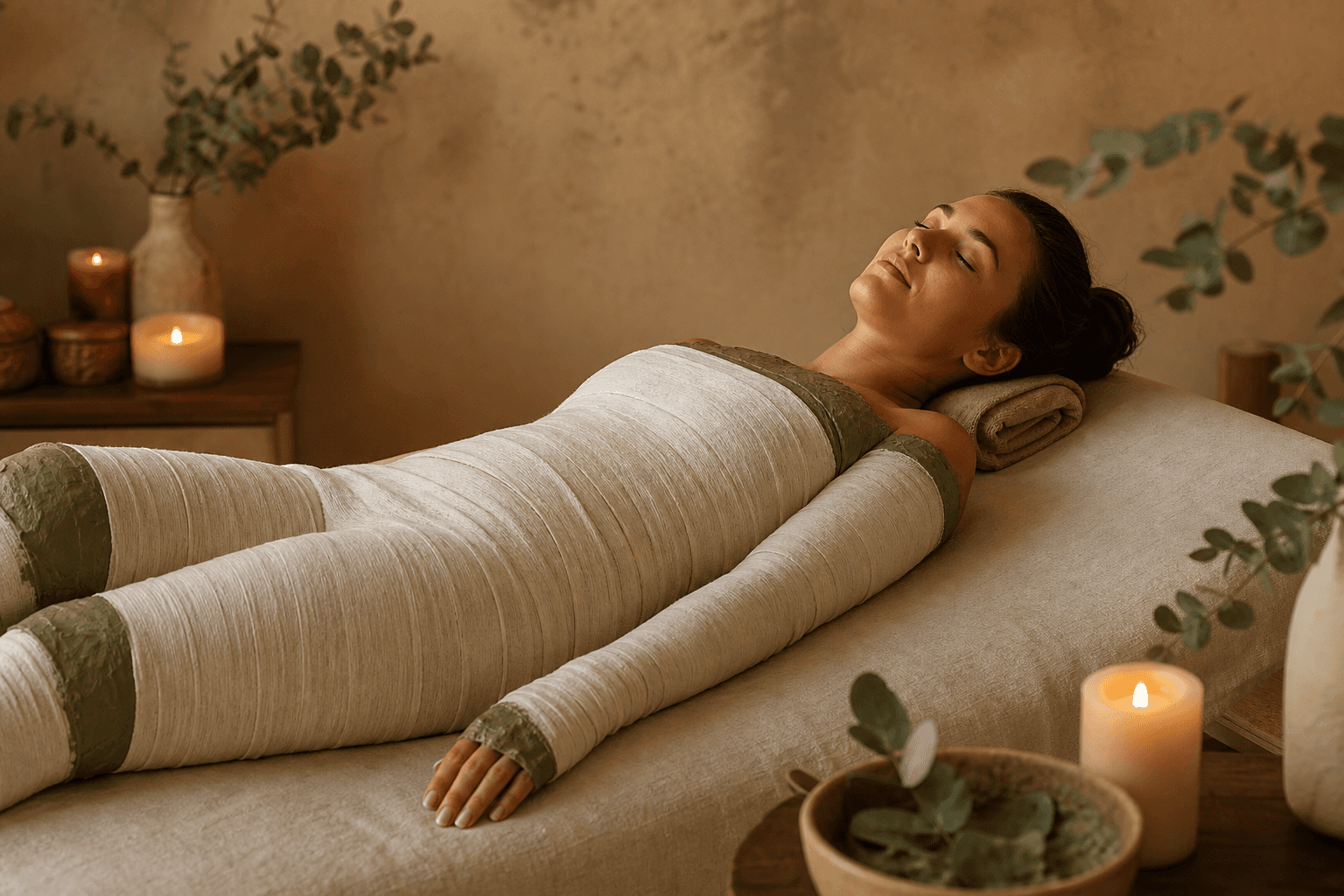
Short answer: A technician applies seaweed, clay, mud or a mineral-salt mixture to your skin and wraps you in linen, foil or a thermal blanket for 20 to 45 minutes. It genuinely softens skin and forces an hour of rest. Detox is not supported, and any inch loss is fluid redistribution that returns to baseline within hours.
A body wrap can feel genuinely luxurious: warm, aromatic, cocooned, quiet. For an hour you are basically forced to lie still, which is rarer than it sounds. That part, the forced rest, the warmth, the skin-softening ingredients, is real. What is not real is the word “detox” printed on the menu. Here is what is actually happening when you climb off that table.
What a body wrap is
A body wrap is a spa treatment in which a technician applies a substance, most commonly seaweed, clay, mud, or a mineral-salt mixture, to the skin, then wraps the body in linen bandages, a foil sheet, or a thermal blanket for 20, 45 minutes. Afterward the wrap is removed and the skin is moisturized.
The treatment has roots in European spa culture, particularly thalassotherapy (seawater-based therapies) popular since the 19th century in French and German resort towns. Modern spa versions range from simple clay masks applied to the whole body to elaborate seaweed-and-essential-oil blends with heated blankets.
The mechanism is straightforward: warmth dilates capillaries close to the skin surface, the wrapping ingredient sits in contact with the skin, and the sealed environment creates mild perspiration. Ingredients like kaolin clay, bentonite, or seaweed extract can mildly exfoliate and temporarily hydrate the skin’s top layers.
What a body wrap session is like
You arrive, change into disposable underwear or a spa wrap, and lie on a padded table. The technician applies the chosen medium, often pre-warmed clay or seaweed paste, across your back, abdomen, legs, and arms. Some treatments include a light dry brushing beforehand to exfoliate the skin first.
Once coated, you are wrapped snugly in linen or foil and covered with a blanket. Most people feel warm within a few minutes. The session typically runs 20, 45 minutes; you just rest. Some spas dim the lights and play ambient music. A few include a scalp massage during the wait.
Afterward the technician unwraps you, wipes or showers off the medium, and applies a moisturizer. Your skin will feel noticeably softer and slightly flushed. You may be given water and told to rest briefly before dressing.
Total appointment time, including consultation and aftercare, is usually 75, 90 minutes.
What the evidence says about body wraps
This is where Tendground does its job honestly.
- Reasonable evidence for: Temporary skin softening and mild hydration. Clay and seaweed ingredients contain minerals, polysaccharides, and trace elements that interact with the skin’s surface and can improve texture for a day or two. Dry brushing before a wrap genuinely exfoliates. The warm, still environment reliably produces a relaxation response, reduced heart rate, lower perceived stress, that is well-documented in general spa-therapy research.
- Debated or mixed: Whether specific seaweed or mineral ingredients confer benefits beyond any other warm, moisturizing medium. The ingredient market is largely unregulated and product quality varies widely.
- Not established / overstated: “Detox.” Your body removes metabolic waste and environmental toxins primarily through the liver and kidneys, not through the skin and certainly not through a 40-minute wrap. No credible peer-reviewed study shows body wraps remove toxins from the body. Temporary inch loss after a wrap is real but is entirely due to fluid redistribution and perspiration; measurements return to baseline within hours. Permanent fat or cellulite reduction from body wraps is not supported by clinical evidence.
Benefits people report from wraps
- Skin feels noticeably softer and smoother after the treatment
- A deep sense of warmth and relaxation during the wrap
- Reduced muscle tension (mainly from the heat, not the ingredient)
- Mild reduction in the appearance of dry or rough skin patches
- A general sense of rest and slowing down, underrated and real
Who body wraps are for, and who should skip them
Body wraps suit most healthy adults who want a relaxing spa experience or a temporary skin-softening treatment. They are particularly popular before events when soft, even skin tone matters.
Skip or consult your doctor first if you: are pregnant, have claustrophobia (the wrapped sensation can be intense), have active skin conditions like eczema or psoriasis (ingredients may irritate), have cardiovascular disease or blood pressure issues (the heat raises heart rate), or have any open wounds, sunburn, or rash. For eczema and psoriasis specifically, our guide to those conditions covers what else on the menu is fine.
Seaweed wraps are contraindicated for people with iodine allergies or thyroid conditions, since topical seaweed can deliver iodine transdermally in some formulations. Always tell your technician about allergies and medications before the session.
What a body wrap costs
- Single session: $80, $180 at a day spa; $150, $280 at a resort or medical spa
- Add-on to another treatment (massage, facial): often $50, $90
- Packages: Some spas bundle 3, 5 wraps for $200, $450, often marketed for inch-loss programs, remember those results are temporary
Prices vary significantly by city and venue tier. Resort spas in destination wellness towns run toward the top of the range.
How to choose a good spa or treatment
Look for spas that describe what their ingredients actually do rather than promising detox or permanent body reshaping. A well-trained esthetician will conduct a brief skin and health consultation before applying anything. Ingredient quality matters: reputable spas list the brands or source of their seaweed, clay, or mud (Dead Sea, Moor mud, French green clay, etc.).
Avoid any provider that promises measurable fat loss, toxin removal, or medical-grade results from a wrap. Those are red flags for misleading marketing. Read the ingredient list if you have sensitivities, essential oils, seaweed, and mineral salts are common allergens.
FAQ: body wraps
Can a body wrap help me lose inches permanently? No. Any reduction in measurements immediately after a wrap is from mild dehydration and fluid shift caused by heat and sweating. This reverses within hours of rehydrating. Body wraps do not reduce fat tissue.
Is there any reason to get a wrap beyond relaxation? Yes, skin softening is genuine, particularly if the treatment includes exfoliation. If you have rough, dry skin and want a pampering treatment, a wrap can be a pleasant option. Just don’t expect medical outcomes.
How often can I get a body wrap? Most estheticians suggest no more than once every 4, 6 weeks. More frequent sessions don’t compound benefits and can over-sensitize skin, especially with active ingredients like clay or essential oils.
Do at-home wrap kits work? The DIY versions using plastic wrap and lotions marketed online have even less evidence behind them and carry mild safety concerns (overheating, circulation restriction). If you want the skin-softening effect, a good body lotion applied to warm, freshly exfoliated skin accomplishes roughly the same thing.
The honest summary on body wraps
Body wraps are a genuinely relaxing spa treatment that can leave skin softer for a day or two. The warmth, the stillness, and the skin-contact ingredients are all real things with real effects. What is not real is the detox narrative: your liver and kidneys handle waste removal, and no wrap changes that.
If you go in expecting relaxation and soft skin, and nothing more, a body wrap delivers exactly what it promises.