Can cold water help with depression or anxiety?
The story everyone shares is a single case report about one woman. That is not nothing, and it is not evidence of a treatment. The gap between those two things is where the honesty lives.
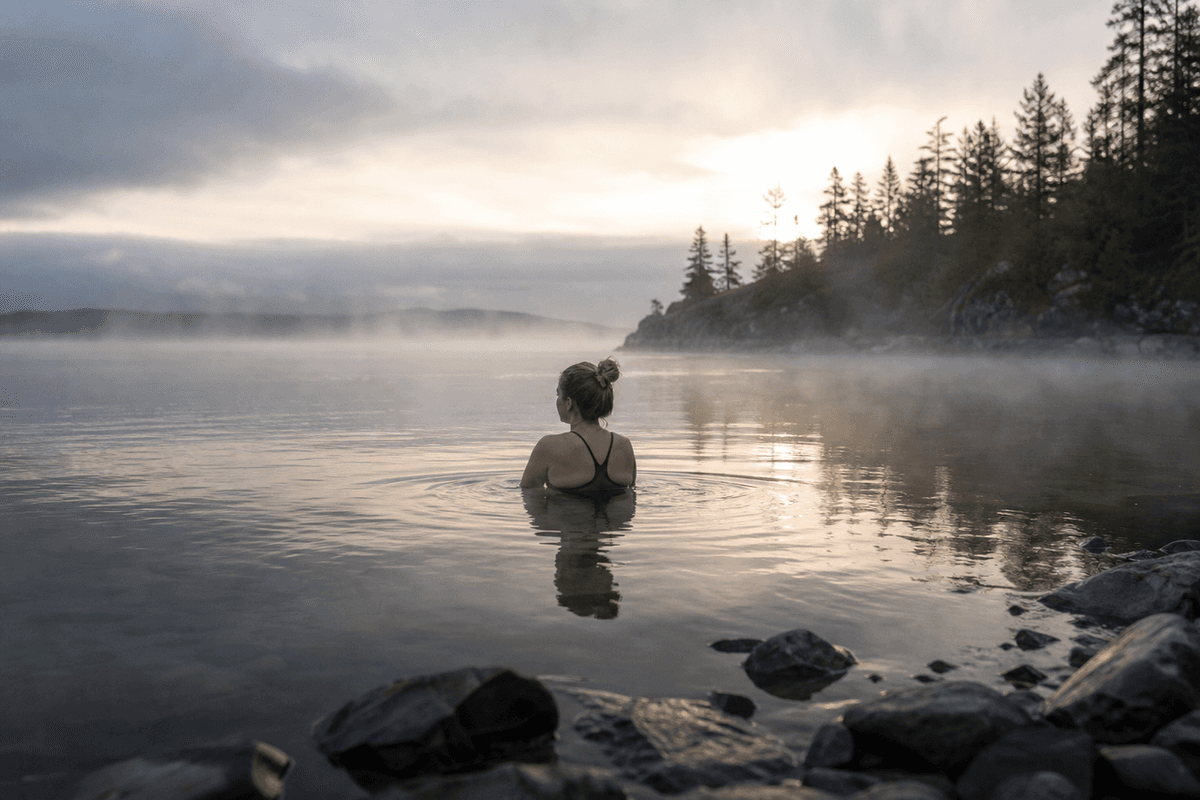
Short answer: Not proven. The evidence amounts to one 2018 case report about a single woman, one small brain-imaging study in healthy volunteers, and self-selected surveys. Open-water swimming also bundles exercise, morning light, nature and company, and nobody has separated those. Add it if you like it; never swap it for treatment.
Maybe, and the honest state of the evidence is thinner than the enthusiasm suggests. What exists is one widely shared case report about a single person, a handful of small brain-imaging and survey studies, and a lot of people who say it changed their life.
That combination is genuinely worth taking seriously. It is also not what “proven treatment” means, and the difference matters more here than almost anywhere else in wellness, because the stakes are someone’s mental health.
If you are being treated for depression or anxiety, cold water is something to add and discuss, never something to swap in.
What is the famous study everyone cites?
A case report. About one woman.
Christoffer van Tulleken and colleagues published it in BMJ Case Reports in 2018. A 24-year-old woman with depression and anxiety, on medication since her teens, started weekly open-water swimming. Her symptoms improved substantially, she came off her medication, and she remained well at follow-up.
That is a real, documented, striking outcome, and it is why the story travelled.
It is also, by design, n equals one. A case report is a description of one person’s course, with no control, no blinding, and no way to know what else was happening in her life. Its purpose in medicine is to say “this is interesting, someone should study it properly.” It is the beginning of an evidence trail, not the end of one.
Almost every article you have read about cold water and depression is ultimately pointing at this one woman.
Is there anything beyond that?
A little, and it is early.
Ala Yankouskaya and colleagues (2023) put people in cold water immersion and scanned their brains, finding changes in connectivity between networks involved in attention and emotion, alongside self-reported improvements in mood and alertness. It is a real physiological finding.
It was also a small study in healthy volunteers, measuring an immediate effect, not a treatment for a diagnosed condition. Feeling more alert and less sluggish for an afternoon is not the same as treating depression.
There are also survey and observational studies of outdoor swimming communities reporting better wellbeing. Those are unblinded, self-selected, and cannot separate the water from everything else. Our cold plunge benefits guide covers the wider picture of what does and does not hold up.
What is actually confounded here?
Almost everything, and this is the crux.
Consider what open-water swimming actually involves. You are outdoors, usually in nature, usually in the morning, getting exercise, often with other people, doing something hard and finishing it, on a regular schedule.
Every single one of those has independent evidence for improving mood. Nature exposure, exercise, morning light, social connection, mastery, routine. Our nature and mental health guide covers one of them.
So when someone’s depression improves after they start cold swimming, the honest question is which ingredient did it, and the honest answer is that nobody has separated them. It might be the cold. It might be that a depressed person started leaving the house at 7am to meet friends outdoors and do something difficult.
That does not make it useless. It means the mechanism story, the one about norepinephrine and cold shock, is running well ahead of the design of the studies.
Is this different from the dopamine claim?
Yes, and they get blurred together constantly.
The viral dopamine claim is about a specific measured spike in a small physiology study, and it is usually stretched far beyond what it showed. Our cold exposure and dopamine guide covers that one on its own terms.
This is a different question: not “what does cold do to a neurotransmitter for an hour” but “does regular cold water exposure improve a clinical condition over months”. The first has mechanism data. The second has a case report.
Confusing a mechanism for an outcome is the most common error in this whole field. A thing can be real in the blood and still not change your life.
Where does the risk sit?
In two places, and one is not obvious.
The physical risk is real and covered elsewhere: cold shock, cardiac events, and drowning in open water. Never combine breath-holding or heavy breathing with cold water. Our cold plunge safety guide and breathwork safety guide cover the specifics.
The less obvious risk is the one that matters more here. If someone with serious depression reads a case report as a cure, stops their medication, and it does not work for them, that is a genuinely dangerous outcome. Coming off psychiatric medication is a medical decision made with a doctor, and the woman in the case report did it under supervision.
Any studio or influencer selling cold plunges as an antidepressant is doing something irresponsible.
So should you try it?
If you want to, yes, as an addition.
It is a reasonable thing to add to a life if you are physically able and you enjoy it, and plenty of people find real value in it. The ritual, the cold, the outdoors, the people, the small daily win. If it helps, it does not much matter which ingredient did the work.
Keep your treatment, keep your doctor, and treat any improvement as welcome rather than as proof that you no longer need them. Our how often guide covers sensible dosing.
If your mood is genuinely bad, please talk to a professional. Cold water is a nice thing that might help. It is not a plan.
On an antidepressant, cold water carries no drug-specific caution and no claim to replace the tablet, which our guide to wellness on antidepressants sets out.
The bottom line on cold water and mood
The evidence is one case report, one small imaging study, and self-selected survey data, wrapped around a bundle of ingredients nobody has separated. Interesting, promising, unproven.
Add it if you like it. Do not subtract anything that is working for you in order to make room for it.
To find a cold plunge near you, start with our city wellness maps.