Is breathwork safe? The risks, and who should be careful
Gentle slow breathing is safe for almost everyone. The intense hyperventilation styles carry real, specific risks, and one of them is genuinely dangerous near water.
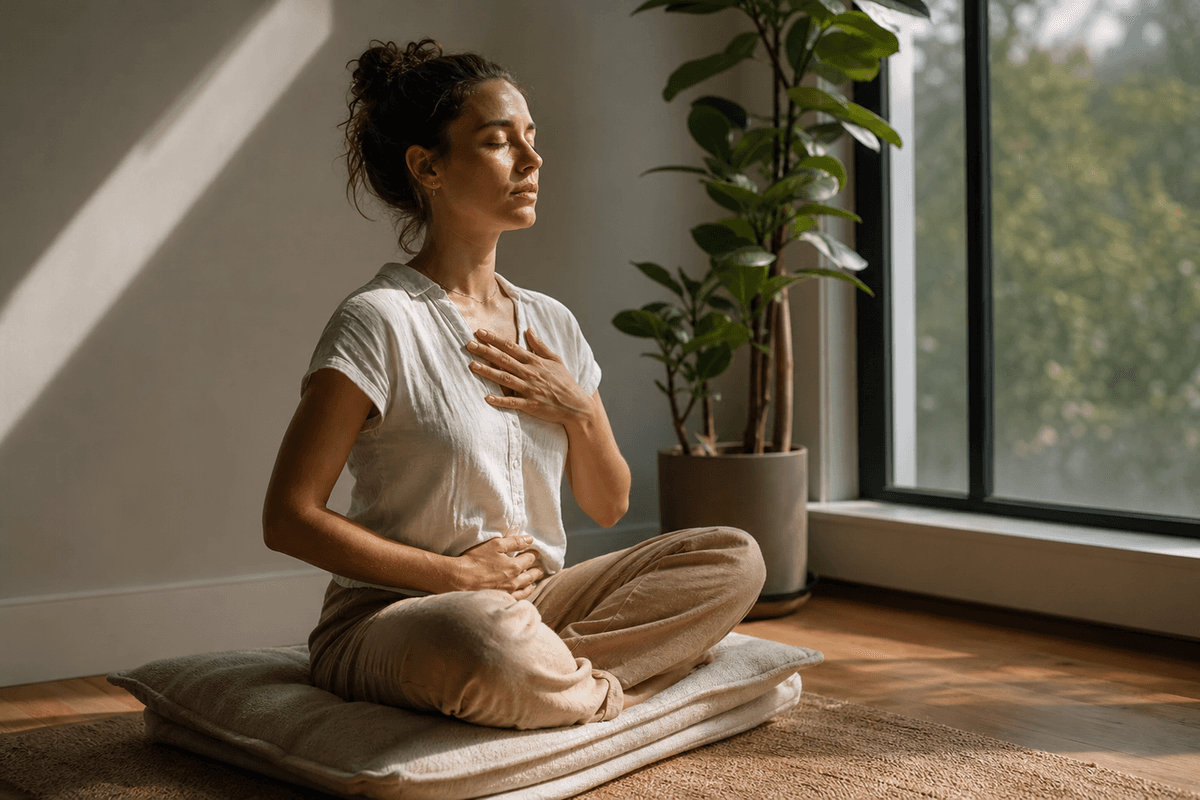
Short answer: Slow, gentle breathing is safe for almost everyone. The intense hyperventilation styles, holotropic and Wim Hof, can cause tingling, tetany and fainting, so they are done lying down with a facilitator. Never breathe heavily or hold your breath in, entering, or right before water: people have drowned that way.
Gentle, slow breathing, the kind used to calm down or fall asleep, is safe for almost everyone. The intense styles that involve fast, heavy breathing, holotropic and Wim Hof style sessions, are where the real risks live, and they are specific rather than vague.
The single most important rule is that you never do heavy breathing or breath holds in or right before water. People have drowned doing exactly that.
Most people can practice breathwork safely. A few should get medical clearance first, and everyone should know which style they are actually doing.
Why is slow breathing so low-risk?
Because it moves you gently in the direction your body already goes at rest.
Slow, light breathing, longer exhales, box breathing, and similar practices nudge your nervous system toward calm. Nothing extreme happens to your blood chemistry. The worst common side effect is a bit of lightheadedness if you overdo it, which passes in a minute.
This is the breathwork most people actually want and the version woven through meditation and wind-down routines. If your goal is to relax or sleep, this is both the effective option and the safe one. Our meditation versus breathwork comparison covers when to reach for it.
The cautions below are almost entirely about the other kind.
What can the intense hyperventilation styles do?
They deliberately blow off carbon dioxide, and that has predictable effects.
Fast, deep, sustained breathing lowers the carbon dioxide in your blood. That causes the classic sensations of these sessions: tingling in the hands and face, lightheadedness, and sometimes tetany, a temporary cramping or claw-like stiffening of the hands. These are usually harmless and resolve once you breathe normally, but they can be alarming if no one warned you.
Low carbon dioxide also narrows blood vessels in the brain and can cause fainting. That is fine lying down on a mat with a facilitator nearby. It is not fine standing, sitting on a hard edge, or anywhere a fall could hurt you.
This is why reputable facilitators run these sessions lying down, in a safe space, with guidance. Our breathwork benefits overview covers what these styles are actually for.
What is the serious risk everyone should know?
Doing breath holds in or before water.
Hyperventilating before a breath hold delays the urge to breathe without adding meaningful oxygen. In water, that means you can black out underwater with no warning gasp first, a mechanism long known in freediving as shallow water blackout. There are documented deaths from people combining Wim Hof style breathing with swimming, cold plunges, or bathtubs.
The rule is absolute: never do heavy breathing or breath holds in water, entering water, or right before a cold plunge. The breathing part happens on dry land, seated or lying down, finished, before you go anywhere near cold water.
Our how to breathe during a cold plunge guide is about staying calm in the water, which is the opposite of hyperventilating before you get in. Keep the two clearly separate.
Who should check with a doctor first?
Several groups, mainly for the intense styles.
Anyone who is pregnant, has cardiovascular disease or uncontrolled high blood pressure, has epilepsy or a seizure history, has had a stroke or aneurysm, or has glaucoma (our glaucoma guide explains the pressure mechanism) should get medical clearance before intense hyperventilation breathwork. The swings in blood pressure, blood chemistry, and intracranial pressure are the concern. Our guide to wellness with epilepsy explains why deliberate hyperventilation is the one to ask about first, and our guide to wellness with a health condition sorts the rest. For lungs that trap air, our guide to wellness with COPD explains why the slow styles are the treatment and the fast ones are the trap.
There is also a mental-health dimension. Holotropic and other cathartic styles can surface intense emotion and, in people with a history of psychosis, bipolar disorder, or severe trauma, can be destabilizing rather than healing. A facilitator who screens for this is a good sign. Our guide to wellness with bipolar disorder covers that condition across the whole menu.
Gentle slow breathing is fine for nearly all of these groups. It is the fast, forceful work that warrants the conversation.
How do you practice it safely?
Match the intensity to the setting, and never freelance the extreme stuff alone.
For calming breathwork, sit comfortably, keep it gentle, and stop if you feel dizzy. For the intense styles, learn from a trained facilitator first, stay lying down, keep water far away, and do not push through tetany or panic as if discomfort were the goal. Our first breathwork session guide walks through what a guided session is like.
Start slow, notice how you respond, and treat any strong reaction as a signal to ease off rather than a badge.
The bottom line on breathwork safety
Slow breathing is safe for almost everyone. Intense hyperventilation styles are powerful, carry real risks like fainting and tetany, must never be combined with water, and are not for certain medical conditions without clearance.
Know which style you are doing, respect the water rule absolutely, and the rest is manageable.
If you want to try a guided session, the breathwork and recovery studios near you are on our city wellness maps.