Whole-body cryotherapy: what it is, and how it compares to an ice bath
Three minutes in a -200°F chamber, the experience, the (limited) evidence, and whether it beats a cold plunge.
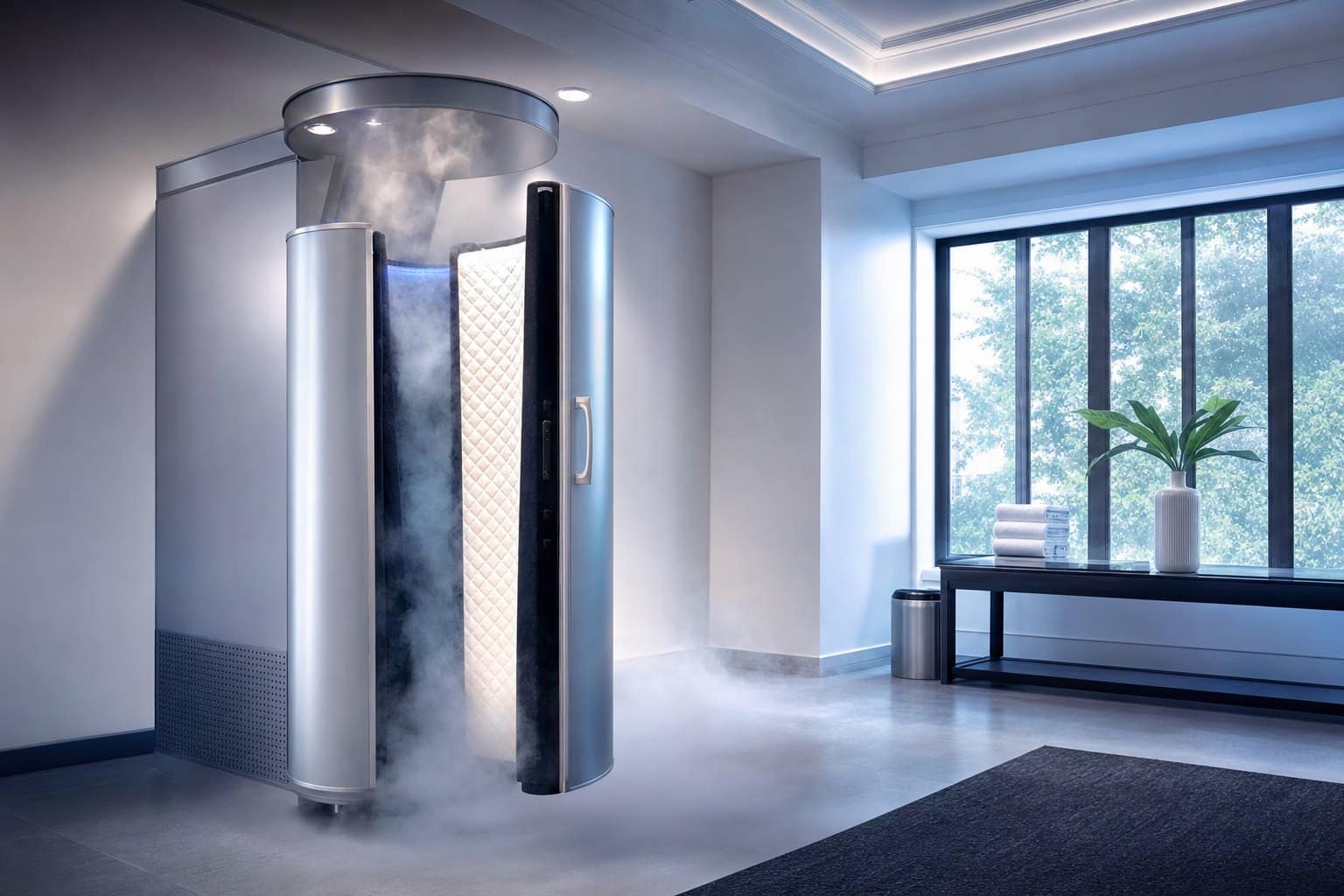
Short answer: Two to three minutes standing in air chilled to -200 to -260°F. The short-term soreness relief and the norepinephrine mood lift are real; detox and fat-loss claims are not. An ice bath is a stronger, cheaper stimulus, so cryo wins on speed and staying dry. Sessions run $40 to $80.
Whole-body cryotherapy is the high-tech cousin of the ice bath, a two-to-three-minute blast of nitrogen-chilled air that triggers the same cold-exposure response in a fraction of the time, without ever getting wet. It’s popular with professional athletes, wellness clinics, and anyone who wants a quick recovery boost. Whether it’s actually better than a cold plunge is a more complicated question.
What whole-body cryotherapy is
Whole-body cryotherapy (WBC) involves standing inside a chamber or walk-in booth cooled to roughly -200 to -260°F (-130 to -160°C) using liquid-nitrogen vapor. Sessions last two to three minutes, that’s it. You wear minimal clothing: underwear, dry socks, gloves, a headband, and sometimes a face mask to protect extremities from frostbite.
The cold is air-based, not water-based, which changes the physics of how your body responds: nitrogen vapor is far less conductive than ice water, so the skin surface temperature drops dramatically while core temperature barely shifts.
The nervous system, though, reads the skin signal as a major threat and responds accordingly, flooding the system with norepinephrine, vasoconstricting peripheral vessels, and ramping up alertness.
What a cryotherapy session is like
You arrive, change into the protective gear, and step into the chamber with a staff member nearby. The first fifteen to thirty seconds are genuinely shocking, the cold bites. Most people describe a sharp, burning sensation on exposed skin.
Around the one-minute mark it shifts from painful to merely intense; you focus on breathing and movement. Some facilities let you rotate slowly; others play music. The technician monitors you throughout and can open the chamber at any time.
You step out flushed, sometimes bright red, and immediately notice the rewarming. Within a few minutes most people report feeling alert, energized, and oddly upbeat. That mood lift is real and well-explained: norepinephrine levels rise 200, 300% during cold exposure and stay elevated for some time after.
The whole visit, locker room included, takes about thirty minutes. Most clinics charge $40, $80 per session; packages bring it down.
What the evidence says about cryotherapy
- Reasonable evidence for: reduced delayed-onset muscle soreness (DOMS) after intense training; short-term mood and alertness boost via norepinephrine; some reduction in perceived pain and fatigue in athletes during multi-day competition blocks.
- Debated or mixed: whether WBC produces stronger or faster recovery than a properly cold ice bath; evidence currently favors ice immersion as an equal or stronger stimulus for muscle recovery because water conducts heat away from the body far more efficiently than cold air.
- Not established / overstated: fat loss from a few cryo sessions; “detox” claims of any kind; treating chronic disease; lasting metabolic changes from occasional use. Many clinics oversell these benefits significantly.
The honest comparison to ice bath and cold plunge: a cold plunge at 50, 55°F is a stronger thermodynamic stimulus, costs almost nothing, and carries a comparable (or larger) norepinephrine response. Cryo’s advantage is speed, dryness, and the fact that some people who won’t tolerate submersion will tolerate it.
It fits well into a contrast therapy protocol, alternating heat and cold, though you’d need a sauna or steam room nearby. For infrared-based recovery alternatives, see red light and infrared therapy.
Benefits people report from cryo sessions
Most regular users describe the following, and these align reasonably well with the physiological mechanisms:
- Faster recovery after hard workouts, reduced soreness the next day, especially in legs
- Energy and mood lift, the post-session alertness boost is noticeable and consistently reported
- Better sleep, some users find they sleep more deeply on cryo days, possibly due to the parasympathetic rebound after the initial sympathetic spike
- Reduced joint pain, people with mild inflammatory conditions often report short-term relief
- Mental clarity, the sharp physical jolt seems to cut through brain fog for a few hours
These are real and plausible. The question is always whether the same benefits could come from a cheaper, simpler cold exposure method.
Who cryotherapy is for, and who should skip it
Good fit: Athletes or active people managing training load and recovery; anyone who finds ice baths psychologically overwhelming but wants cold-exposure benefits; people with gym access who want a quick, effective recovery tool.
Skip or get medical clearance first if you have:
- Cardiovascular disease, uncontrolled hypertension, or a history of cardiac events, the sudden vasoconstrictive response is significant
- Raynaud’s disease or other circulation disorders
- Cold urticaria (cold allergy, serious and potentially dangerous in a cryo chamber)
- Pregnancy
- Open wounds, recent surgery, or active infections
- Claustrophobia, even open-top cryosaunas can be disorienting
Children and older adults should consult a doctor. Always disclose your full medical history at intake.
What a cryotherapy session costs
Expect to pay $40, $80 per single session at a standalone cryo clinic or gym-based facility. Monthly memberships with unlimited or frequent sessions typically run $150, $300/month. At-home cryo devices exist but require nitrogen tank refills and are not recommended without training.
Compare that to a DIY cold plunge or a quality ice bath setup, which can cost as little as $0 (bathtub + ice) or $200, $600 for a dedicated tub.
How to choose a good facility
- Look for trained staff, not just a receptionist, who will stay present during your session
- Verify that extremity protection (gloves, socks, headband, face mask) is standard practice, not optional
- Ask whether the chamber is regularly calibrated and what temperature it actually reaches
- Read reviews for cleanliness and attentiveness; a distracted staff member during a cryo session is a real safety issue
- Avoid any facility that makes disease-treatment claims, it signals poor scientific literacy across the board
- First session: a reputable place will ask about your health history, not just take your credit card
FAQ: whole-body cryotherapy
Is whole-body cryotherapy safe? For healthy adults, yes, with proper supervision and protective gear. Serious incidents, including frostbite and at least one fatality (a solo session), have occurred at poorly run or unsupervised facilities. Never do it alone.
How often should you go? Most research on athletes uses 1, 3x per week during a training block. Daily use for general wellness isn’t clearly better than 2, 3x per week and adds cost without proportional benefit.
Does cryotherapy actually burn calories? Your body does burn some calories rewarming, estimates range from 100, 300 calories, but this is not a weight-loss strategy. The effect is small and doesn’t compound meaningfully without other lifestyle changes.
Is cryotherapy better than an ice bath? Probably not for most purposes. An ice bath is thermodynamically stronger, cheaper, and has more research backing for athletic recovery. Cryotherapy’s edge is convenience and accessibility for people who dislike immersion.
The honest summary on cryotherapy
Whole-body cryotherapy delivers a real, well-understood physiological response, the same cold-exposure lift you get from an ice bath, wrapped in a faster and drier package. The short-term recovery and mood benefits are genuine. The premium price and the overcrowded marketing claims (detox, fat loss, disease treatment) are not.
For most people, a cold plunge achieves the same result more cheaply. Cryo earns its place for convenience, for people who won’t do ice immersion, and as part of a structured contrast-therapy routine, not as a magic chamber.
Our cold plunge vs cryotherapy comparison runs that decision properly, including the two Cochrane reviews that landed on opposite sides and the per-minute price gap.