Gua Sha Explained: Body Tool vs. Facial Trend, What's Real
One tool, two very different applications, and the evidence behind each.
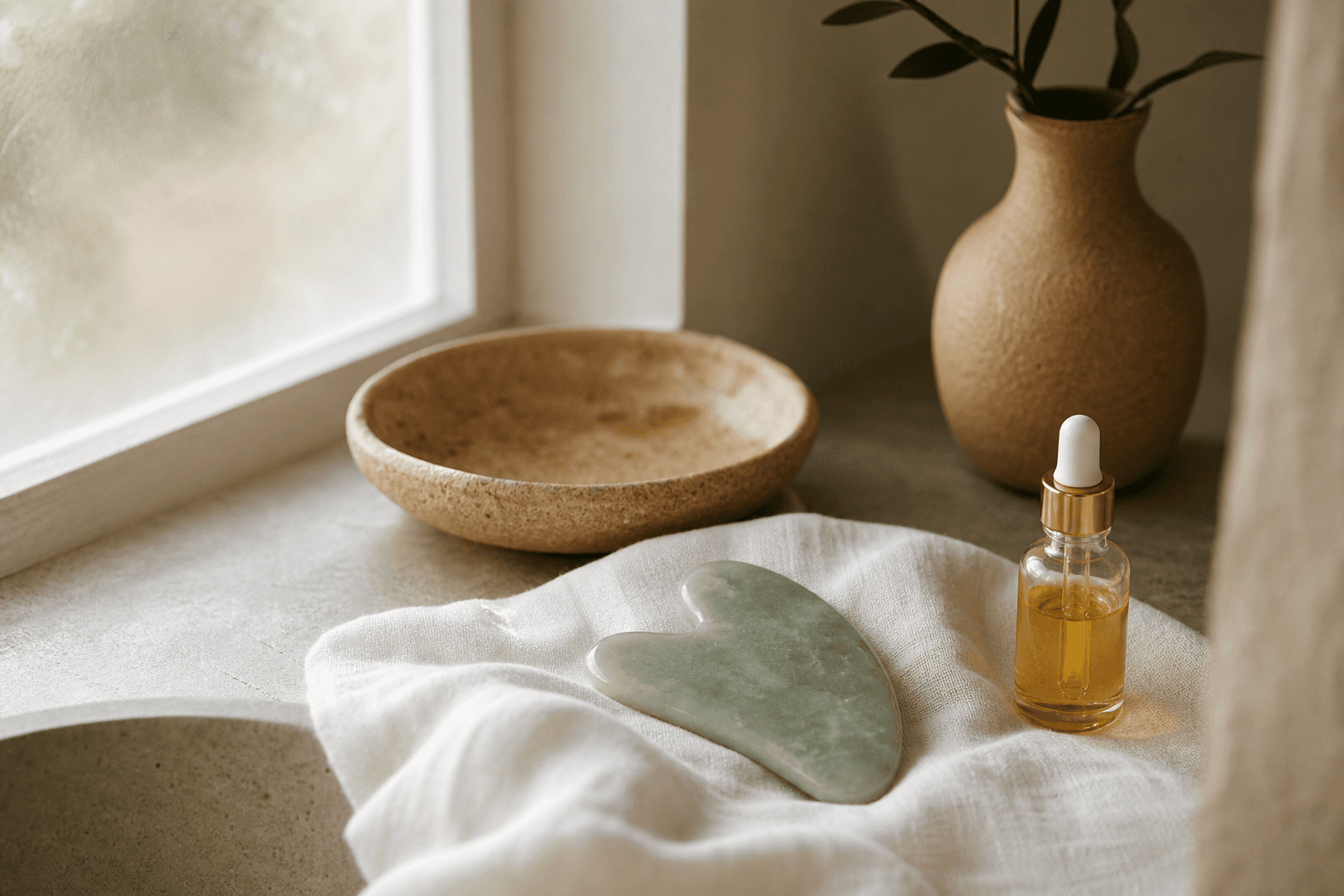
Short answer: One tool, two different practices. Body gua sha uses firm oiled strokes until petechiae appear, has real clinical support for neck and upper-back pain, and the marks fade in three to seven days. Facial gua sha is a light lymphatic-style massage: temporary de-puffing is plausible, sculpting bone or lifting sagging skin is not.
Gua sha went from a little-known traditional Chinese medicine technique to a beauty-counter staple in the span of about three years. The two versions, a firm, therapeutic body scraping and a gentle facial massage, share the same tool and name, but they’re doing quite different things. Understanding which is which saves you from either expecting too little or too much.
What it is
Gua sha (pronounced “gwah-shah”) is a traditional East Asian healing practice that involves pressing a smooth-edged tool firmly against oiled skin and scraping it in repeated strokes. The word translates roughly to “scrape sand”, referring to the reddish or purple petechiae (tiny burst capillaries) that traditional body gua sha intentionally produces.
In Traditional Chinese Medicine, gua sha is used to move stagnant qi and blood, reduce inflammation, and treat musculoskeletal pain. The modern physiological explanation is more straightforward: the mechanical pressure and friction increase local blood flow, temporarily stimulate the immune response in the tissue, and may break up fascial adhesions.
A notable mechanism, studied at Harvard Medical School in 2011, is that gua sha upregulates heme oxygenase-1 (HO-1), an enzyme with anti-inflammatory and cytoprotective effects.
Body gua sha uses firm, deliberate strokes on the back, neck, and limbs, enough pressure to create petechiae (sha). Facial gua sha is a much lighter, lymphatic-style massage using the same tools but without the pressure to mark the skin. They share an aesthetic but are functionally quite distinct.
What a session is like
Body gua sha: You’ll typically lie face-down. The practitioner applies oil to your skin and uses a smooth tool, traditionally made of buffalo horn or jade, now often stainless steel or rose quartz, to make long, firm strokes following the muscle lines of your back, neck, or shoulders. The strokes repeat in the same direction until redness or petechiae (the sha) appear. This signals increased microcirculation to the surface. It’s not painful for most people, but it is intense, expect a sensation similar to a deep-tissue scraping. Sessions run 20, 45 minutes.
The sha fades in 3, 7 days. Some people feel immediate relief; others feel fatigued or tender for a day. Traditional practitioners consider a pronounced sha a positive sign, though there’s no clinical evidence linking mark intensity to clinical outcome.
Facial gua sha: Much lighter. You’ll apply a facial oil and use the tool to make slow, gentle strokes outward and upward across the jaw, cheekbones, and neck. No marks, no petechiae, the goal is lymphatic drainage and gentle circulation. It takes 5, 15 minutes and is often a self-care practice done at home with a purchased tool.
What the evidence says
- Reasonable evidence for: Body gua sha shows genuine promise for neck and upper back pain, a 2011 randomized controlled trial found it outperformed thermal heating pads for chronic neck pain. The HO-1 anti-inflammatory mechanism is documented in tissue studies. Practitioners also use it for myofascial pain and tension headaches, with moderate supporting case evidence.
- Debated or mixed: Whether gua sha is meaningfully superior to other manual therapies (massage, cupping, acupuncture) for the same conditions, or whether the benefits come from the mechanical stimulation generally rather than gua sha specifically. Evidence base is still relatively small.
- Not established / overstated: The facial gua sha industry claims ranging from “sculpting” facial bone structure to permanently “lifting” sagging skin. These are not physiologically supported, bone doesn’t reshape from a daily jade roller, and no lymphatic drainage technique reverses collagen loss. Temporary depuffing (especially morning puffiness) is plausible; permanent structural change is not. Claims that body gua sha “detoxes” organs are also unsupported.
Benefits people report
- Significant relief from chronic neck stiffness and upper-back tension
- Reduced muscle soreness after intense training
- Improved neck range of motion, sometimes immediately after a session
- With facial gua sha: a temporary reduction in facial puffiness and a sense of relaxation
- General feeling of warmth and circulation in treated areas
Who it’s for, and who should skip it
Body gua sha is worth trying if you have chronic muscular tension, particularly in the neck and shoulders, and have found massage provides only temporary relief. It’s also used in TCM for early-stage illness, some practitioners use it at the onset of a cold, though evidence here is anecdotal.
Skip body gua sha or get clearance first if you:
- Take blood thinners or have a bleeding disorder
- Have active skin conditions, varicose veins, or broken skin in the treatment area
- Are pregnant
- Have a history of blood clots or cardiovascular conditions
Facial gua sha is generally very low-risk, the pressure is light enough that most people can self-administer. If you have rosacea or broken capillaries in the face, use extra caution and avoid inflamed areas.
Talk to your doctor if you bruise easily or have a clotting condition before booking a body gua sha session.
What it costs
Body gua sha:
- As an add-on to acupuncture or massage: $15, $35 extra
- Standalone TCM session including gua sha: $60, $120
Facial gua sha:
- As part of a facial or spa treatment: $60, $120 for a full session
- DIY tools (jade, rose quartz, stainless steel): $10, $60 one-time purchase; many people do it at home
Traditional Chinese medicine clinics are typically more affordable than upscale urban spas. The facial gua sha tool industry ranges from pharmacy-shelf rose quartz to $80 “sculpting” sets, the material matters less than technique.
How to choose a good provider
For body gua sha, look for a licensed acupuncturist (L.Ac.) or TCM practitioner, they’ll have the most formal training in the technique, appropriate pressure, and contraindications. Some licensed massage therapists also offer it.
For facial gua sha, the landscape is looser. Look for an esthetician who can explain what they’re actually doing (lymphatic drainage, circulation, not “bone sculpting”). Be skeptical of providers selling you a $200 tool alongside dramatic anti-aging promises.
Both modalities pair naturally with acupuncture and Thai massage and bodywork in integrative wellness settings.
FAQ: gua sha
Does gua sha hurt? Body gua sha can be intense, the firm pressure and deliberate scraping is not gentle. Most people describe it as uncomfortable but manageable, especially once they know what the redness is. Facial gua sha should feel like a firm but soothing face massage with no discomfort.
Is the jade roller the same as gua sha? No. A jade roller is a smooth rolling tool used for gentle massage. Gua sha tools are flat with a curved edge designed for scraping strokes. They’re used differently and produce different effects, though both are sold in the facial wellness space.
How long do the marks last? Body gua sha marks (petechiae) typically fade in 3, 7 days. Facial gua sha leaves no marks. If body marks take longer than 10 days to fade, mention it to your practitioner.
Can I do body gua sha on myself? It’s possible but awkward, reaching your own upper back with the right pressure and stroke angle is difficult. Facial gua sha is very easy to self-administer and is commonly done at home. For body work, a trained practitioner is genuinely more effective.
The honest summary
Body gua sha has a legitimate, if modest, evidence base for musculoskeletal pain, particularly chronic neck tension, and a plausible physiological mechanism. It’s an intense but low-risk form of manual therapy that complements acupuncture and massage well.
Facial gua sha is a pleasant, low-risk self-care practice with real but temporary circulatory benefits; the “sculpting” and anti-aging claims are marketing, not medicine. Both are worth exploring with calibrated expectations.