Deep tissue and sports massage: what they are, how they differ, and what the evidence shows
Two of the most requested massage styles for pain and recovery, one built for chronic tension, one for athletic performance. Here is how they actually work.
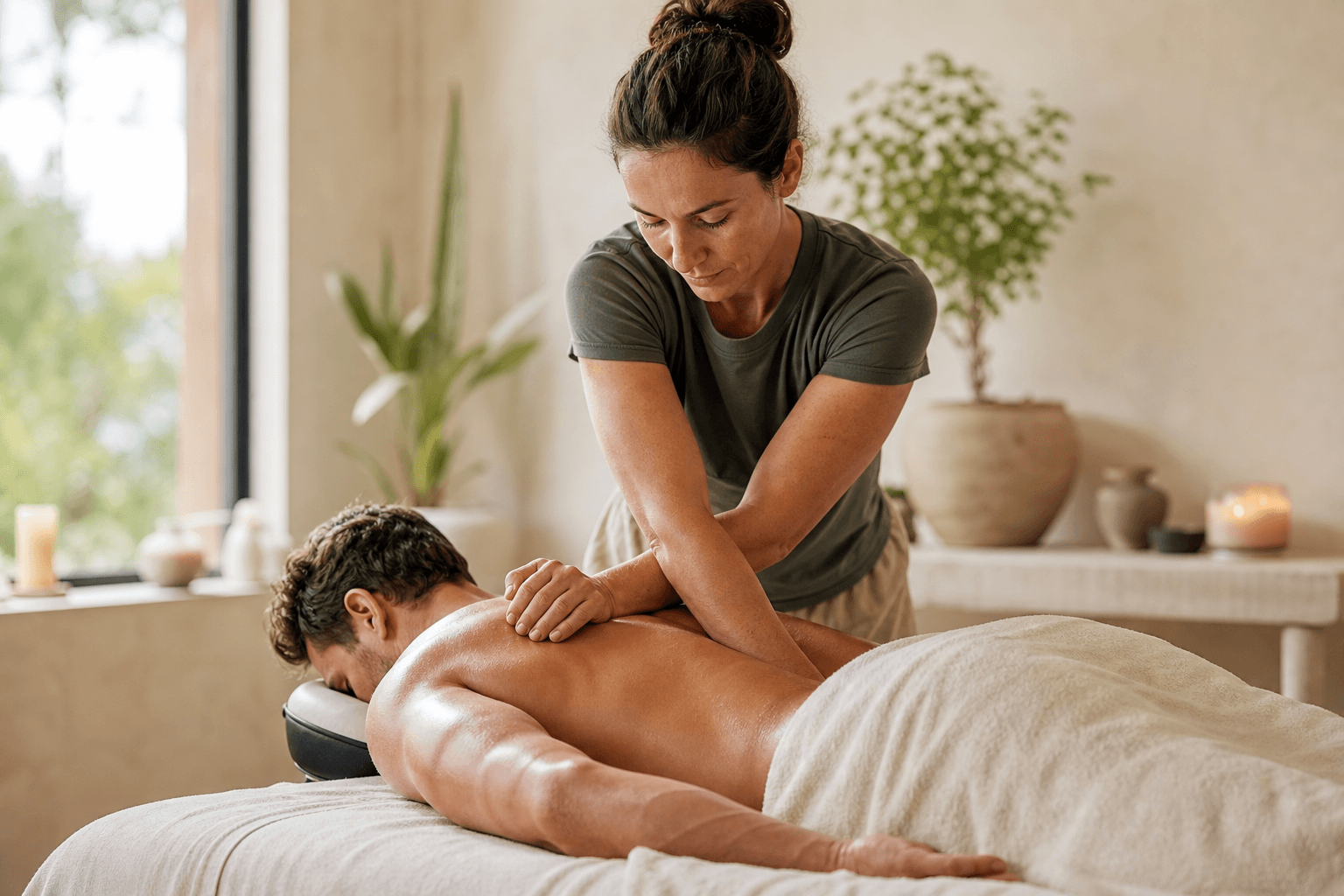
Short answer: Deep tissue targets chronic tension in deep muscle and fascia with slow, sustained pressure; sports massage organizes similar techniques around training, and changes with timing, brisk before an event, flushing after. Evidence is reasonable for chronic low-back pain and post-exercise soreness, weak for performance gains, and absent for releasing toxins.
Deep tissue massage and sports massage are often used interchangeably, which causes real confusion when people are trying to decide what to book. They share DNA, both involve more pressure than a Swedish relaxation massage, both aim at specific muscular problems, but they have different emphases, different contexts, and different evidence behind them. This guide covers both honestly.
What they are
Deep tissue massage is a technique that targets the deeper layers of muscle and the connective tissue (fascia) surrounding them. It uses slow strokes and firm, sustained pressure, often with fingers, knuckles, forearms, or elbows, applied along or across muscle fibers to release chronic tension patterns, adhesions (sometimes called “knots”), and areas of restricted fascia.
It evolved from Swedish massage but deliberately moves beyond the superficial relaxation layer. The goal is structural: to change the resting tension in specific muscles and the mobility of the tissue surrounding them.
Sports massage is a broader category that draws from Swedish, deep tissue, and sometimes trigger point techniques, but organizes them around the demands of athletic training and competition. It can mean very different things depending on timing:
- Pre-event sports massage: lighter, faster, stimulating, intended to warm tissue and increase alertness, not to work deeply
- Post-event sports massage: slower, flushing strokes to reduce soreness and promote recovery
- Maintenance sports massage: the most similar to deep tissue, therapeutic work on chronically overloaded areas, done during regular training
Both modalities are practiced widely and have legitimate therapeutic applications. Both are also sometimes oversold.
What a deep tissue session is like
For deep tissue, you’ll complete an intake covering pain areas, injuries, and pressure preferences. The therapist will typically begin with broader Swedish strokes to warm the tissue, then transition to targeted deep work. Pressure will build gradually, a good therapist checks in frequently and adjusts.
The sensation is distinct from a relaxation massage: you’ll feel pressure that borders on discomfort in areas of tension, often described as a “good hurt”, the sense that something is releasing. Some people experience what therapists call “referred sensation,” where pressure in one spot creates feeling elsewhere, indicating trigger point activity.
Sessions run 60 to 90 minutes; a skilled therapist will not try to address the whole body deeply in one session, but focus on the areas that need it.
For sports massage, the texture depends heavily on when you’re receiving it. Pre-event work is brisk and invigorating, faster strokes, no sustained deep pressure, done 15, 45 minutes before activity. Post-event work is slower and gentler, focused on flushing metabolic waste from fatigued muscle.
Maintenance sports massage, the most common in a retreat or spa setting, is functionally similar to deep tissue with attention paid to sport-specific overuse patterns: a runner’s IT band and calves, a swimmer’s rotator cuff, a cyclist’s hip flexors.
You may experience mild soreness 24, 48 hours after a deep tissue or maintenance sports massage session. This is normal and typically resolves into improved mobility and reduced baseline tension.
What the evidence says about deep tissue
- Reasonable evidence for: Reduction in chronic low-back pain, one of the most studied applications for deep tissue massage, with multiple randomized controlled trials showing meaningful short-term benefit. Reduced delayed-onset muscle soreness (DOMS) after exercise, several meta-analyses support massage as a genuine DOMS intervention. Reduction in muscle tension and improved range of motion in targeted areas. Reduction in perceived pain and anxiety in chronic musculoskeletal conditions.
- Debated or mixed: The specific claim that deep tissue massage “breaks up” adhesions or scar tissue is mechanistically plausible but not well established, it is difficult to image adhesions before and after in ways that would confirm this. Whether sports massage improves performance (vs. just recovery) is mixed; evidence for performance enhancement is weak, while evidence for recovery support is somewhat better. The specific superiority of sports massage over other massage types for athletes has limited evidence, most studies show massage helps generally, not that sports-specific protocols outperform.
- Not established / overstated: Massage “releasing toxins” into the bloodstream, the persistent myth that you need to drink water afterward to “flush out toxins” is not supported. Staying hydrated is always sensible, but massage does not release lactic acid or other waste into the blood in a way that requires extra flushing. Claims that a single session will resolve chronic structural conditions are overstated; multiple sessions combined with movement practice produce better outcomes.
Benefits people report from sports massage
People who receive deep tissue or sports massage consistently report:
- Meaningful reduction in chronic muscular pain, particularly in the neck, shoulders, and lower back
- Improved range of motion in targeted joints and muscle groups
- Faster perceived recovery from intense training sessions
- Reduced muscle fatigue and heaviness following athletic activity
- Better body awareness, a clearer sense of where they hold tension
For athletes, a regular maintenance sports massage schedule often shows up in training logs as fewer training-limiting pain episodes and a subjective sense of being more “ready” for sessions.
Who these massages are for, and who should skip them
Deep tissue massage suits people with chronic muscular tension, postural pain patterns, or specific areas of long-standing tightness. Sports massage suits people in active training who want to manage recovery and prevent overuse injuries.
Skip it or get clearance first if you have:
- Osteoporosis or bone density concerns, deep pressure on fragile bones carries fracture risk (our osteoporosis guide covers what to tell a therapist)
- Blood clot history or active deep vein thrombosis, firm pressure on affected areas can be dangerous
- Blood thinners (anticoagulants), bruising risk is significantly higher; check with your prescribing physician
- Active inflammation, infection, or fever
- Recent surgery or acute injury in the treatment area, generally wait until your clinician clears you for massage
- Skin conditions such as eczema, psoriasis, or rashes in the treatment area
Talk to your doctor if you have a cardiovascular condition, are pregnant, or take blood thinners before booking deep tissue or sports massage.
If you want something similarly active but less pressure-intensive, Thai massage and bodywork uses assisted stretching and rhythmic compression rather than sustained deep pressure and may suit people who want therapeutic benefit without intensity.
What deep tissue and sports massage cost
Deep tissue and sports massage are generally priced similarly to standard therapeutic massage:
- 60-minute deep tissue session: $80, $150 in most US markets
- 90-minute session: $110, $200
- Sports massage at a dedicated sports performance clinic: $100, $180 per session, sometimes more in major metro areas
- Retreat add-on: typically $100, $170 for 60 minutes
Some sports medicine facilities and physical therapy practices offer massage therapy covered by insurance when prescribed as part of a treatment plan, worth checking if you have a documented musculoskeletal condition.
How to choose a good massage therapist
All licensed massage therapists in the US must complete state-mandated training, but deep tissue and sports massage require additional skill developed through practice and specific coursework. Look for:
- A therapist who asks specific intake questions about your pain history, injuries, and goals, not just “how much pressure do you like”
- Documented continuing education in deep tissue technique, myofascial release, or sports massage specifically
- For sports massage: experience working with athletes in your sport or activity type, which shapes which overuse patterns they’ll prioritize
- For deep tissue: a therapist who builds pressure gradually and checks in, never one who simply applies maximum force from the start
Red flags: a therapist who tells you soreness is always a sign it’s “working” (deep work should be productive, not simply painful), one who dismisses your description of symptoms without intake questions, or one claiming that massage will fix a structural issue that warrants a physician’s evaluation.
For more on evidence-based bodywork, the guides on acupuncture and somatic experiencing and TRE cover adjacent approaches to chronic pain and tension from different angles.
FAQ: deep tissue and sports massage
How is deep tissue different from Swedish massage? Swedish massage uses lighter, flowing strokes designed for full-body relaxation. Deep tissue uses slower, firmer pressure targeting specific muscles and layers of fascia. A Swedish session leaves you relaxed; a deep tissue session may leave you slightly sore but more structurally “open” in the targeted areas. Many therapists combine techniques within a single session.
Will deep tissue massage hurt? You should feel significant pressure, the kind that says “there’s something happening here”, but not sharp, stabbing, or burning pain. If you wince or hold your breath, the pressure is too much; good therapists read these signals and adjust. “No pain no gain” is bad massage advice. Productive discomfort and damaging pressure are different things.
How often should I get deep tissue massage? For chronic pain or tension management, every 2, 4 weeks is a common rhythm. For acute flare-ups, some therapists recommend 2, 3 sessions in close succession followed by a maintenance schedule. For athletic recovery, weekly or bi-weekly during heavy training blocks is reasonable. Your therapist should help you calibrate based on your goals.
Is sports massage only for professional athletes? No. Sports massage is appropriate for anyone who exercises regularly, including recreational runners, gym-goers, cyclists, and weekend athletes. You don’t need to compete professionally to benefit from massage that’s calibrated to athletic recovery and overuse patterns.
The honest summary on therapeutic massage
Deep tissue and sports massage are among the better-evidenced massage modalities, particularly for chronic low-back pain, muscle tension, and post-exercise recovery. The evidence is stronger for pain reduction and recovery support than for the more mechanistic claims (“breaking up adhesions,” “releasing toxins”).
Both modalities work best as part of a broader approach that includes movement, adequate sleep, and addressing the root causes of tension, not as a stand-alone fix for structural issues.
Find a skilled, intake-focused therapist and treat it as a regular maintenance tool rather than an emergency intervention, and the results tend to be genuinely meaningful.
For the shoulder specifically, our guide to rotator cuff and shoulder pain separates the common sources before you book anything.