Hot stone massage: what it is, what a session is like, and what the evidence shows
One of the most requested spa treatments, genuinely relaxing, more honest than most spa marketing suggests.
Short answer: Hot stone massage is Swedish massage plus smooth basalt stones heated to 110°F to 130°F, placed along the spine and used to glide over muscle. Sessions run 60 to 90 minutes and cost $100 to $175 for the hour. It reliably relaxes muscle and eases tension; detox, immune and chakra claims are unsupported.
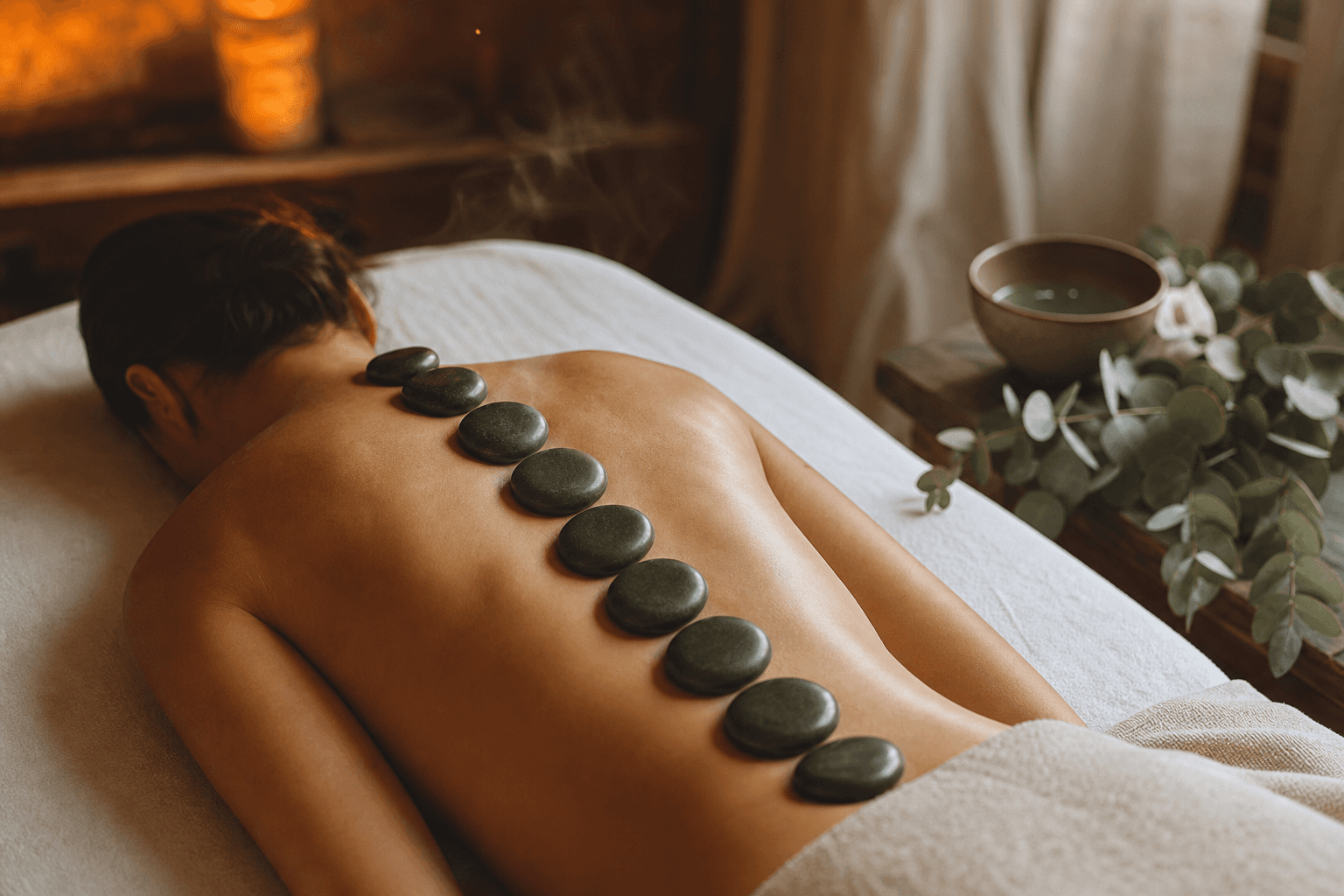
Hot stone massage is one of the most iconic images in the wellness spa world, smooth dark stones resting along a client’s spine, steam rising, ambient music in the background. It is also one of the most misrepresented, somewhere between a genuinely effective relaxation tool and a photogenic add-on whose benefits are sometimes oversold.
Here is what actually happens and what it is actually good for.
What hot stone massage is
Hot stone massage combines the techniques of Swedish massage with the application of smooth, flat, heated stones, most often basalt, a volcanic rock that retains heat well, to specific areas of the body. The heat from the stones penetrates muscle tissue more quickly than hand pressure alone, allowing muscles to soften with less effort and potentially enabling deeper work with less discomfort.
The practice is sometimes marketed with references to ancient Native American or Hawaiian healing traditions, and while heated stones have been used therapeutically across many cultures for centuries, the specific spa treatment recognizable today was largely formalized in the 1990s by a massage therapist named Mary Nelson, who trademarked a protocol called LaStone Therapy. From there it spread rapidly through the spa industry and became one of the most widely offered modalities worldwide.
The proposed mechanism is straightforward: heat dilates blood vessels, increases local circulation, relaxes muscle fibers, and activates the parasympathetic nervous system, the “rest and digest” state. The stones serve as an extension of the therapist’s hands, transmitting sustained heat across broader areas.
What a hot stone session is like
You’ll undress to your comfort level and lie on a padded table. Before you enter the room, the therapist will have heated the stones in a professional stone heater, water-heated units that maintain a consistent temperature, typically between 110°F and 130°F. Reputable practitioners test stone temperature on their own forearm before placing them on a client.
The session usually opens with the therapist using cooler or room-temperature stones briefly, then transitioning to the heated stones. They’ll place stones at key points, along the spine, in the palms, between the toes, on the chest or abdomen, while simultaneously using other stones to massage the back, shoulders, legs, and arms in long, gliding strokes.
You’ll feel the warmth spreading through your muscles almost immediately. The sensation is distinct from a heating pad: the weight and smooth contact of the stone delivers the heat more evenly and with a satisfying physical presence. Most people find it deeply comforting.
Some therapists alternate hot stones with cool marble stones for contrast, similar in logic to what you’d read in the contrast therapy guide, though this is less standard outside dedicated spa settings.
A full hot stone session typically runs 60 to 90 minutes. For the last 15, 20 minutes, most therapists set the stones aside and work with their hands alone, giving you a sense of how relaxed your muscles have become.
What the evidence says about hot stones
- Reasonable evidence for: Reduction in muscle tension and perceived pain, consistent with heat therapy research more broadly. Hot stone massage appears to activate the parasympathetic nervous system reliably, heart rate and cortisol markers decrease in multiple small studies. There is reasonable support for its role in short-term relief of muscle stiffness and stress.
- Debated or mixed: Whether hot stone massage produces meaningfully different outcomes than Swedish massage alone is unclear, many studies comparing them find similar relaxation benefits, suggesting the stones add an experiential dimension more than a dramatically different physiological effect. Claims about “deep tissue” effects from the heat have limited support; stone heat loosens superficial muscles but does not penetrate to deep fascia the way sustained manual pressure does.
- Not established / overstated: Detoxification via “opening pores” is a persistent spa-marketing claim with no scientific basis. Stones resting on the body do not release toxins from cells. Claims about improving immune function, balancing chakras, or treating specific medical conditions are not supported by evidence.
Benefits people report from hot stone massage
People consistently describe hot stone massage as one of the most deeply relaxing treatments they’ve experienced. Beyond the relaxation response, commonly reported benefits include:
- Relief from chronic muscle tension, particularly in the shoulders, lower back, and legs
- Reduced physical awareness of pain during and immediately after the session
- Improved sleep the night of or following a session
- A sense of full-body warmth and heaviness that persists for several hours
- Mood lift and reduced anxiety, consistent with what we’d expect from any thorough parasympathetic activation
For people who find standard massage pressure too intense or who are sensitive to deep tissue work, the heat-assisted relaxation of hot stone massage can allow muscles to release with much lighter pressure, making it a good option for those who want therapeutic benefit without discomfort.
Who hot stones suit, and who should skip them
Hot stone massage is well-suited for people dealing with chronic muscle tension, stress, insomnia, or general fatigue who want one of the more immersive relaxation experiences available in a spa setting. It’s a particularly good choice for colder months or for people who simply love warmth.
Skip it or get medical clearance first if you have:
- Diabetes, peripheral neuropathy, or any condition that affects your ability to feel heat accurately, you may not be able to tell if a stone is dangerously hot
- Cardiovascular conditions, including high blood pressure or heart disease, heat increases vasodilation and can affect blood pressure
- Varicose veins, phlebitis, or blood clot history, heat and stones should not be applied over varicose veins
- Active skin conditions, sunburn, open wounds, or recent injury in the treatment area
- Pregnancy, particularly in the first trimester; prenatal-trained therapists can modify the treatment significantly, but confirm with your OB first
- Fever or active infection
Talk to your doctor if you have any circulatory or heart condition before booking heat-based treatments, including hot stone massage.
What hot stone massage costs
Hot stone massage is typically priced at a premium above a standard Swedish session. In most US spa settings:
- 60-minute session: $100, $175
- 90-minute session: $140, $230
- At a luxury resort or destination spa: $180, $300+ for 90 minutes
Many wellness retreats include hot stone massage as an available add-on, usually priced at $120, $200 depending on session length and location. The cost reflects both the additional setup time (heating equipment, stone preparation) and the premium positioning of the treatment.
Some franchised massage chains (Massage Envy, Hand & Stone) offer hot stone add-ons for standard table sessions at lower price points, $15, $30 added to a base rate, though these are abbreviated versions rather than full protocols.
How to choose a good hot stone therapist
Hot stone massage does not have a separate certification pathway in most US states, any licensed massage therapist can legally offer it. That means quality varies significantly. Look for:
- A therapist with specific hot stone training (many massage schools offer a dedicated module; ask directly)
- A spa that uses a professional stone heater, not a slow cooker or microwave, temperature control matters for safety
- A practitioner who tests stone temperature before placement and checks in with you throughout
- Clear intake questions about heat sensitivity, cardiovascular conditions, and skin issues, a therapist skipping intake is a red flag
Red flags: stones left in place for very long periods without checking in, no temperature testing, a therapist who dismisses contraindication questions, or a spa using stones that feel inconsistently hot from one to the next (sign of improvised heating).
If you enjoy heat-based wellness broadly, the therapeutic sauna guide and the hot springs and thermal soaking guide cover related practices worth comparing.
FAQ: hot stone massage
Is hot stone massage the same as deep tissue massage? No. Hot stone massage primarily targets the superficial muscle layer through heat-assisted relaxation. Deep tissue massage uses sustained manual pressure to reach deeper muscle layers and fascia. Some practitioners combine elements of both, but they are distinct techniques. If you have significant chronic pain or postural issues, deep tissue massage may be more appropriate.
Can the stones burn you? A trained therapist will test stone temperature carefully and keep stones moving to prevent prolonged contact in one spot. Burns from hot stone massage are rare but do occur when practitioners are undertrained or inattentive. Always speak up immediately if a stone feels too hot, you should never feel discomfort beyond pleasant warmth.
How often should I get hot stone massage? There is no clinical protocol for frequency in a wellness context. Most people find it a meaningful treat once a month or as part of a retreat. For muscle tension management, every 2, 4 weeks is a reasonable rhythm if your budget allows.
Is hot stone massage better than regular massage? “Better” depends on what you want. For relaxation and the experience of warmth, many people prefer it over Swedish massage. For targeted muscular work on specific problem areas, a skilled therapist working with hands alone may offer more precision. Hot stone massage excels as an immersive, full-body relaxation experience.
The honest summary on hot stone massage
Hot stone massage delivers on its core promise: it is one of the most genuinely relaxing treatments you can find in a spa setting, and the heat-assisted muscle relaxation is real. The evidence for broader medical benefits, detox, immune boost, chakra balancing, is not there.
What is there is a well-designed parasympathetic experience that can meaningfully reduce muscle tension and stress for several hours or days after the session. For the right person in the right setting, that is worth quite a lot.