Do standing desks actually work? The honest answer
The claim has two halves and only one of them holds up. Breaking up long sitting is well supported. Standing itself doing the work is not, and standing still all day has its own costs.
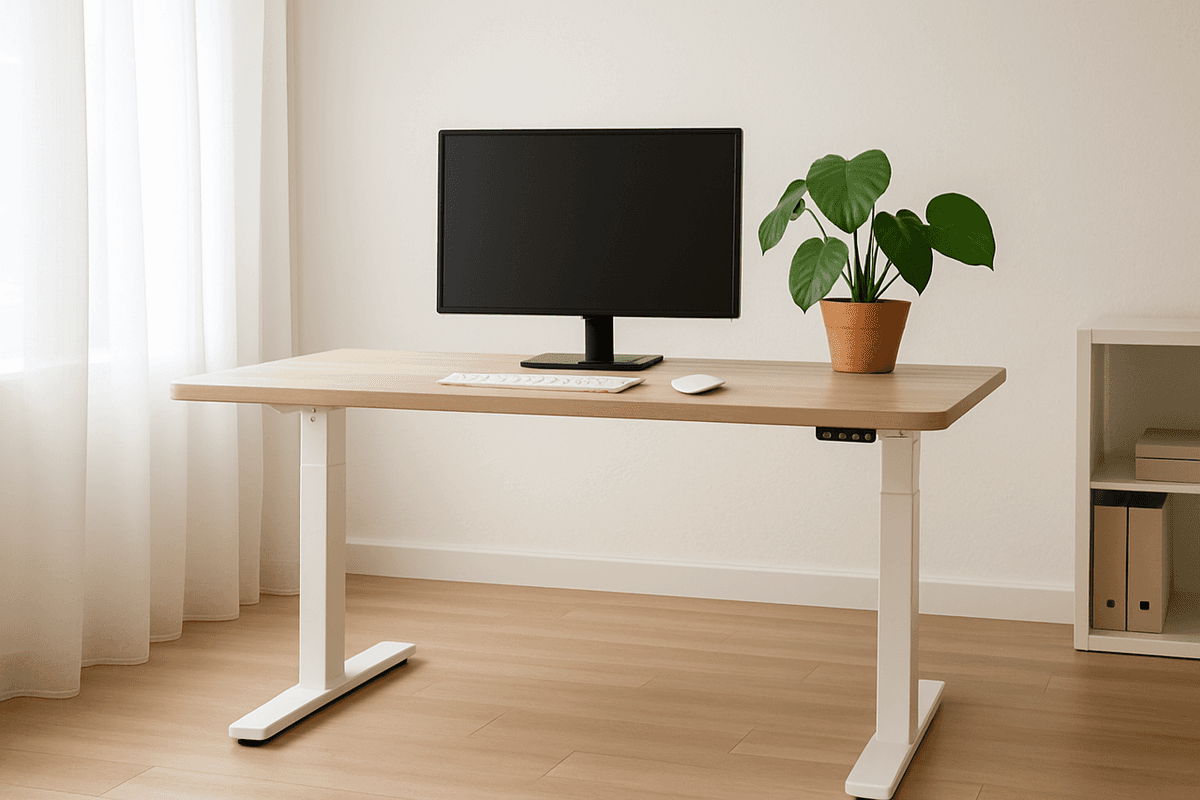
Partly, but not for the reason they are sold. The claim has two halves and only one holds up. Prolonged, uninterrupted sitting is genuinely associated with worse health outcomes, and breaking it up matters. That much is real.
The second half, that standing is therefore the fix, does not follow. Standing still for hours has costs of its own, and the evidence that a standing desk by itself improves health markers, weight, or productivity is thin. The trials that exist are small and short.
What the desk buys you is the ability to change position without thinking about it. That is a real benefit, and a smaller one than the box promises.
What the sitting research actually shows
The risk sits in duration and inactivity, not in chairs.
The consistent finding across large observational studies is that people who spend most of their waking hours sedentary have worse health outcomes, and that long uninterrupted stretches look worse than the same total sitting broken into pieces.
The qualifier is that most of this is observational, and daily physical activity appears to offset a great deal of it. Our desk worker guide covers the pooled analysis that put a number on that dose. The problem behaves like an activity deficit, not a furniture defect.
Which is the distinction the category skips. Sitting less is supported. Standing more is a separate claim.
Why standing is not the fix
Stillness is the load, and standing is also still.
If holding one shape for hours strains tissue, holding a standing shape for hours strains tissue too. It relocates the complaints. Static standing is associated with leg and foot discomfort, aching lower backs in some people, and, over years of occupational standing, varicose veins.
The health outcome claims are the weakest part. Studies of sit-stand desks generally find that people sit less, which is what you would expect from a desk that goes up. What they have not reliably shown is that the reduced sitting changes weight, blood markers, or cardiovascular risk. Most trials are small, short, and measure behavior rather than health.
Back pain deserves its own warning, because it is the most common reason people buy one. Evidence that standing desks relieve or prevent it is weak and mixed, so treat any promise of relief as unearned.
The calorie argument is technically true and practically trivial. Standing uses slightly more energy per hour than sitting, and across a day that difference disappears into normal variation in what you eat. Scaling it into a weight loss claim is the pattern our guide to spotting a nonsense wellness claim describes: a real mechanism stretched past what it can deliver.
Standing desk claims at a glance
| Claim | What the evidence supports | Verdict |
|---|---|---|
| Prolonged uninterrupted sitting is bad for you | Consistent in large observational studies | Well supported |
| Changing position frequently helps | The most defensible claim here | Best supported |
| Standing improves weight or metabolic markers | Small, short, inconsistent trials | Weak |
| Standing desks relieve or prevent back pain | Mixed findings, no reliable effect | Weak and mixed |
| Standing burns more calories than sitting | True per hour, negligible per day | True, not meaningful |
| Standing desks improve focus or productivity | Small, largely self-reported studies | Weak |
| Static standing has its own costs | Leg and foot discomfort, varicose veins | Supported |
What a sit-stand desk is actually for
The benefit is in switching, not in standing.
A sit-stand desk is useful because it drops the cost of changing position to a button press. Buy one and stand rigidly for eight hours and you have swapped one static posture for another.
This is the same argument our desk worker guide makes about neck and shoulder tension, and the one our read on whether posture correctors work makes about alignment: variation beats correctness. No position held for four hours feels good, including the one you have been told is correct.
So alternate rather than commit. The desk is the enabler. The switching is the intervention.
Where ergonomic chairs fit
Fit and adjustability matter. Price is a poor proxy for either.
A chair that supports your forearms, lets your feet rest flat, and adjusts to your dimensions reduces the load you carry across a day. That is worth real money, and for most people the chair is the better first purchase.
It is not a cure. An expensive chair is not automatically better than a cheaper one that fits you, sitting well for eight hours is still sitting, and a comfortable chair rewards you for staying in it.
What actually helps
Unglamorous, cheap, and better supported than anything you can buy.
Change position frequently. Get up regularly and take short movement breaks through the day rather than one long one at lunch. This is the best supported intervention here, and it costs nothing, the theme of our wellness that costs nothing guide.
Fix the geometry once. Screen at roughly eye level, keyboard and mouse close enough that your shoulders are not reaching forward, forearms supported. Hand and wrist symptoms respond more to setup and workload than to gadgets, which our guide to carpal tunnel covers.
Get a real activity dose outside work. No desk substitutes for it, and building it into a repeatable week beats intending to find time, which our weekly recovery routine guide walks through.
Treat symptoms as symptoms. Massage has decent short-term evidence for tension, but will not out-treat nine hours of stillness. If you work nights or rotating hours, our shift worker guide covers the version where the schedule is the load.
How to buy one sensibly
Three things people get wrong.
A converter on your existing desk is often enough. These lift the screen and keyboard for a fraction of a powered frame’s price, and if you are unsure you will use the standing mode, it is the honest way to find out.
The anti-fatigue mat matters more than people expect. The surface under your feet is most of the difference between comfortable and quietly giving up in week two, and it is most often skipped.
Going from zero to all-day standing is the classic mistake, and it is how a desk ends up parked permanently in the down position. Start with short blocks.
We have not tested any of these desks, and we only recommend what we would send a friend to, so there are no product picks here. If pain is already in the picture, an assessment beats a purchase, and our guide to checking a practitioner’s credentials covers where to start.
FAQ
Is standing all day better than sitting all day? No. It trades one set of complaints for another, and static standing brings leg and foot discomfort, plus varicose veins over years of occupational standing.
Will a standing desk help me lose weight? Realistically no. Standing uses slightly more energy per hour, but the daily difference vanishes into normal variation in eating, and trials have not shown meaningful weight change.
Will it fix my back pain? There is no reliable basis for promising that. The evidence is mixed, and pain that is already there is worth having assessed by a clinician rather than treated with furniture.
How long should I stand for? There is no established number. Short blocks, changed before you get uncomfortable, fit the evidence better than any target duration.
The bottom line on standing desks
The sitting half is real: long uninterrupted sedentary stretches are associated with worse outcomes, and breaking them up is worth doing. The standing half is oversold. A standing desk on its own has weak support for weight, metabolic health, back pain, or productivity, and hours of static standing bring their own problems.
Buy one for what it does, which is make changing position easy. Used that way it is a reasonable purchase. Bought to stand rigidly for eight hours, it is a more expensive way to hold still.