Hot tub temperature: the 104°F limit, and what is safe for kids, pregnancy and summer
The CDC and the Consumer Product Safety Commission both cap hot tub water at 104°F (40°C). The CPSC calls 100°F safe for a healthy adult and the maximum in pregnancy, and says the thermostat can be off by four degrees. Here are the numbers and where they come from.
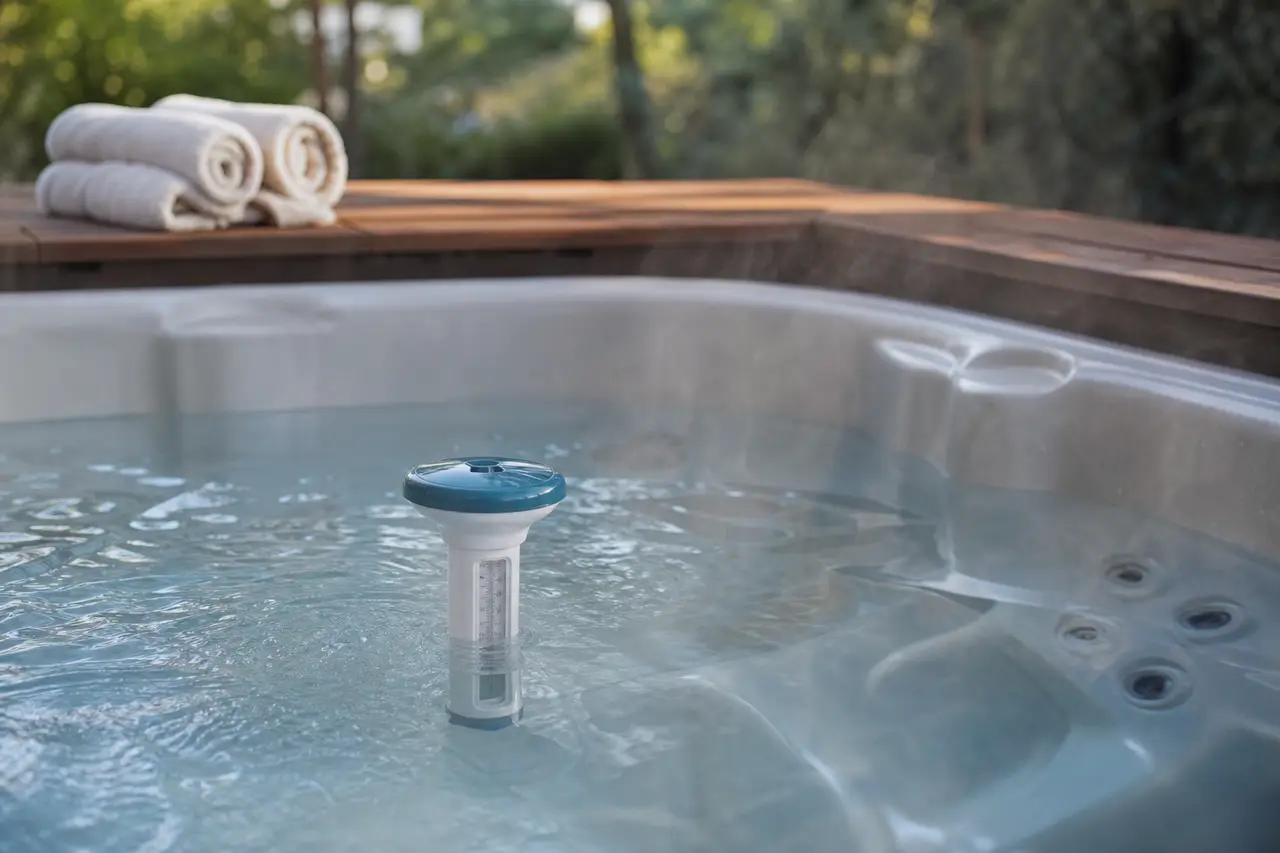
Short answer: Keep hot tub water at 104°F (40°C) or below, the limit both the CDC and the Consumer Product Safety Commission give. The CPSC calls 100°F safe for a healthy adult and sets 100°F as the maximum in pregnancy, and it warns that thermostats can be off by as much as four degrees, so check the water with a thermometer. The CDC says children under 5 should not use hot tubs at all.
Most hot tub questions come down to two numbers: how hot the water is and how long you stay in it. Both decide how far your core temperature climbs, and unlike a sauna, a hot tub gives you no way to cool off by sweating while you are in the water.
This guide sets out the official limits from the CDC and the Consumer Product Safety Commission (CPSC), what studies measured at those temperatures, and what changes for children, pregnancy, high blood pressure and hot weather.
The 104°F limit and where it comes from
The CDC’s hot tub guidance says: “Water temperature should not be higher than 104°F (40°C).” The CPSC said the same in its 1996 safety warning: keep the water “at 104 degrees Fahrenheit or below.”
The limit goes back to the CPSC’s original hot tub warning, released at the end of 1979. Its rules start with these:
- “Hot tub water temperatures should never exceed 104 degrees Fahrenheit.”
- “A temperature of 100 degrees is considered safe for a healthy adult.”
- “Special caution is suggested for young children.”
The same warning explains what goes wrong above that. Water above normal body temperature can cause drowsiness, which may lead to unconsciousness and drowning. Water at 106°F can raise body temperature to the point of heat stroke, which the CPSC said can be fatal even to fully healthy adults. Of the 10 hot tub deaths it knew of that year, three were alcohol-related drownings in tubs heated to about 110°F.
Check the water with a thermometer, not the dial
The CPSC told hot tub users to check the water temperature with an accurate thermometer before getting in, because hot tub thermostats can be off by as much as four degrees. On a tub set to 104°F, that is the difference between the limit and 108°F.
While you are checking, the CDC lists the other numbers a public or home hot tub should meet: chlorine at least 3 parts per million, or bromine at 4 to 8 ppm, and a pH of 7.0 to 7.8, all of which you can check with test strips. It adds that a properly chlorinated hot tub has little odor, and a strong chemical smell indicates a problem.
How fast a hot tub heats you
Temperature and time work together, and two studies measured the climb.
A 1981 study in the Canadian Medical Association Journal put 20 women in hot tubs at two temperatures and timed how long it took their core temperature to reach 38.9°C (102°F):
- At 39.0°C (102.2°F), no one got there before 15 minutes.
- At 41.1°C (106°F), no one got there before 10 minutes.
- Most of the women got out because they felt uncomfortable before their temperature got that high.
A 1993 Mayo Clinic study put 15 men with stable heart disease in a 40°C (104°F) tub for 15 minutes. Temperature measured in the ear rose by about 0.6°C on average, and there were no complications.
So a few degrees make a real difference. A hotter tub gets you to the same body temperature in less time, and a cooler one buys minutes.
How long to stay in
No official body gives a time limit. The studies that measured what a soak does used 10 to 15 minutes at 102 to 104°F: the Mayo Clinic study above, a 2003 study of people with treated hypertension that found 10 minutes at 104°F safe for most of them, and a 1999 study of 15 minutes at 102°F in young adults. In the 1981 timing study, 102°F water took at least 15 minutes to raise core temperature to 102°F.
Your own signals matter too. Get out if you feel drowsy, dizzy, lightheaded or simply too hot; the CPSC names drowsiness as the first step toward drowning, and in the timing study discomfort came before the worrying temperatures. If you feel faint, our guide to what to do if you feel faint in a sauna covers the same moment.
Hot tub temperature for kids
The firmest rule is about age, not temperature. The CDC says: “Don’t let children less than 5 years old use hot tubs.” The CPSC’s 1996 warning explains part of the reason: of the more than 700 deaths in spas and hot tubs it knew of since 1980, about one-third were drownings of children under 5.
For children old enough to get in, the CPSC’s advice is supervision: keep young children away from spas or hot tubs unless there is constant adult supervision, it says, and its 1979 warning suggested special caution for young children. No health body we found sets a separate temperature for children; cooler water and shorter soaks are the cautious reading.
The same 1996 warning lists hair entanglement and drain entrapment among the hazards, which is another reason to tie up long hair, keep children away from the drain and use a locked cover when the tub is not in use. Our guide to saunas, hot tubs and cold plunges with kids covers age limits in more detail.
Hot tub temperature in pregnancy
The CPSC’s rule is “Pregnant women should stick to the 100-degree maximum rule,” and it warned that water above 102°F in the first three months could harm the baby. The CDC says to talk to a healthcare provider before using a hot tub, and ACOG’s advice for early pregnancy is that it’s best not to. Our guide to hot tubs while pregnant covers the studies.
Hot tub temperature with high blood pressure or heart disease
The studies that tested these groups used water at 104°F for 10 to 15 minutes. The CPSC advises anyone with heart disease, circulatory problems, diabetes or blood pressure problems to get their physician’s advice before using a hot tub. Our guide to hot tubs with high blood pressure covers what a soak does to blood pressure and why standing up is the moment to watch.
Hot tub temperature in summer
No health body publishes a summer setting. Nothing in the guidance says a hot tub has to be hot, though: the CPSC’s warning about drowsiness is about water above normal body temperature, and water below it does not add heat.
On a hot day, turning the tub down is the cautious choice, and the other rules still hold: water at 104°F or below, no alcohol before or during, as the CDC says, and out at the first sign of feeling unwell.
Hot tub temperatures at a glance
| Water temperature | What the sources say |
|---|---|
| About 110°F | Three alcohol-related drownings in tubs this hot in the CPSC’s 1979 count |
| 106°F | Can raise body temperature to heat stroke, fatal even in healthy adults (CPSC) |
| 104°F (40°C) | The maximum for anyone (CDC, CPSC) |
| 102°F | Above this in the first three months of pregnancy, the CPSC warned of harm to the baby |
| 100°F | ”Considered safe for a healthy adult,” and the maximum in pregnancy (CPSC) |
| Below body temperature | Does not add heat; the CPSC’s drowsiness warning is about water above it |
| Any temperature, under age 5 | Children under 5 should not use hot tubs (CDC) |
FAQ: hot tub temperature
What temperature should a hot tub be? At or below 104°F (40°C), the limit the CDC and the CPSC give. The CPSC calls 100°F safe for a healthy adult. Check the water with a thermometer, because the CPSC warns thermostats can be off by as much as four degrees.
Is 104°F too hot for a hot tub? It is the maximum, not a target. Studies at 104°F found 10 to 15 minute soaks safe in people with treated hypertension and in men with stable heart disease, but the CPSC warns that 106°F can raise body temperature to the point of heat stroke, so a thermostat that reads high matters.
What temperature is safe for kids in a hot tub? Children under 5 should not use hot tubs at all, according to the CDC. For older children, no health body sets a separate temperature; the CPSC suggests special caution and constant adult supervision, so cooler water and shorter soaks are the cautious choice.
What temperature should a hot tub be in summer? No health body gives a summer setting. The 104°F limit still applies, and since the CPSC’s drowsiness warning is about water above body temperature, turning the tub down on a hot day is the cautious choice.
How long can you stay in a 104°F hot tub? No official body sets a time. The studies at that temperature used soaks of 10 to 15 minutes; get out sooner if you feel drowsy, dizzy or too hot.
What temperature should a hot tub be when pregnant? The CPSC’s rule is 100°F at most, and the CDC says to talk to a healthcare provider before using a hot tub while pregnant. ACOG advises against hot tubs early in pregnancy.
The bottom line on hot tub temperature
The numbers are settled and old: 104°F (40°C) is the ceiling for anyone, 100°F is what the CPSC calls safe for a healthy adult and the maximum in pregnancy, and children under 5 stay out. The dial can be four degrees off, so trust a thermometer.
Time is the other half. Studies at 102 to 104°F used 10 to 15 minute soaks, and the body’s own signals, discomfort and drowsiness, are the reason to get out before the clock says so. Our sauna vs hot tub comparison and our printable sauna and hot tub safety signs put the same rules in one place.