Sauna vs hot tub: which is better for recovery and relaxation?
Both are hot, both feel great, and they do surprisingly different things to your body. Here's the honest comparison for recovery, relaxation, and which one to actually build or book.
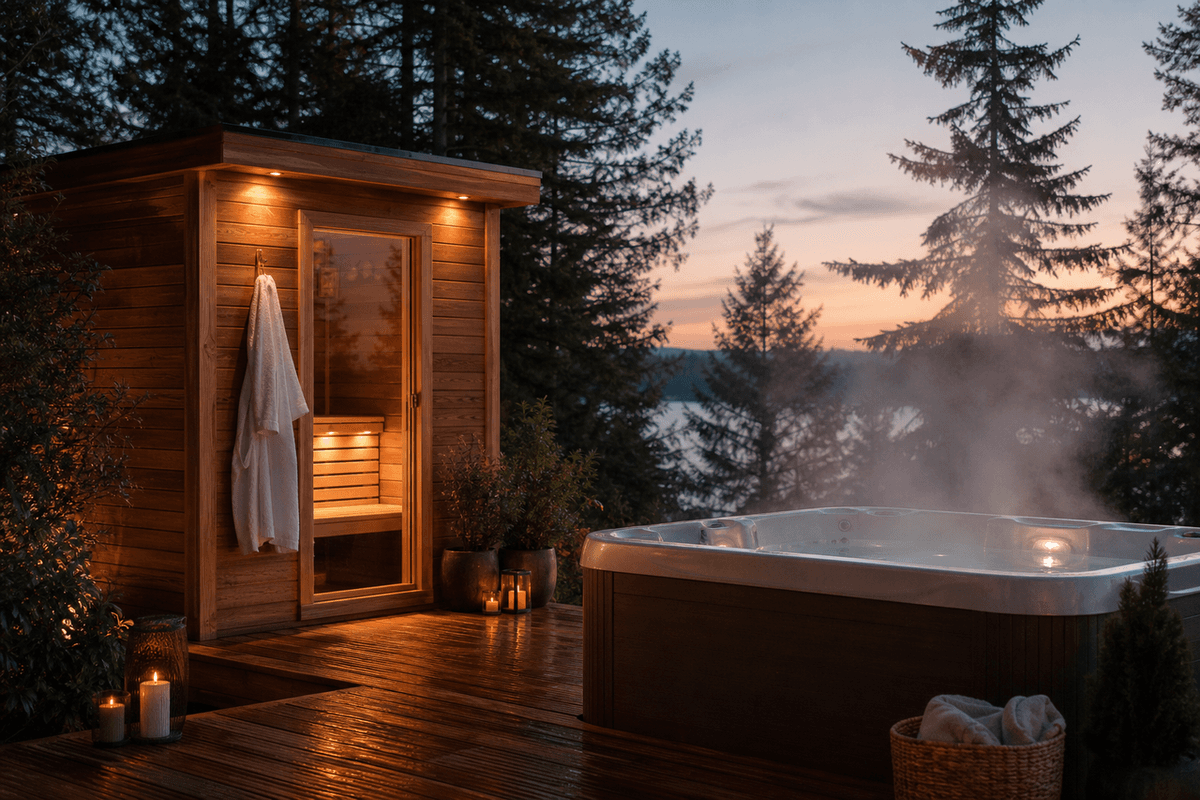
For dry heat, cardiovascular benefit, and a deep sweat, choose a sauna; for gentle muscle relaxation, buoyancy that eases joints, and easy socializing, choose a hot tub. Neither is simply better, they do different jobs.
A sauna heats you with hot dry air to 180°F or more and produces the sweating and cardiovascular load that most of the “heat is good for you” research is built on.
A hot tub surrounds you with warm water around 100 to 104°F, which relaxes muscles and unloads joints through buoyancy but does not push your body nearly as hard.
If you want one for recovery and long-term health, the sauna has the stronger case; if you want soothing comfort and a social soak, the hot tub wins.
How does each one actually affect your body?
Sauna. Hot dry air raises your core temperature, your heart rate climbs, blood vessels dilate, and you sweat heavily. This mild cardiovascular stress, similar in some ways to light exercise, is what the long-term sauna research is about. Our sauna benefits explainer covers the evidence, including the cardiovascular associations from large Finnish studies.
Hot tub. Warm water heats you more gently and, crucially, adds buoyancy: floating takes weight off your joints and lets tight muscles relax in a way you cannot replicate in air. The water is also a lower, more sustained heat. You get real relaxation and joint relief, but far less of the cardiovascular workload a sauna delivers.
Which is better for recovery?
It depends on what you are recovering. For general soreness and stiff, aching muscles, a hot tub’s warm water plus buoyancy is genuinely soothing and easy on the joints, which is why it suits people with arthritis or joint pain especially well.
For the deeper cardiovascular and heat-adaptation benefits, and if you like pairing heat with a cold plunge for contrast, the sauna is the tool, and it slots naturally into a hot-cold cycle in a way a hot tub does not. Our contrast therapy guide covers that pairing.
Which is better for relaxation?
Honestly, this is personal. A hot tub is the more sociable, lower-intensity, easy-to-linger option, you can sit in it with other people, talk, and stay a long time comfortably. A sauna is more intense and, in many traditions, quieter and more inward.
If your goal is a relaxed evening soak with your partner, the hot tub is the obvious pick. If you want a focused, sweat-it-out reset, the sauna delivers that better.
What about cost and upkeep?
Both are investments, with different profiles. A hot tub has a meaningful ongoing burden: constant water heating, chemicals, filters, and regular cleaning, and the water sanitation is non-negotiable for safety. A home sauna costs to run (heater electricity or firewood) but has no water to treat.
Up front, a barrel or cabin sauna and a mid-range hot tub land in broadly similar territory; our home setup cost guide breaks the sauna side down. For most people the deciding factor is upkeep tolerance: a hot tub asks more of you every week.
Who should choose which?
Choose a sauna if you want cardiovascular and heat-adaptation benefits, a deep sweat, a contrast-with-cold practice, or lower weekly upkeep.
Choose a hot tub if you have joint pain or arthritis, want gentle muscle relaxation and buoyancy, value a sociable soak, or simply prefer warm water to hot air.
A safety note for both: heat raises heart rate and lowers blood pressure, so ease in if you have cardiovascular conditions, avoid either with alcohol, stay hydrated, and get out if you feel unwell.
The bottom line on sauna vs hot tub
Sauna for recovery, cardiovascular benefit, and a real sweat; hot tub for joint relief, buoyant relaxation, and a social soak. If you can only have one and health is the goal, the sauna has the better evidence; if comfort and joints are the goal, the hot tub wins.
And if you love the idea of heat plus cold, the sauna is the half of that equation you want, our sauna or cold plunge first guide covers how to use it.