Lagree explained: what a Megaformer class is really like
It looks like Pilates on a bigger, meaner machine, and that is roughly the idea. The signature is slow motion and no rest, which is why a class that never seems fast leaves you shaking within minutes.
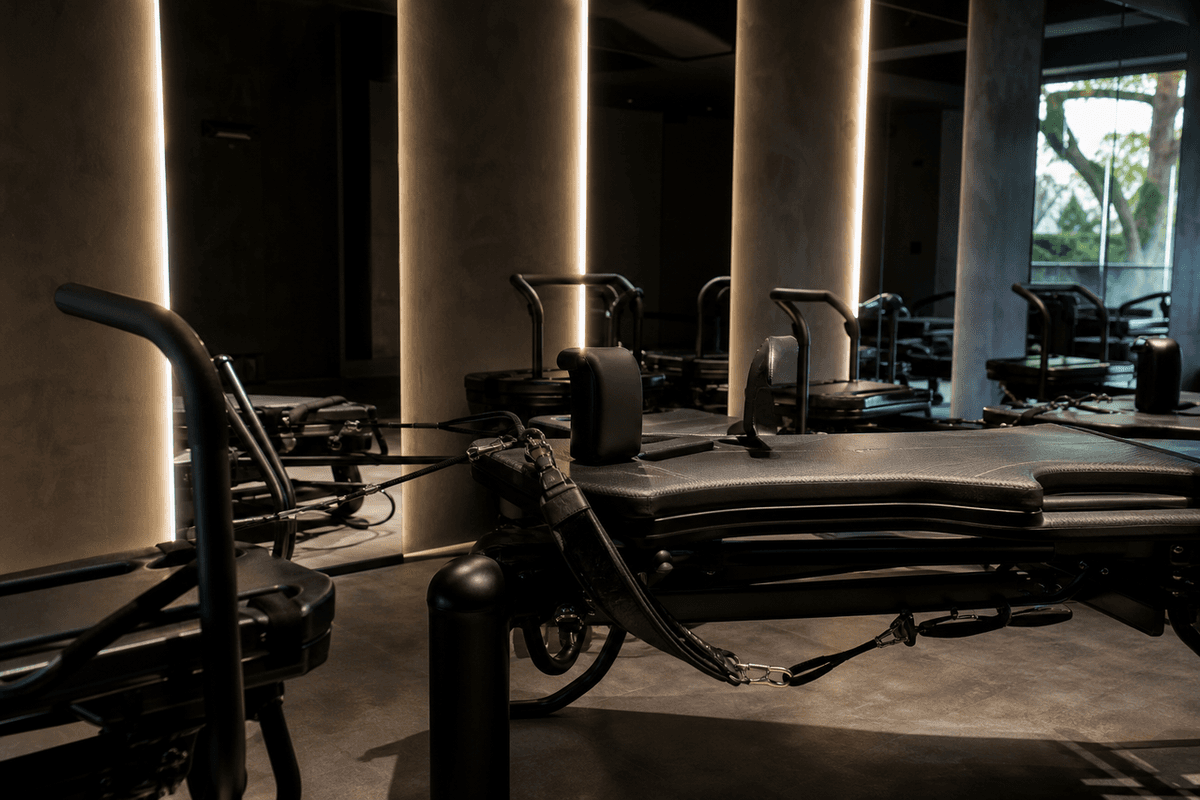
Short answer: Lagree is high-intensity, low-impact strength work on a Megaformer, a longer spring-loaded relative of the Pilates reformer. The method is slow movements with no rest between exercises, so muscles stay under constant tension until they burn and shake, usually within the first minute. Everything scales, so beginners can start.
Lagree is a high-intensity, low-impact workout done on a large spring-loaded machine called a Megaformer. It grew out of Pilates and shares its control and core focus, but it is harder, more strength-oriented, and built around a specific trick: moving slowly and never resting, so your muscles stay under constant tension until they burn and shake.
If Pilates is precise and controlled, Lagree is precise, controlled, and relentless. The machine looks intimidating and the classes are genuinely tough, but everything is scalable and low-impact, so beginners can start.
Expect to feel it fast, expect to shake, and expect a class that never looks fast to be one of the hardest things you have done.
What is the Megaformer?
A bigger, more versatile relative of the Pilates reformer.
The Megaformer is a large machine with a moving carriage and adjustable springs, similar in spirit to a Pilates reformer but longer, with more handles, platforms, and loading options. It was designed by Sebastien Lagree specifically for this method.
The springs provide resistance you work against, and the many positions let a single machine target nearly every muscle group. You spend the class transitioning between exercises on it, often without stepping off.
It looks like a piece of equipment from a spaceship, which puts beginners off, but the instructor sets it up and guides you through every move. Our reformer versus mat Pilates guide covers the family resemblance.
Why is it so intense if it is slow?
Because slow with no rest is brutal.
The defining principle of Lagree is time under tension. You perform movements very slowly, often to a count, and crucially you do not rest between exercises, transitioning straight from one to the next. Your muscles never get the brief recovery that normal sets allow.
That constant tension is what produces the deep burning and shaking, usually within the first minute of an exercise. It fatigues muscles thoroughly without heavy weights or fast, high-impact movement, which is the whole design.
So the class feels slow and controlled while being genuinely exhausting. People expecting a gentle Pilates vibe are often shocked by how hard it is.
How does it compare to Pilates and barre?
A tougher, more strength-focused cousin.
Lagree comes from Pilates and shares the core control, precision, and low-impact approach, but it is more intense, faster-paced in class flow if not in movement, and more focused on building strength and muscular endurance to failure. Pilates tends to be more rehabilitative and controlled. Our first Pilates class guide covers that, and our reformer Pilates vs Lagree comparison sets the two side by side on cost, class length and who each one suits.
Compared with barre, Lagree is machine-based and generally harder and more strength-oriented, where barre is bodyweight and light-weight class work. Our barre explainer and barre versus Pilates guide cover those.
Think of it as the most intense member of the low-impact, controlled-movement family.
What does it actually do for you?
Muscular strength and endurance, low-impact, with the usual caveats.
Lagree builds real muscular strength and endurance, core stability, and control, and because it is low-impact, it is gentle on the joints while still being demanding. For people who want an intense workout without running and jumping, it is a strong fit.
What it is not is cardiovascular training in the running sense, though the constant tension does elevate your heart rate, nor is it a substitute for heavy strength training if maximal strength is your goal. As with any boutique method, be skeptical of dramatic body-transformation marketing and judge it as one good tool. Our recovery trackers guide is a reminder that feeling wrecked is not a measured outcome.
As part of a varied week, it is an efficient, joint-friendly strength-endurance option.
What should a beginner expect and wear?
A humbling first class, grip socks, and a lot of shaking.
Wear fitted workout clothes so the instructor can see your alignment, and grip socks are required at essentially every studio for grip and hygiene. Bring water and a towel, because you will sweat despite the low impact.
Book a beginner or intro class if offered, arrive early to learn the machine, and tell the instructor it is your first time and about any injuries, especially wrist, shoulder, knee, or back issues, so they can modify. Expect to be confused by the machine at first and to shake almost immediately, both of which are normal. Our studio checklist covers the general questions worth asking a new studio.
Do not judge the method on one bewildering first class. The second one, when you know the machine, is a different experience.
The bottom line on Lagree
Lagree is intense, low-impact, strength-focused training on a Megaformer, related to Pilates but harder, built on slow movements with no rest to keep muscles under constant tension.
If you want a demanding, joint-friendly workout and do not mind shaking through it, it is well worth a class. Just go in knowing that slow and controlled does not mean easy.
To find a Lagree or Pilates studio near you, start with our city wellness maps.