Reformer Pilates vs Lagree: which should you try?
Both put you on a spring-loaded carriage and make small movements feel enormous. One is a century-old method built around control and rehab. The other is a modern workout built to burn you out. The machines are cousins; the intentions are not.
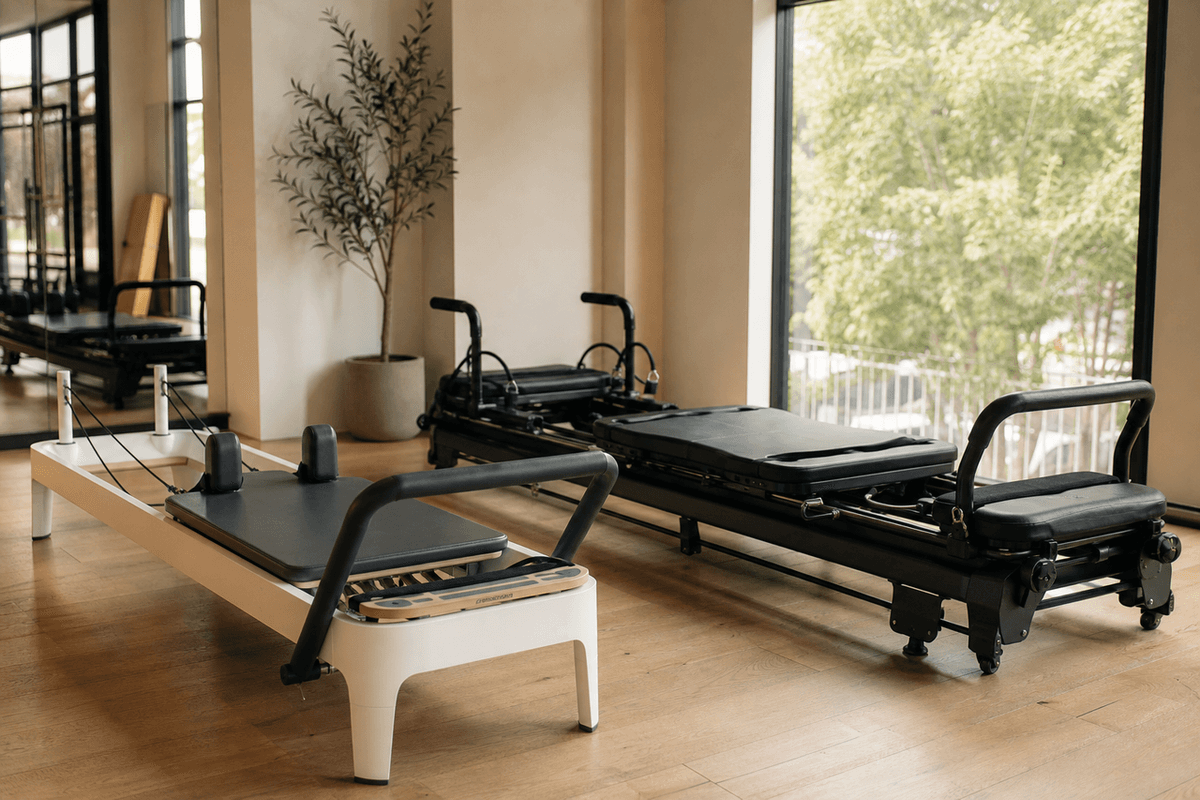
Short answer: Choose reformer Pilates for a precise, century-old method that suits beginners, older bodies and rehab, and scales gently. Choose Lagree for a relentless no-rest workout on a Megaformer that holds muscles under constant tension until they shake. Both are low-impact, both cost roughly $35 to $60 a drop-in class, and neither is cardio or heavy strength training.
Choose reformer Pilates if you want a precise, controlled, century-old method that is friendly to beginners, older bodies, and rehab. Choose Lagree if you want a relentless, high-intensity workout that keeps your muscles under constant tension until they shake and fatigue.
They look similar because Lagree grew out of Pilates and uses a related spring-loaded machine. But reformer Pilates is a method focused on control and alignment, while Lagree is a workout designed around intensity and muscular burnout. The machines are cousins; the goals are different.
Both are low-impact and joint-friendly, so the honest question is how hard you want to work and why.
Reformer Pilates vs Lagree at a glance
| Reformer Pilates | Lagree | |
|---|---|---|
| Machine | Reformer: carriage, springs, footbar, straps | Megaformer: longer, more platforms, handles and loading options |
| Origin | Joseph Pilates, early 20th century | Sebastien Lagree, built for this method |
| Class length | Group classes usually 45 to 55 minutes | Studios typically schedule 45 to 50 minutes |
| Pace | Measured, with resets between exercises | Slow movement, no rest between exercises |
| What you feel | Muscles you did not know you had | Burning and shaking, usually inside the first minute |
| Drop-in price | Roughly $35 to $60 | At or above the reformer end, and scarcer |
| Scales down | Very well, which is why physios use it | Yes, but the method’s point is intensity |
| Best first class | Intro or beginner reformer, ideally small group | Beginner-labelled class, and tell them you are new |
What is the machine difference?
A reformer versus a bigger, tougher Megaformer.
Reformer Pilates uses the classic reformer: a sliding carriage with adjustable springs, straps, and a footbar, developed as part of Joseph Pilates’ method. The springs provide both assistance, which is what makes it useful in rehab, and resistance, which is what makes it hard. It scales from very gentle to challenging. Our reformer versus mat guide covers it.
Lagree uses the Megaformer, a larger, longer machine with more platforms, handles, and loading options, designed by Sebastien Lagree specifically for his higher-intensity method. Our Lagree explainer covers a class.
So it is not quite the same equipment. The Megaformer is built to enable the constant-tension, no-rest style that defines Lagree, whereas the reformer is built for the varied, controlled repertoire of Pilates.
Which is more intense, and how sore will you be?
Lagree, clearly and by design.
Lagree is built around time under tension: slow movements performed with no rest between exercises, which produces deep burning and muscular fatigue fast, usually within the first minute of an exercise. Most people find their first class genuinely hard and shake through parts of it.
Reformer Pilates can absolutely be challenging, especially in an advanced class, but its emphasis is control, precision, breath, and alignment rather than relentless intensity. The difficulty is in doing it well, not in surviving the burn.
Expect delayed soreness from either for a day or two after a first class, usually in the abdominals, inner thighs and glutes, and usually more from Lagree. That is normal and settles as you adapt. Soreness that is sharp, one-sided, or in a joint rather than a muscle is not, and our weekly recovery routine guide covers spacing hard classes so you are not permanently sore.
How much does each cost, and how often should you go?
Boutique pricing, similar tiers, with Lagree usually at the higher end.
A drop-in reformer class typically runs about $35 to $60 in most US cities, against $20 to $30 for a mat class, and Lagree tends to sit at or above the reformer end because the equipment is more specialised and there are fewer studios. Both are usually sold as class packs or memberships.
Twice a week is the frequency most people should plan around, because it is the dose the visible results are described at: postural awareness and some easing of back discomfort within four to six weeks, measurable strength and mobility changes around eight to twelve. The old Pilates maxim, ten sessions to feel a difference and thirty to change your body, is roughly accurate for consistent practice.
Do not buy the membership on your first visit. Our guides on whether studio memberships are worth it and trying wellness without a membership cover the arithmetic, and our guide on cancelling a wellness membership covers what to check in the contract before you sign it.
Which is better for back pain and rehab?
Reformer Pilates, and this is the clearest gap between the two.
Pilates has good evidence in chronic lower-back pain, with meta-analyses finding it outperforms general exercise for that population, which is why it is widely used in physiotherapy. The reformer’s springs can assist a movement you cannot yet do unloaded, which is exactly what a rehab progression needs. Our lower back pain guide covers where exercise sits among the options.
Lagree builds muscular strength and endurance harder and faster through fatigue, which is great for a fit person chasing intensity, but fatigue is the wrong tool for careful rehab. It is low-impact and scalable, and that is not the same as being the appropriate class after an injury.
If you have a specific condition, ask about the instructor’s training rather than the method. Our guides on scoliosis, diastasis recti, postpartum wellness and hypermobility each cover what to tell an instructor, and our guide on checking credentials covers how to verify the answer.
What neither of them is
Cardio, or heavy strength training.
Both are strength-endurance work at low impact. Neither builds maximal strength the way loaded barbell training does, and neither is a substitute for cardiovascular exercise despite how hard a Lagree class feels while you are in it. Treat either as one layer of a week rather than the whole programme. Our which class format for which goal guide sorts the studio formats by what each actually trains.
Neither is a reliable weight-loss tool on its own either, which matters because both are marketed that way.
Which suits which person?
Pick reformer Pilates if you are a beginner, older, recovering from or working around an injury, pregnant or postpartum, or you value control, precision, and a slower practice you can progress in over years. It is the safer, gentler entry point, and the one that scales down furthest.
Pick Lagree if you are reasonably fit, want a demanding, sweaty session, enjoy training to muscular fatigue, and like the idea of a hard workout that is still low-impact. It is the choice for intensity-seekers with no current injury.
If you are unsure, start with reformer Pilates, ideally private or small classes, and tell the instructor your history. Our first Pilates class guide covers what actually happens, our barre versus Pilates guide and barre versus reformer comparison cover the neighbours, and our yoga versus Pilates guide covers the other common first choice.
FAQ
Is Lagree harder than reformer Pilates? Yes, by design. No rest between exercises and slow time-under-tension work produce burning and shaking within the first minute, where Pilates emphasises control.
How much does a reformer or Lagree class cost? Roughly $35 to $60 a drop-in for reformer in most US cities, with Lagree typically at or above that. Mat Pilates runs $20 to $30.
How long is a class? Group reformer classes usually run 45 to 55 minutes, and studios typically schedule Lagree at 45 to 50.
What should you wear? Fitted clothes so the instructor can see your alignment, and grip socks, which are required at essentially every studio for both.
Which is better for back pain? Reformer Pilates. It has good evidence in chronic lower-back pain and is used in physiotherapy for exactly that. Lagree is not a rehab method.
Can a complete beginner start with Lagree? Yes, everything scales, but book a beginner class and expect it to be humbling. If you are nervous or working around an injury, start with Pilates.
How often should you go to see results? Twice a week. Expect postural awareness and easier movement in four to six weeks, and measurable change around eight to twelve.
Is one better for weight loss? Neither, on its own. Both are low-impact strength-endurance work, not cardio, and neither replaces the rest of the week.
The bottom line on reformer pilates vs lagree
Reformer Pilates is the controlled, precise, rehab-friendly method that scales gently and has the back-pain evidence. Lagree is the modern, high-intensity, no-rest workout built to burn you out. Same machine family, different philosophies, both low-impact and both around $35 to $60 a class.
If you want careful and progressive, choose reformer Pilates. If you want brutal and efficient, choose Lagree. When unsure, start with Pilates and work up.
If you end up committed enough to consider buying a machine, our guide on whether a home reformer is worth it covers that decision. To find a Pilates or Lagree studio near you, start with our city wellness maps.