Barre explained: what a class is really like, and who it's for
It borrows the ballet barre and a little of the vocabulary, and then asks you to pulse one inch until your thighs stage a protest. You do not need to have danced. Almost nobody in the room did.
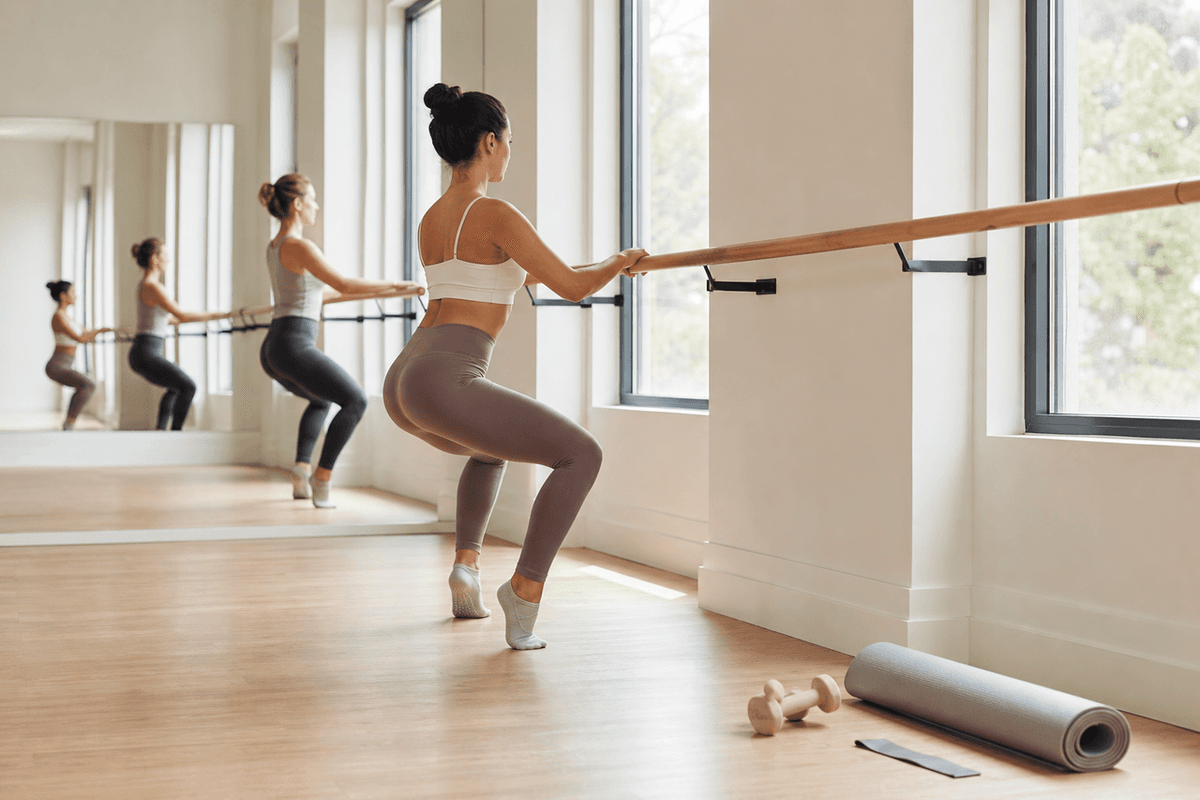
Short answer: Barre is a low-impact group class built around small, controlled, repetitive movements, often pulses of about an inch, that fatigue thighs, glutes, arms and core until they shake. It borrows a ballet barre and some vocabulary but teaches no dance, and almost nobody in the room trained as a dancer.
Barre is a low-impact group fitness class built around small, controlled, repetitive movements that fatigue specific muscles until they shake. It borrows positions and a little vocabulary from ballet, mixes in Pilates and light strength work, and uses a ballet barre for balance, but it is a workout, not a dance class.
You do not need any dance background. The overwhelming majority of people in a barre class never trained as dancers, and the moves are broken down for beginners.
Expect to feel it in your legs, glutes, and core, expect a lot of tiny pulses, and expect it to be harder than the graceful name suggests.
What actually happens in a class?
Isolated muscle work, one small range at a time.
A typical class moves through sections targeting different areas: thighs at the barre, glutes, arms with light hand weights, and core work on a mat. Within each, you hold a position and perform very small, controlled movements, often described as pulses, sometimes just an inch of range, repeated until the muscle is thoroughly fatigued.
That burning, shaking sensation is the whole point. Barre chases muscular endurance and fatigue rather than heavy load or big movement. Classes often finish with stretching.
It is choreographed to music and flows quickly, which makes it feel energetic, but the intensity is local and muscular, not the breathless cardio of a spin class.
Is it actually ballet?
Only loosely, and that trips people up.
Barre uses a ballet barre for support, some ballet-inspired positions like a turned-out first position, and a bit of the language. What it is not is a class that teaches you to dance or expects grace, technique, or flexibility from a dance background.
It grew out of a fitness method developed in the mid twentieth century and has since blended heavily with Pilates and general strength conditioning. The dance element is aesthetic and postural, not performance.
So if the word ballet is what has kept you away, that is a misunderstanding worth dropping. Nobody is watching your pointe.
How does it compare to Pilates and yoga?
Related cousins with different emphases.
Barre overlaps most with Pilates in its focus on core, control, and small precise movements, and many studios teach both. Where they differ, barre tends to be more up-tempo, more repetitive-to-fatigue, and more standing leg-and-glute work, while Pilates leans more into core mechanics and, on the reformer, spring resistance. Our first Pilates class guide and reformer versus mat guide cover that world.
Compared with yoga, barre is more of a muscular workout and less about flexibility, breath, or a contemplative element. Our yoga versus Pilates guide maps the neighbouring choice.
If you like structured, energetic, low-impact strength-endurance work, barre is the pick of the three.
What does it actually do for you?
Muscular endurance, tone, and a genuinely low-impact workout.
Barre builds muscular endurance in the legs, glutes, and core, improves postural strength, and can improve balance and body awareness. Because it is low-impact, it is gentle on the joints, which makes it popular with people who cannot or do not want to run and jump.
What it is less good at, honestly, is building significant strength or size, since the loads are light, and it is not real cardiovascular training despite feeling intense. Treat the toning-and-endurance claims as fair and the dramatic body-transformation marketing as the usual overreach. Our recovery trackers guide is a reminder that feeling wrecked is not the same as a measured outcome.
As one part of a varied routine, it is a solid, joint-friendly option.
What should you wear and expect as a beginner?
Fitted clothes, grip socks, and a humbling first class.
Wear fitted, comfortable workout clothes so the instructor can see your alignment, and expect grip socks to be required or expected at most studios, since you work barefoot-ish for grip and hygiene. Bring water.
Your first class will likely humble you, because muscles you rarely isolate get fatigued fast, and the shaking can feel alarming when it is completely normal. Rest whenever you need to and do smaller movements rather than forcing the range. Our studio checklist covers the general questions worth asking a new studio.
Tell the instructor it is your first class and about any injuries, especially knee, hip, or back issues, so they can offer modifications.
The bottom line on barre
Barre is a low-impact, high-repetition muscular endurance class that borrows ballet’s barre and a little of its look, blended with Pilates and light strength work. No dance experience required, and no, it will not be gentle.
If you want joint-friendly, structured, energetic toning work, it is worth a class. Judge it for what it is, not for the ballet in the name.
To find a barre or Pilates studio near you, start with our city wellness maps.