Massage during and after cancer treatment: what's safe
The old rule was that massage could spread cancer, so patients were turned away. That belief has been abandoned, and a large hospital study measured what massage actually did for symptoms. What replaced the blanket ban is more useful and more specific.
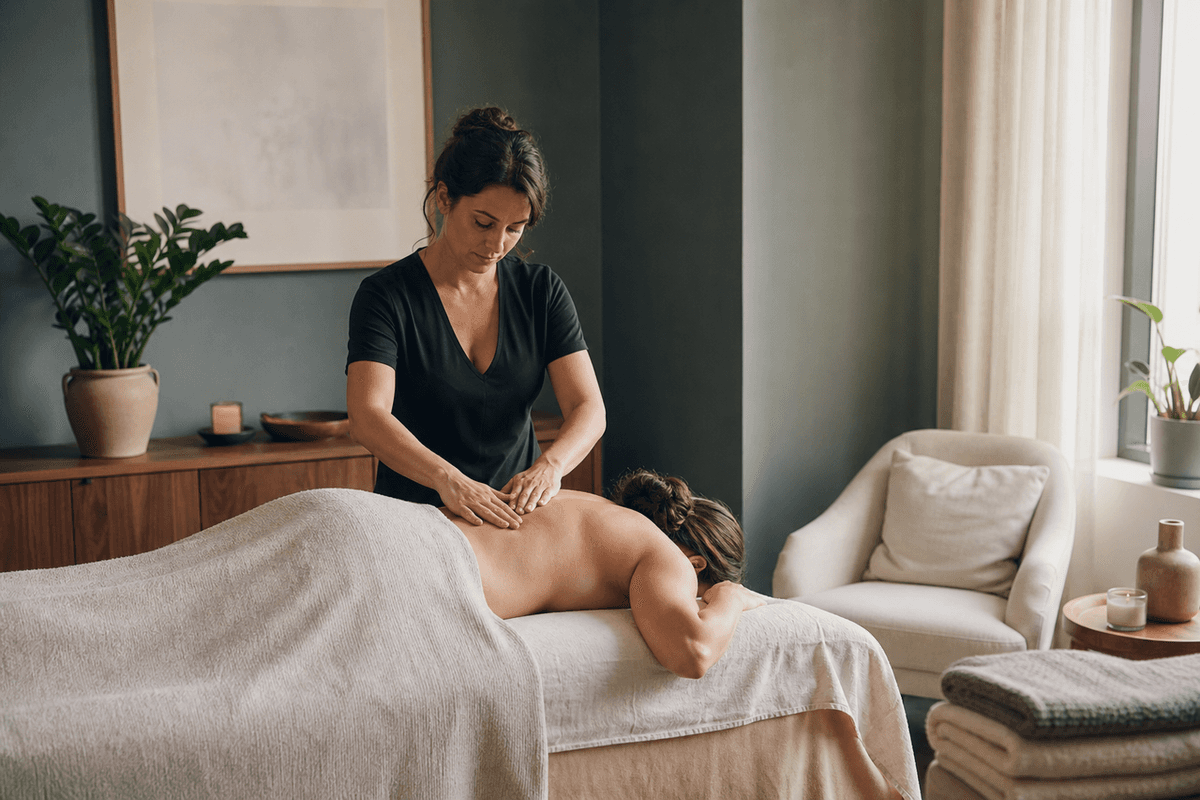
Short answer: Yes, with specific precautions. The old rule that massage spreads cancer was dropped because metastasis is biological, not mechanical. A study of over a thousand hospital patients found substantial short-term drops in pain, anxiety, fatigue and nausea. Avoid tumour sites, radiation fields, fresh scars and lines; keep pressure light.
For years, people in cancer treatment were refused massage on the grounds that manipulating tissue could spread the disease. That reasoning has been abandoned, because it was never based on evidence and does not fit how metastasis works.
What replaced it is more useful: massage is widely offered inside cancer centres, with specific and sensible precautions, and there is measured evidence for what it does.
This is a guide to what the research shows and what to ask. It is not medical advice, and your oncology team’s instructions override anything here, particularly around timing and blood counts.
What does the evidence show for cancer massage?
Meaningful short-term relief across several symptoms.
The largest and most cited data comes from Cassileth and Vickers in the Journal of Pain and Symptom Management in 2004, an outcome study of massage therapy at a major cancer centre covering more than a thousand patients.
Patients reported substantial reductions in pain, fatigue, anxiety, nausea, and depression immediately after treatment, with roughly half the benefit persisting for hours afterward. Outpatients tended to report larger improvements than inpatients.
The caveat matters: this was an observational outcome study without a control group, so it cannot separate the massage from attention, rest, and expectation. It shows that patients felt considerably better, not that the mechanism was the pressure. For symptom relief, that distinction is less important than it would be for a disease-modifying claim.
Why was the old rule dropped?
Because metastasis is not a mechanical process.
The belief that pressing on tissue could push cancer cells around and seed new tumours was intuitive and wrong. Metastasis involves cells acquiring specific genetic and molecular capabilities to invade, survive in circulation, and establish elsewhere. It is a biological process, not a plumbing one.
Major cancer centres now run their own massage programmes, and integrative oncology guidelines include massage for anxiety and pain. That is a substantial reversal from a blanket ban.
What did not disappear are the practical precautions, which are real and specific. The shift was from “never” to “yes, with these adjustments” rather than to “anything goes”.
Massage and cancer at a glance
| Situation | Approach |
|---|---|
| Directly over a tumour site | Avoid |
| Over a radiation field, during treatment | Avoid; skin is fragile |
| Recent surgical site or scar | Avoid until cleared, then gentle work only |
| Low platelets or clotting problems | Light pressure only, or postpone; ask the team |
| Low white cell count (neutropenia) | Usually postpone; infection risk |
| Port, PICC line, or catheter | Avoid the area entirely |
| Lymphoedema or nodes removed | Specialist-trained therapist only |
| Bone metastases | Firm pressure contraindicated; medical guidance first |
| General fatigue, anxiety, nausea | The main reason to go; gentle, shorter sessions |
What are the real precautions?
Sites, pressure, timing, and counts.
Pressure is the first adjustment. Oncology massage is generally lighter than a standard treatment, and deep tissue work is inappropriate for most patients in active treatment. Firmer is not better here, and with bone involvement it can be dangerous.
Sites matter next: avoid tumour sites, radiation fields, surgical scars until healed, and anywhere with a port or line. Skin in a radiation field is fragile and can react badly to friction or oils.
Timing and blood counts are the parts people miss. Fatigue and nausea often peak on predictable days in a chemotherapy cycle, so scheduling around that matters. And low platelet counts raise bruising and bleeding risk, while low white cell counts raise infection risk, both of which can mean postponing. Your team can tell you where you sit; a therapist cannot.
How do you find the right therapist?
Ask for oncology massage training specifically.
Oncology massage is a recognised specialism with its own training, and a therapist who has done it will say so immediately and will ask you a long list of questions before touching you. That intake is the signal you want.
Ask directly: have you trained in oncology massage, how many patients have you worked with, and what would you change for someone in my situation. A therapist who waves the question away, or who says pressure is fine because massage is natural, is the wrong one.
Many cancer centres have integrative medicine departments offering this in-house, often at low or no cost, which is usually the safest starting point. Our guide to checking a practitioner’s credentials covers vetting, and reading studio reviews covers assessing a place.
What about lymphatic drainage and other modalities?
Lymphoedema is specialist territory; heat needs care.
If you have had lymph nodes removed or have lymphoedema, manual lymphatic drainage is a legitimate treatment but must be done by someone trained in it for that purpose. General massage on an affected limb by an untrained therapist is a genuine risk. Our guide to wellness with lymphedema covers heat, exercise and skin care for the limb as well. Our lymphatic drainage guide covers what it is.
Heat modalities need separate clearance. Saunas, hot tubs, and steam rooms affect blood pressure, hydration, and skin, and several cancer treatments already affect all three. Radiation-treated skin in particular reacts badly to heat.
Cold plunging is not appropriate during active treatment without specific medical advice. Our cold plunge safety guide covers the general exclusions, and feeling faint in a sauna covers the heat risk that matters most if you are already fatigued or dehydrated.
FAQ: massage and cancer care
Can massage spread cancer? No. That belief was abandoned because metastasis is a biological process, not a mechanical one. The site-specific precautions above remain.
Do I need my oncologist’s permission? Tell them, always. Many centres want to clear it around blood counts and treatment timing, and they know your situation.
Is massage safe after treatment ends? Generally yes, with attention to scars, lymphoedema risk, and any lasting neuropathy. Say what you have been through even years later.
Can a caregiver give a massage instead? Simple hand or foot massage from a family member is often welcomed by centres and can help a great deal. Ask the team what to avoid.
The bottom line on massage in cancer care
The rule that massage spreads cancer has been dropped, and a study of more than a thousand hospital patients found substantial short-term reductions in pain, anxiety, fatigue, and nausea, with about half the benefit persisting for hours.
The real precautions are specific rather than blanket: avoid tumour sites, radiation fields, fresh scars and lines, keep pressure light, and let your team guide timing around blood counts. Find a therapist trained in oncology massage, and tell your oncologist before you book.