Reiki & energy work: what happens in a session, and how to think about it honestly
What reiki is, what the evidence does and doesn't show, and how to approach it with clear eyes.
Short answer: Reiki is a Japanese energy-work practice where you lie fully clothed for 45 to 60 minutes while a practitioner rests their hands on or just above you. Trials find it no better than sham reiki for medical outcomes, but the relaxation response is real. Treat it as care, not treatment.
Reiki sits at the edge of wellness where subjective experience and scientific evidence diverge, and where that gap gets filled, usually, with either dismissiveness or overclaiming. Neither serves you well. What follows is an honest attempt to describe what reiki actually is, what a session involves, what the research says, and how to think about whether it might be worth your time.
What reiki is
Reiki is a Japanese energy-work practice developed by Mikao Usui in the early twentieth century. The name combines the Japanese words for “universal” (rei) and “life energy” (ki), the same concept as chi in Traditional Chinese Medicine or prana in Ayurvedic tradition.
In practice, a trained reiki practitioner places their hands lightly on or just above specific areas of the body, head, torso, limbs, with the intention of supporting the flow of energy and facilitating relaxation and healing.
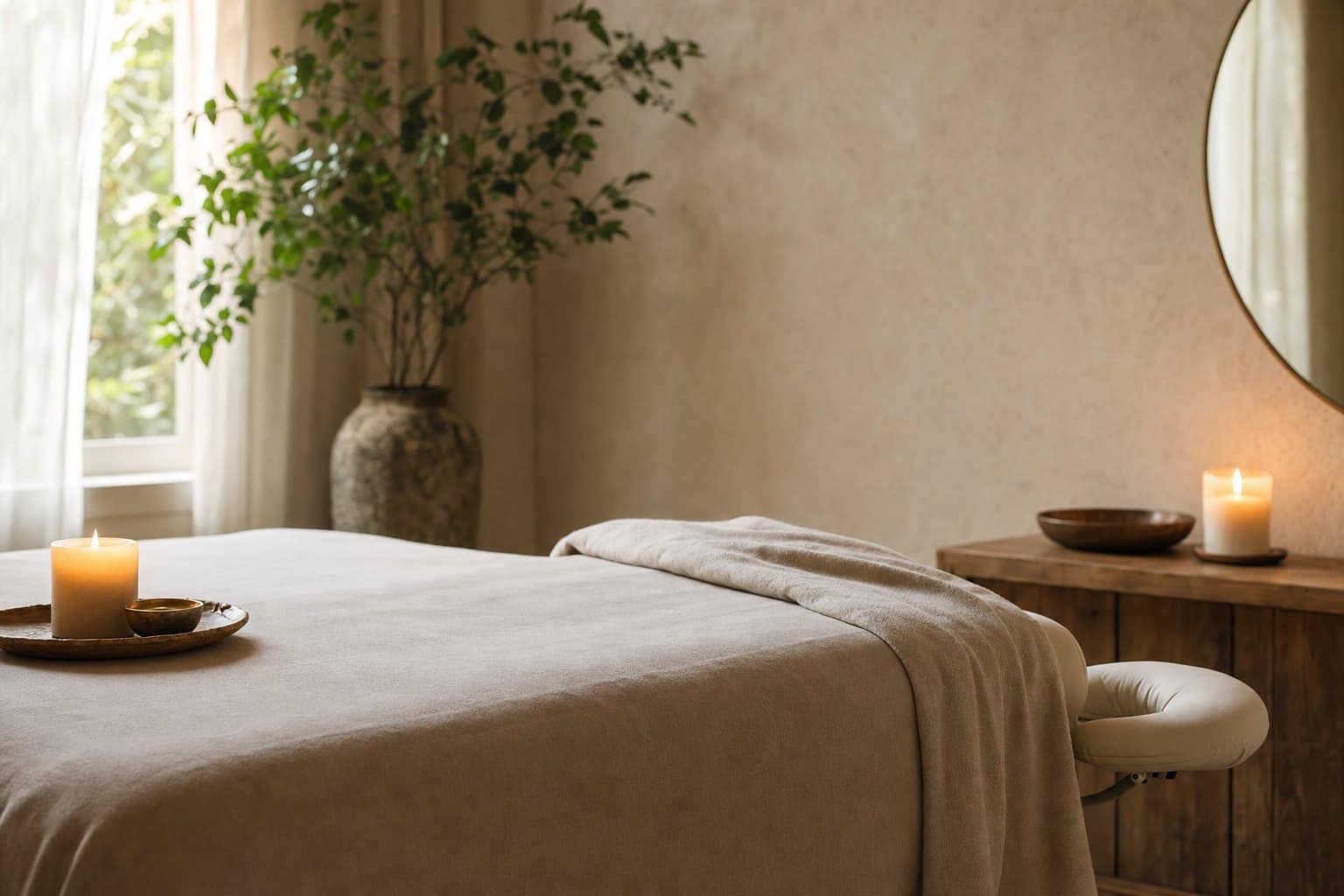
You remain fully clothed throughout. There is no manipulation, massage, or pressure. Sessions are quiet, typically candlelit or softly lit, and usually run 45, 60 minutes. You lie on a treatment table in a warm, calm room, and the primary job of the recipient is to rest and receive.
The experience has more in common with the stillness of a sound bath than with the physical engagement of massage or acupuncture.
Unlike craniosacral therapy, reiki does not involve any reading of physical tissue, the practitioner is working with perceived energy fields, not anatomy.
What a session feels like
Most people describe a deeply relaxing experience. Common reports include: warmth or a gentle tingling where the practitioner’s hands rest, a heaviness in the limbs, a drift toward sleep without fully arriving there, and a feeling of being genuinely cared for and attended to.
The meditative stillness of a full hour in a quiet room, with someone present whose entire attention is focused on your wellbeing, is itself unusual and worth something in most people’s lives.
Many people leave a session calmer, lighter, and less tense than when they arrived. Some report emotional releases, unexpected tears, a sense of processing something unnamed. Some feel very little during the session and notice the effect afterward. These subjective responses are real, commonly reported, and worth taking seriously as data points, even when the proposed mechanism is contested.
What the evidence says about energy work
Here’s the honest part: rigorous clinical research generally finds that reiki performs no better than sham (placebo) reiki for objective medical outcomes. Studies where practitioners gave “reiki” without their hands touching, or where someone with no training mimicked the hand positions, have produced results indistinguishable from certified reiki in controlled trials.
There is no reproducible, peer-reviewed evidence for a measurable “universal life energy” field in the scientific sense, attempts to physically detect or measure it have not succeeded.
What the evidence does support, consistently, is the relaxation response produced by reiki sessions, reductions in self-reported anxiety, heart rate, and blood pressure that are comparable to other forms of relaxation intervention (and larger than no-treatment controls).
The caring, unhurried, attentive quality of the session almost certainly contributes to this through the well-documented psychophysiology of social connection and felt safety.
What the relaxation response and a caring, unhurried hour do provide is genuine: a parasympathetic nervous system downshift, reduced cortisol, and a felt sense of ease, even if the proposed mechanism isn’t supported by the underlying physics.
- Reasonable evidence for: Acute relaxation response. Reduction in self-reported anxiety and perceived pain in hospital and palliative care settings. General sense of wellbeing and calm post-session.
- Debated or mixed: Whether reiki is superior to other relaxation interventions (rest, music, guided relaxation) for stress outcomes. Whether practitioner experience level matters for the relaxation effect.
- Not established / overstated: Reiki does not demonstrably heal physical disease, accelerate wound healing in controlled settings, or produce outcomes beyond what placebo-level relaxation accounts for. Claims that reiki can treat cancer, heart disease, or other serious conditions are not supported and can be harmful when they substitute for evidence-based medical care.
Benefits regular recipients report
Beyond what the trials capture, regular reiki recipients frequently describe: a reliable way to access deep relaxation when nothing else is cutting through chronic tension, a felt sense of energetic “reset” that they find hard to articulate but consistently seek out, reduced sleep latency on the night of a session, a sustained sense of emotional ease that lingers into the following day, and a feeling of being witnessed and cared for that has value independent of any physical mechanism. For people whose daily lives involve high cognitive load, emotional suppression, or chronic stress, being completely still and attended to for an hour is genuinely rare, and the body responds to that.
Who reiki is for, and who should skip it
Reiki has no meaningful physical contraindications. It involves no manipulation of tissue, no pressure, no heat application, and no ingested substances. It is safe for children, elderly people, people with serious illness, and those in palliative care (it is used in many hospital settings for exactly this reason).
Who benefits most: People dealing with anxiety, chronic stress, insomnia, or emotional heaviness who want a receptive, non-effortful experience. People in high-touch phases of illness or medical treatment who want supportive care without physical intervention. People who respond well to stillness and benefit from the attention and holding that a session provides.
Who should be clear-eyed: Anyone with a serious medical condition, reiki is an appropriate complement to medical treatment, not a substitute for it. Don’t defer a diagnosis or delay treatment in favor of energy work.
Who might not enjoy it: People who find stillness and the absence of physical sensation difficult or activating. People who are deeply skeptical of the premise, you can hold the evidence-based view of reiki and still find the relaxation valuable, but going in with contempt tends to close off the relaxation response that drives the benefit.
What a reiki session costs
- Single session with a certified reiki practitioner: $60, $120 for 60 minutes in most US cities.
- Spa or wellness center sessions: $80, $150, sometimes available as part of a package with other bodywork.
- Hospital and integrative medicine programs: often free or low-cost as part of supportive care programs (many major cancer centers offer this).
- Reiki training (Levels 1, 3 / Reiki Master): $150, $500+ per level, depending on teacher and location; some people learn in order to self-treat.
How to choose a reiki practitioner
Reiki is not licensed as healthcare in most US states, which means credential verification matters more, not less. Look for a practitioner who is certified through a lineage-based training (Usui Reiki is the most widely practiced), has completed all three levels of training, and, critically, is transparent about what reiki is and isn’t.
A good practitioner will not claim to treat medical conditions or discourage you from conventional care. They should be comfortable with the position that the research doesn’t support the energetic mechanism, and confident that the relaxation value is real regardless.
The quality of the held space matters more than any credential: you want someone calm, present, and genuinely attentive.
FAQ: reiki & energy work
Do I have to believe in reiki for it to work? You don’t need to believe in the metaphysics. The relaxation response is a physiological state that the conditions of a reiki session, stillness, quiet, warmth, undivided caring attention, reliably tend to produce. Skepticism about the mechanism doesn’t necessarily prevent relaxation from occurring. What does interfere is active vigilance or contempt, which keeps the nervous system on alert.
How is reiki different from massage? Reiki involves no tissue manipulation, pressure, or deep physical contact, just light touch or near-touch. The experience is more meditative and receptive. Massage works directly on muscular tissue and is more physically activating; reiki is specifically about stillness and the relaxation response.
How many sessions do I need to notice anything? One session is enough to form a view of whether you respond to it. Many people notice the relaxation effect after a single session. Regular benefit tends to come from regular practice, monthly or more frequent sessions for people who find value in it.
Is distant reiki (without physical presence) valid? Distant reiki, where the practitioner works on someone in another location, is practiced within the tradition but is even further from anything science can evaluate. The relaxation-via-presence benefit almost certainly doesn’t transfer at distance. Treat in-person sessions and distant reiki as entirely different propositions.
The honest summary on reiki
Reiki is a deeply relaxing, caring practice that many people find genuinely valuable, for the quality of calm it produces, the rare experience of undivided attentive care, and the nervous system downshift that a still, quiet, unhurried hour tends to provide. The research supports the relaxation; it does not support the energetic metaphysics.
Both things can be true. Go in with clear eyes: treat it as a relaxation and care experience, not a medical treatment. Keep it alongside conventional care, not instead of it.
And judge it by the honest standard of whether it leaves you calmer, lighter, and more at ease, because on those terms, many people find it worth returning to.