Float tank vs sound bath: which reset is right for you?
Both are ways to lie still and let your nervous system drop into deep calm, but one removes everything and the other fills the room. Here's how to pick the reset that fits you.
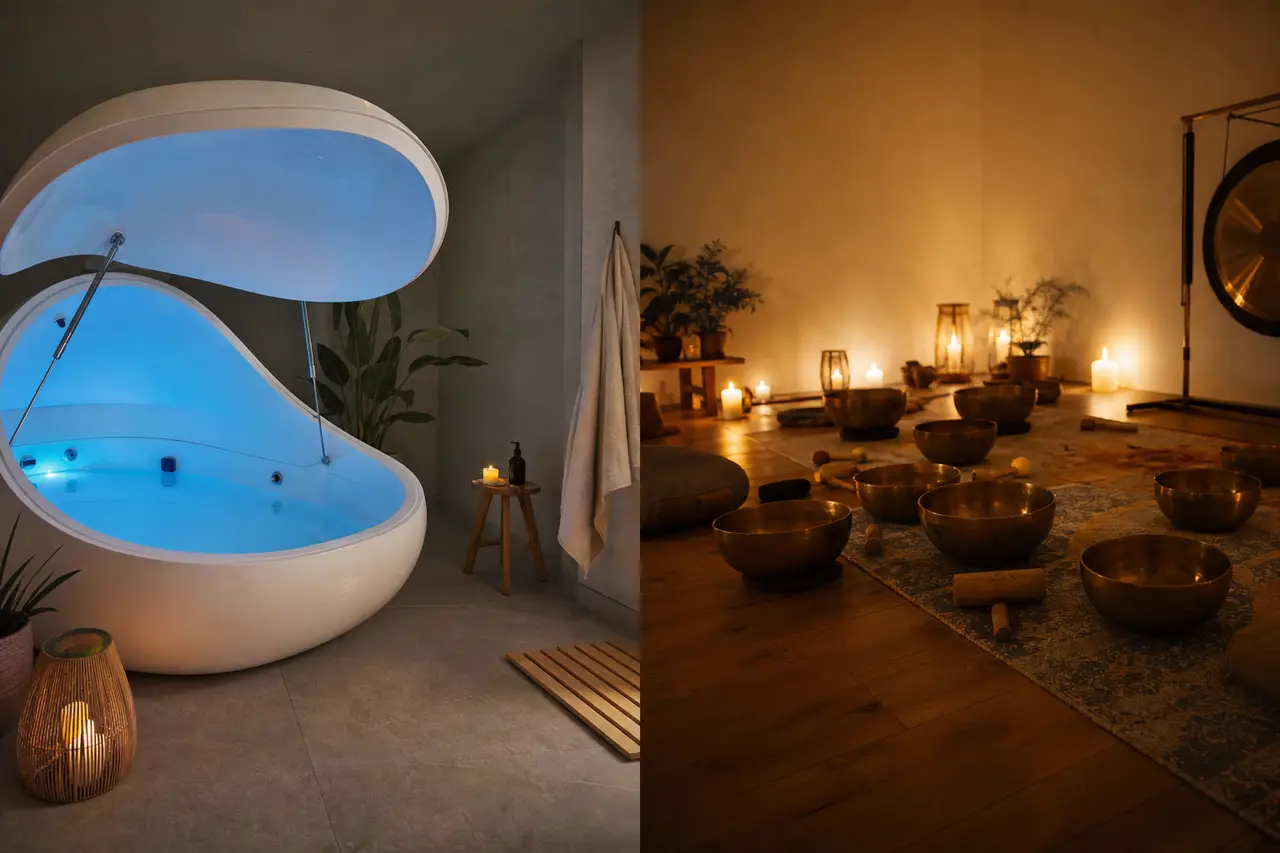
Short answer: Choose a float tank if you want solitude and near-total sensory quiet: an hour alone in dark, body-temperature salt water. Choose a sound bath if you prefer being guided into calm by bowls and gongs for 45 to 60 minutes in a group. Emptiness soothes some people and unsettles others.
Choose a float tank if you want solitude and near-total sensory quiet, and a sound bath if you prefer being guided into calm by immersive sound in a group.
Both are low-effort ways to reach deep relaxation by lying still and letting go, but they get there from opposite directions: a float removes almost all sensory input, warm water, silence, darkness, alone, while a sound bath adds a rich, continuous layer of tones for your attention to rest on, usually in a room with others.
Neither is objectively better; the right one depends on whether solitude and emptiness soothe you or unsettle you.
What is each one actually like?
Float tank. You lie in body-temperature, heavily salted water that floats you effortlessly, in the dark and quiet, alone, for about an hour. Sensory input drops toward zero, which lets your nervous system fully stand down. It is private, still, and empty. Our first float tank guide walks through the experience.
Sound bath. You lie on the floor, covered and comfortable, in a group, while a facilitator plays bowls, gongs, and chimes for 45 to 60 minutes. Instead of removing stimulation, it gives you a single, soothing, non-verbal thing to follow. It is communal, guided, and immersive. Our first sound bath guide covers what to expect.
Which suits which kind of person?
A float tank suits you if you find solitude restorative, you are comfortable alone with your own mind, you want the deepest possible sensory quiet, and you like the idea of no input at all. It can be too much emptiness for people who get anxious alone in the dark or with racing thoughts.
A sound bath suits you if you find silence and solitude restless rather than restful, you prefer some gentle guidance, you are comfortable relaxing near other people, and you like having something, the sound, to anchor a busy mind. It is the more accessible, lower-commitment entry point for most beginners.
If you tend to spiral when left alone with nothing, the sound bath’s anchor may calm you where a float would agitate you; if outside stimulation is exactly what you are trying to escape, the float is the truer off-switch.
What about cost and commitment?
A sound bath is usually cheaper and lower-commitment, often a drop-in group class at a modest price, so it is easy to try. A float typically costs more per session (a private tank and an hour of your own) and asks more of you: booking a solo slot, showering, the salt routine.
For a first, low-risk taste of deep rest, a sound bath is the easier yes; a float is a slightly bigger step for a potentially deeper drop. Both are very low-risk physically; our guides note the minor cautions for each.
Can you like both?
Absolutely, and many people do, using them for different moods. A float is the choice when you want to disappear and be truly alone with a quiet body; a sound bath is the choice when you want to be gently held in calm without effort, perhaps with a friend.
They scratch related but distinct itches, and neither replaces the other. If your broader goal is building everyday calm rather than an occasional deep reset, our meditation for beginners guide covers the daily-practice side.
The bottom line on float tank vs sound bath
Float tank for solitude and sensory emptiness; sound bath for guided, communal, immersive calm. Pick based on whether being alone in the quiet soothes or unsettles you. For an easy first try, start with a sound bath; for the deepest possible off-switch, book a float. Both are legitimate deep-rest tools, and you are allowed to love them for different days.