Laughter Yoga Explained: What It Is, What the Evidence Says, and Whether It's Worth Trying
Fake laughter becomes real, and the body doesn't always know the difference.
Short answer: A structured breathing and movement practice that uses simulated laughter as the breath pattern, with no jokes and no postures. Small controlled studies show short-term stress and mood benefits, and better mood and less loneliness in older adults. Immunity and disease claims are overstated. Community clubs are free to about $10.
Laughter yoga sounds like a punchline. A group of adults laughing on command, no comedian required, no joke in sight, just simulated ha-ha-has that, according to its practitioners, turn genuine by the end of the session. It’s been practiced in over 100 countries since the mid-1990s, and while it’s easy to dismiss, the physiology behind it is more credible than the name suggests.
The catch: “yoga” is loose branding. There are no postures. What laughter yoga actually is, is a structured breathing and movement practice that uses laughter as the breath pattern. That framing matters for understanding both its appeal and its evidence base.
What laughter yoga is
Laughter yoga (Hasya yoga) was developed in 1995 by Indian physician Dr. Madan Kataria, who was exploring the health benefits of laughter and noticed that the body can’t easily distinguish between real and simulated laughter, the physiology overlaps enough that the benefits carry through either way.
He combined extended laughter exercises with pranayamic breathing (deep diaphragmatic breaths) and created a group practice built around that observation.
A typical session has no comedy content. Instead, participants move through a sequence of laughter exercises, clapping, chanting, eye contact, and then laugh. The premise is that laughter is a learnable bodily skill, not just a response to something funny. Group dynamics and “fake it till you make it” momentum usually mean most people end up laughing genuinely within a few minutes.
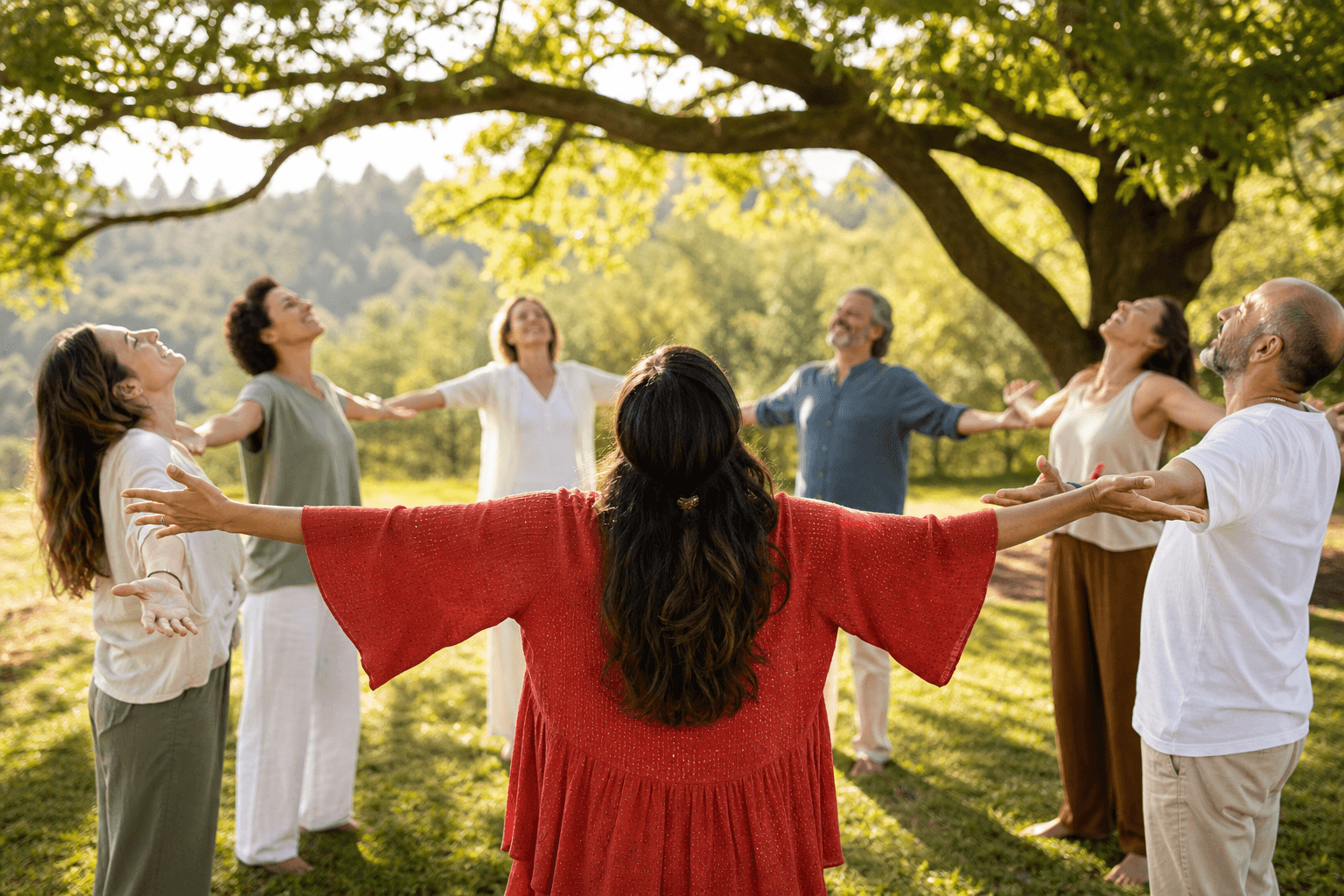
It has no religious affiliation, no prerequisite fitness level, and no equipment needs. Laughter yoga clubs meet in parks, offices, senior centers, and care homes worldwide. Sessions are typically free or low-cost.
What a laughter yoga session is like
A standard laughter yoga class runs 30 to 60 minutes. Most happen outdoors or in a large room with space to move around. Here’s the general flow:
You’ll start with gentle warm-ups, rhythmic clapping (1-2, 1-2-3 pattern) and simple chants (“Ho-ho, ha-ha-ha”) that activate the breath and loosen up social awkwardness. A facilitator leads the group through a series of laughter exercises with names like “Lion Laughter,” “Milkshake Laughter,” or “Gradient Laughter”, each is a short guided scenario or gesture that prompts a laughter response.
Between exercises, you do deep belly breathing to reset. Toward the end, sessions often include a laughter meditation, lying down, letting laughter arise spontaneously, and close with a quiet grounding period.
Most people feel silly at first. That’s expected and part of the design. The forced laughter usually turns genuine within five to ten minutes, partly from absurdity and partly from social contagion. Sessions are accessible regardless of fitness level or coordination. You don’t need to be funny, flexible, or athletic.
What the evidence says about laughter yoga
-
Reasonable evidence for: Reduced self-reported stress and anxiety in the short term. Several small controlled studies show laughter yoga decreases cortisol and increases mood ratings compared to control groups. There is decent evidence for improved mood and reduced loneliness in older adults in care settings, this is one of the more replicated findings. Diaphragmatic breathing (built into the practice) has strong independent evidence for reducing physiological stress arousal.
-
Debated or mixed: Whether laughter yoga produces meaningfully different outcomes than other group exercise, social connection, or breathing practices. Many benefits may come from group dynamics, deep breathing, and physical movement rather than laughter specifically. Studies are mostly small, short-term, and without rigorous controls. Cardiovascular and immune claims (IgA antibody increases) appear in some studies but effect sizes are modest and findings inconsistent.
-
Not established / overstated: That laughter yoga treats depression, chronic illness, or pain as a primary therapy. Claims that it “boosts immunity” in any clinically meaningful, lasting way are not supported. It is not a substitute for medical or mental health treatment.
Benefits people report from laughter yoga
- Feeling lighter and less tense after sessions, most participants notice this reliably
- Reduced social anxiety in group settings over repeated practice
- A genuine mood lift that lasts a few hours after a class
- Improved breathing habits from the diaphragmatic component
- A sense of playfulness and silliness that’s hard to access otherwise in adult life
- Reduced feelings of isolation, particularly for older adults
Who laughter yoga is for, and who should skip it
Laughter yoga is well-suited to people looking for an accessible, low-barrier group practice for stress relief or mood support. It’s particularly effective for older adults, office wellness programs, and anyone who has lost touch with spontaneous play. No experience with yoga or meditation is needed.
Who should approach with care:
- People with severe depression or active grief may find forced laughter uncomfortable or emotionally destabilizing, listen to your body and leave if needed
- Those with hernias, incontinence, late-stage pregnancy, or recent abdominal surgery should check with a doctor before vigorous laughter exercises
- Anyone with serious heart conditions or uncontrolled high blood pressure should get medical clearance first, the physical exertion is real
- It is not a replacement for therapy, medication, or mental health treatment for clinical conditions
Talk to a professional if you’re using laughter yoga as a mood support tool alongside treatment for depression or anxiety, a good therapist will likely think it’s a fine complement, but they should know.
What a laughter yoga class costs
Laughter yoga is one of the more affordable wellness practices:
- Laughter yoga clubs (community sessions in parks, community centers): typically free or a small donation ($0, $10)
- Drop-in studio classes: $10, $25 per session
- Corporate wellness workshops: $200, $800 for a facilitator for a half-day, usually arranged by an employer
- Laughter Yoga Leader certification: Dr. Kataria’s organization offers training programs; a basic leader certification course runs $200, $500 depending on format (online vs. in-person)
You don’t need certification to practice. Start with a free community club, the World Laughter Tour and Laughter Yoga International both have club finders online.
How to find a laughter yoga leader
For most people, attending a community laughter yoga club a few times is enough to understand the practice. Look for facilitators who are certified through Laughter Yoga International (Dr. Kataria’s training program) or Dr. Steve Wilson’s World Laughter Tour, both organizations maintain directories.
Red flags: facilitators who make disease-cure claims, charge high fees for basic participation, or push you toward expensive certification as a prerequisite to attend. A community session should cost you almost nothing.
If you want to lead sessions yourself, the certification process is accessible, no yoga or meditation background required, and training is available online. Most facilitators run free community clubs as a passion project rather than a primary income source.
FAQ: laughter yoga
Do you have to actually find laughter yoga funny? No. That’s the design. Simulated laughter is used to trigger the physiological state. Most people start finding it genuinely funny, or at least genuinely absurd, within a few minutes. The social component does most of the work.
Is laughter yoga the same as regular yoga? No. There are no yoga postures. The “yoga” refers to the yogic breathing component (diaphragmatic, belly-focused breath) and the union of breath and movement. If you’re looking for flexibility training or asana practice, this isn’t it, try yoga styles explained.
How often should you practice? Even one session a week shows mood benefits in the available studies. More frequent practice (daily 10, 15 minutes, using online videos or self-guided exercises) can work as a light stress-relief habit, though the group dynamic is a meaningful part of the experience.
Can children participate? Yes, laughter yoga is often used in school settings and is well-suited to kids. No modifications needed; the exercises are already play-based. Adult supervision is appropriate for younger children.
The honest summary on laughter yoga
Laughter yoga works well as what it is: a playful, accessible, group-based breathing and movement practice that reliably produces a short-term mood lift and reduces tension. The evidence for stress reduction and improved wellbeing, especially in older adults, is credible. The claims about immunity, disease treatment, and long-term physiological transformation are overstated.
Go for the fun and the breathing; don’t go expecting a cure. For most people, a free community club session is low-risk, low-cost, and genuinely enjoyable.