Your first hot yoga class: what to expect
The heat is the whole point and the whole difficulty. Nobody warns you that the real skill in your first class is not the poses, it is staying calm and not leaving the room.
Short answer: Expect a room at 90 to 105 F, heavy sweating, and a first class where staying calm matters more than the poses. Bikram-style runs 105 F for 90 minutes; modern hot flow is often 90 to 100 F for 60. Hydrate all day, bring a mat towel and water, and rest whenever you need to.
Expect a room heated to somewhere between 90 and 105 F, a lot of sweat, and a first class where the real challenge is staying calm rather than nailing the poses. Hydrate through the day beforehand, wear as little as you are comfortable in, bring a towel and water, and give yourself full permission to rest.
The single most important thing to know: resting in the heat is not failing. Lying down when you feel lightheaded is the correct, experienced move, not the beginner one.
Do not try to keep up with the room. Your only job in the first class is to stay in it, calmly.
How hot does it actually get?
Hot enough to change the whole experience, and it varies by style.
A traditional Bikram-style class runs around 105 F with high humidity for 90 minutes, which is genuinely demanding. Many modern hot yoga and hot flow classes are a little gentler, often 90 to 100 F for 60 minutes. Either way, this is a real environmental load, not a warm room.
The heat is meant to loosen muscles and raise the intensity, and it does. It also makes everything feel harder, raises your heart rate, and makes you sweat far more than you expect.
Ask the studio which style and temperature they run before you book, so you are not surprised. Our hot yoga versus regular yoga guide covers the differences in more depth.
How should you prepare and hydrate?
Hydrate across the whole day, not with one panicked bottle beforehand.
You will lose a lot of fluid, so drink steadily through the day before class rather than chugging right before, which just makes you feel sloshy. Some people add electrolytes on class days, which is reasonable given the sweat volume.
Do not eat a heavy meal in the couple of hours beforehand. A hot room plus a full stomach plus inversions is a recipe for nausea. A light snack earlier is fine. Our food and hydration guide covers the same logic for heat generally.
Arrive early, tell the instructor it is your first hot class, and set your mat somewhere near the door and the back, not front and centre.
What should you wear and bring?
Minimal, quick-drying clothing, and two things you must not forget.
Wear fitted, light, sweat-wicking clothes. Most people wear less than they would to a normal class, shorts and a light top, because you will be drenched. Cotton gets heavy and cold. Fitted matters because loose clothes slide when you are covered in sweat.
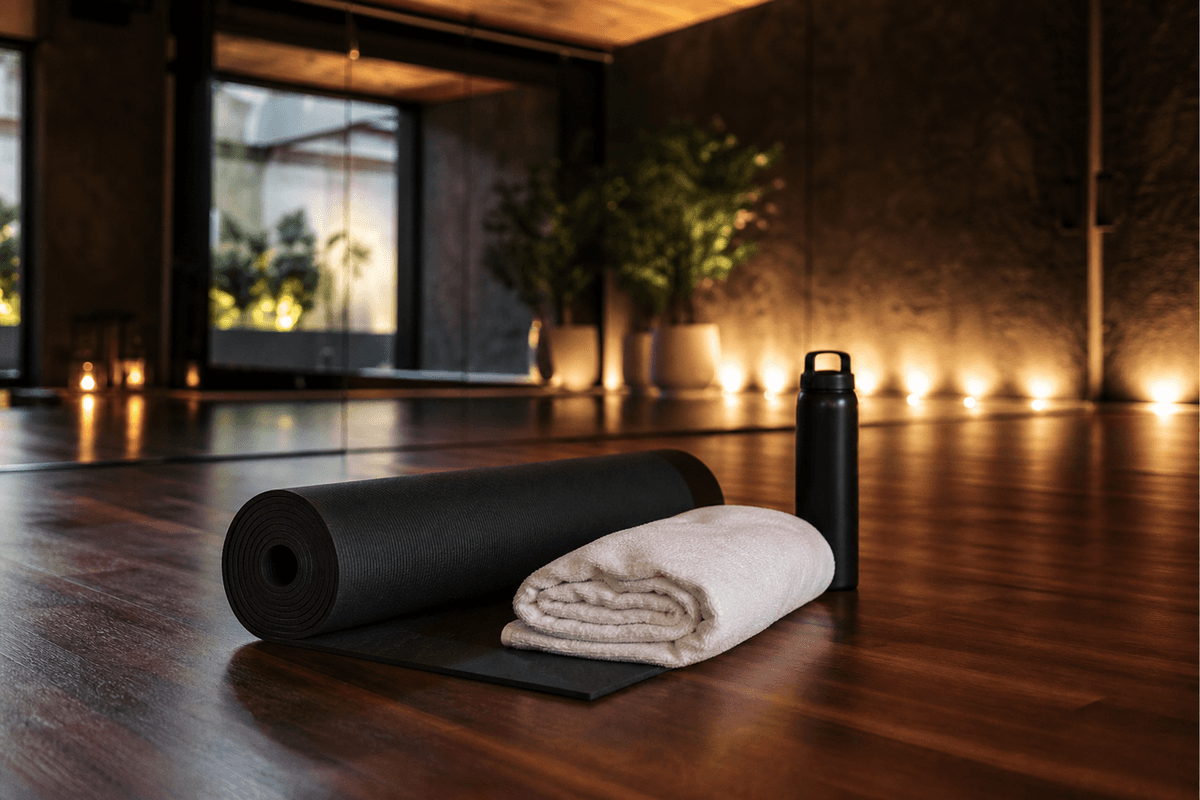
The two essentials: a large towel to lay over your mat, because a bare mat becomes a slip hazard once you are sweating, and plenty of water. Many people bring a second small towel for their face and hands. Some studios rent mats and towels, but check first.
Grip can vanish entirely when wet, so a proper mat towel is not optional in a hot class the way it might be in a normal one.
What will the class actually feel like?
Intense early, then a strange calm, with some dizziness possible.
The first ten to fifteen minutes often feel the hardest, when the heat hits and your body has not settled. Many first-timers hit a moment of “I cannot do this,” which usually passes if you slow down and breathe.
Feeling lightheaded, dizzy, or slightly nauseous is common in a first hot class and is your cue to stop, sit or lie down, and sip water. This is expected. Experienced practitioners rest constantly. Child’s pose exists for exactly this.
If the dizziness is strong, if you feel your heartbeat pounding oddly, or if you stop sweating and feel chilled, leave the room and cool down. Those are not push-through signs. Our first yoga class guide covers the non-heat basics of walking in.
Who should be cautious with hot yoga?
Several groups, because the heat is a real cardiovascular and thermal load.
If you are pregnant, have a heart condition, low or unstable blood pressure, or a condition affected by heat, check with a doctor before a hot class specifically, even if regular yoga is fine for you. The room is the variable that changes the risk.
If you are new to exercise, prone to fainting, or unwell, start with a cooler class and work up. There is no prize for enduring 105 F on day one. Our yoga benefits guide covers what yoga does and does not do, heat aside.
Overheating is a genuine risk, not a mindset problem. Respect it and the class is safe and enjoyable.
The bottom line on hot yoga
Expect real heat, heavy sweat, and a first class that is about staying calm and hydrated rather than performing. Prepare by hydrating all day, wear minimal quick-dry clothing, bring a mat towel and water, and rest without guilt whenever you need to.
Get through it once, calmly, and the second class is a completely different experience.
To find a hot yoga or wellness studio near you, start with our city wellness maps.