Do recovery trackers actually work? HRV, Oura, and WHOOP, honestly
A recovery score is a real measurement wrapped in a proprietary guess. The sensor is often accurate. The single number it hands you, and what you are told to do about it, is where to keep your skepticism.
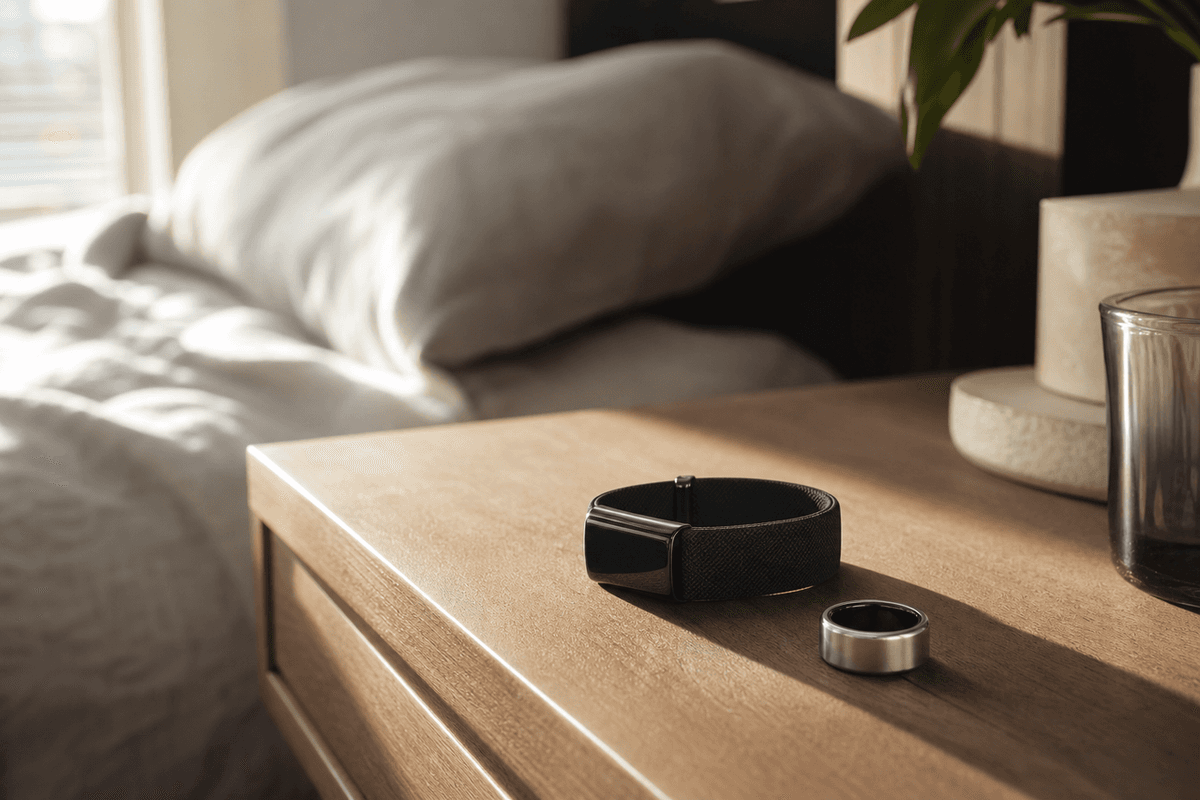
Short answer: The sensors are honest, the score is a guess. Resting heart rate and HRV are real signals that good wrists and rings measure reasonably well at rest, while sleep-stage breakdowns are shakier. The single recovery number is proprietary, with thin evidence that obeying it improves anything. Watch the multi-week trend instead.
Partly. The underlying measurements, resting heart rate and heart rate variability, are real physiological signals, and the better devices measure them reasonably accurately at rest. Where it gets shakier is the single recovery or readiness score, which is a proprietary interpretation, and the evidence that acting on that number actually improves your health or performance is thin.
So a tracker is a genuinely useful mirror for trends, and a questionable oracle for daily decisions. The number is real data run through a guess.
Used lightly, it can be informative. Used anxiously, it can invent a problem it then measures.
What is HRV, and is it a real thing?
Yes, it is a real and meaningful measurement.
Heart rate variability is the tiny variation in time between your heartbeats. Counterintuitively, more variability is generally healthier: it reflects a nervous system that is flexible and well recovered, while low HRV can reflect stress, fatigue, illness, or poor sleep.
HRV is used in genuine clinical and sports-science research. It is not wellness pseudoscience. The signal itself is legitimate.
The catch is that HRV is highly individual and noisy. Your absolute number means little compared with someone else’s, and it swings day to day for reasons including alcohol, a late meal, a hard workout, or a poor night. This is why trackers focus on your personal trend, which is the right instinct.
Are the devices accurate?
At rest, often yes. In motion, less so.
Validation studies generally find that good wrist and ring devices measure resting heart rate and HRV reasonably well, and estimate total sleep time decently. Where accuracy drops is in the finer claims: sleep-stage breakdowns, deep versus REM, are considerably less reliable, and heart-rate accuracy falls during intense or jerky exercise.
So trust the resting-heart-rate trend and the rough sleep-duration figure more than the confident pie chart of your sleep stages. The device is measuring something real and adding an interpretation on top, and the interpretation is the softer part.
None of these are medical devices. They are consumer wearables, and they should not be used to diagnose anything. Our practitioner credentials guide is the reminder that a real concern belongs with a doctor.
What about the recovery or readiness score?
That is the part to hold loosest.
The single daily score, readiness, recovery, whatever the brand calls it, is a proprietary algorithm combining HRV, resting heart rate, sleep, and other inputs into one number. The inputs are real. The formula is a black box, and it differs between brands, so the same night can produce different verdicts on different devices.
More importantly, there is little independent evidence that changing your behaviour based on the daily score improves outcomes. It may, and it is plausible, but “my ring told me to take it easy” is not yet backed by strong trials showing better health or performance than just listening to your body.
Treat the score as one input, roughly aligned with how you already feel, not as an instruction.
Can a tracker make things worse?
Yes, in a specific and well-documented way.
There is a real phenomenon of people becoming anxious about their sleep and recovery data, sometimes called orthosomnia, where worrying about a poor score makes sleep and stress worse, which then produces worse scores. The tool creates the problem it measures.
If you are the kind of person who will treat a red morning score as a verdict on your day, or who will lie awake calculating whether you will sleep enough to score well, a tracker may cost you more calm than it gives you. Our sleep guide covers what actually helps sleep, none of which is a number.
The data is meant to serve you. If it is running you, that is a reason to take the device off for a while.
How should you actually use one?
For trends and curiosity, not daily verdicts.
The genuinely useful pattern is the multi-week trend. A resting heart rate creeping up, or HRV trending down over a week, can flag that you are getting run down or coming down with something before you consciously notice, which is legitimately handy.
It is also good for seeing cause and effect over time: how alcohol, a late meal, a hot room, or a hard training block actually move your numbers. That feedback can quietly improve your habits. Our how often guide covers dosing recovery sensibly.
Check it a few times a week, watch the trend, and let a single bad morning be a shrug rather than a diagnosis.
The bottom line on recovery trackers
The sensors and HRV are real and often accurate at rest. The single recovery score is a proprietary interpretation with thin evidence that obeying it improves anything, and for anxious users it can backfire.
Use a tracker as a trend mirror and a curiosity, not as a daily boss. Your own sense of how you feel is still the most validated instrument you own.
To find recovery and wellness studios near you, start with our city wellness maps.
If the number you keep checking is a sleep score, our guide to what actually helps you sleep covers what moves it and what does not.