Osteoarthritis: what actually helps, and where wellness fits
Most people who say arthritis mean osteoarthritis, and most of what they are told about it is a generation out of date. The joint is not a tyre wearing down, and the treatment with the best evidence is the one that sounds least like a treatment.
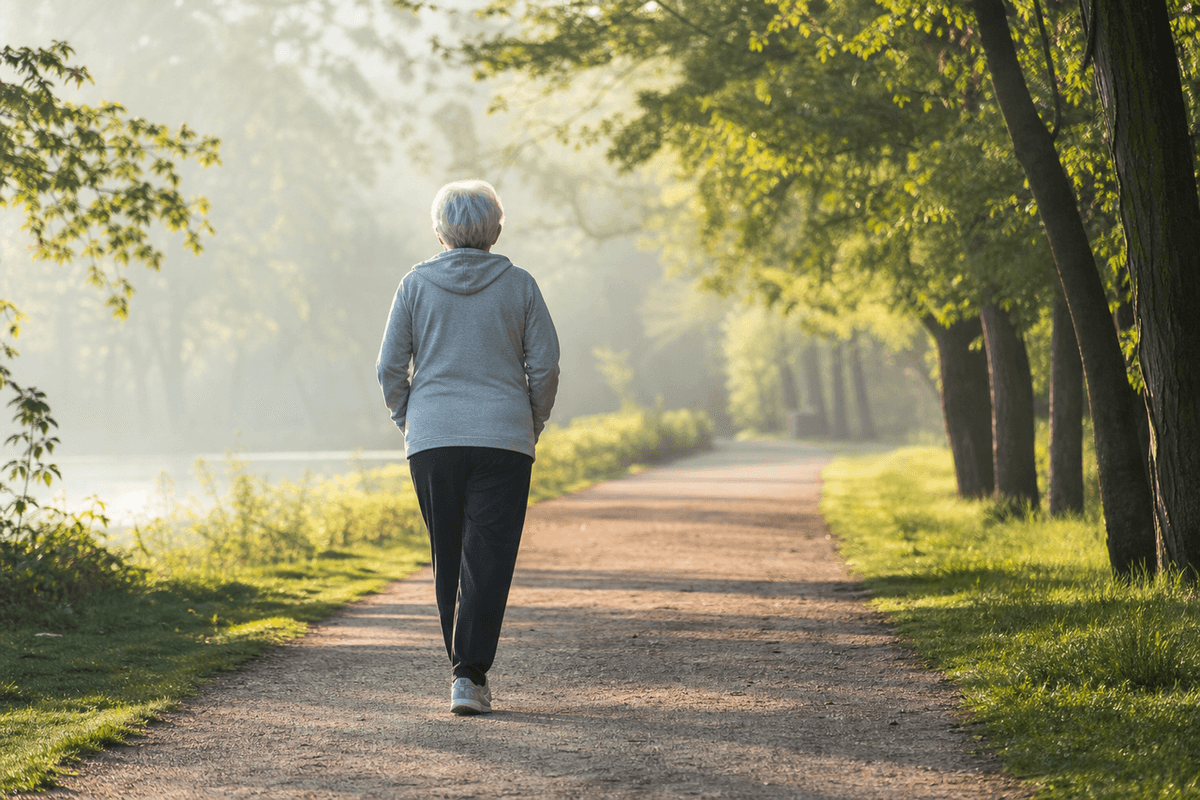
The honest verdict first: what changes the course of osteoarthritis is movement and loading, understanding the condition and, where it is relevant, weight management. Exercise is the first-line treatment in every major guideline, and it is there because of the evidence rather than as a consolation prize.
Heat, hot water, massage and the rest of the wellness menu ease stiffness and comfort. That is worth having, and none of it changes the joint. Nothing sold as joint repair or cartilage regeneration has anything like the evidence exercise has.
This is general information, not medical advice. The version of this that belongs to a clinician has its own section further down.
What osteoarthritis actually is
The common, age-related kind, and not a tyre wearing down.
Osteoarthritis is what most people mean when they say arthritis. Cartilage thins, the bone underneath changes shape and the joint lining can become irritated. The signature is stiffness after rest, first thing in the morning or after a long sit, that eases once you get moving, most often in the knees, hips, hands and spine.
The “wear and tear” picture is out of date. Osteoarthritis is a whole-joint process involving bone, cartilage, the lining and the muscles around it, and cartilage does not wear out from use the way a tyre does. You may also hear it called OA or degenerative joint disease, which sound worse than they are.
Our guide to which bodywork suits which complaint covers getting assessed first, and our knee pain explainer sorts the osteoarthritic knee from the other knee patterns.
Osteoarthritis versus rheumatoid arthritis
Different conditions that share a word.
Rheumatoid arthritis is an autoimmune disease in which the immune system attacks the joint lining, often on both sides of the body at once, with fatigue, flares and stiffness that lasts long into the morning, and it is treated with disease-modifying medication. Osteoarthritis is not autoimmune, and its stiffness usually loosens soon after you start moving. Our guide to rheumatoid and psoriatic arthritis covers the wellness side of the autoimmune kind.
Why movement beats rest
An unloaded joint gets stiffer and weaker, not better.
Every major guideline puts exercise first. Bannuru and colleagues in Osteoarthritis and Cartilage in 2019 set out the OARSI guidelines for knee, hip and polyarticular osteoarthritis, with structured exercise, education and weight management at the core for everyone. Kolasinski and colleagues in Arthritis Care and Research in 2020, writing for the American College of Rheumatology and the Arthritis Foundation, strongly recommend exercise and tai chi.
The trial evidence underneath is solid. Fransen and colleagues in the Cochrane Database of Systematic Reviews in 2015 found high-quality evidence that land-based exercise reduces pain and improves physical function in knee osteoarthritis in the short term, and that the benefit fades in the months after a program ends unless people keep moving. Exercise for osteoarthritis is a habit, not a course.
Weight belongs in the same sentence where it is relevant, because the load through a knee or hip is partly about what sits above it.
None of that is a plan to design yourself. What the exercise looks like and how it builds are questions for someone who can examine the joint, and our guide for older adults starting safely covers beginning gently when the joint is already sore.
What tai chi, yoga and water offer
Ways to move that a sore joint tolerates.
Tai chi has the strongest position of the three. Wang and colleagues in Annals of Internal Medicine in 2016 ran a randomized trial in knee osteoarthritis in which tai chi produced improvements in pain and function comparable to physical therapy over twelve weeks, with additional benefit for mood and quality of life. Our tai chi and qigong explainer covers what a class involves.
Yoga has a conditional place in the American College of Rheumatology guideline for the knee, on thinner evidence. Gentler styles are the sensible starting point.
Water takes the load off before you move. Bartels and colleagues in the Cochrane Database of Systematic Reviews in 2016 found small, short-term benefits from aquatic exercise on pain, function and quality of life in knee and hip osteoarthritis. Modest, and a reasonable way in when the land-based version is too sore.
Where heat, hot springs, sauna and cold fit
Comfort measures, and comfort is not nothing.
Heat eases the stiffness that makes an osteoarthritic joint reluctant first thing, and the evidence for it is thin rather than negative. Brosseau and colleagues in the Cochrane Database of Systematic Reviews in 2003 found only a few small, low-quality trials of heat and cold for osteoarthritis, and the American College of Rheumatology guideline gives both a conditional, comfort-level place rather than a treatment-level one.
Hot springs add buoyancy to the warmth, and moving in the water is the aquatic exercise above in a nicer setting. Our guide to hot springs and thermal soaking covers choosing one, and our read on whether an infrared sauna helps with pain covers what sauna heat does and does not do.
Cold is comfort after a flare rather than a treatment, and the choice between the two is mostly preference. Skip heat on a joint that is already hot and swollen.
What massage can and cannot do
Less pain and better function for a while, and no change to the joint.
Perlman and colleagues in PLOS ONE in 2012 and Perlman and colleagues in the Journal of General Internal Medicine in 2018 ran randomized trials of weekly whole-body Swedish massage over about two months for knee osteoarthritis, and found less pain and better function than light touch or usual care. The benefit faded after the sessions stopped.
Massage eases the guarding in the muscles around a sore joint and makes the leg or hip feel freer. It does not touch cartilage, bone or what the joint can carry, and our comparison of massage and physical therapy covers why only one of those changes what a joint can do next month.
Ask for moderate pressure around the joint rather than deep work on it. No hands-on work belongs on a joint that is hot and swollen.
Hand osteoarthritis
The base of the thumb and the finger joints, with their own comforts.
Hand osteoarthritis shows up as aching, stiff finger joints with knobbly enlargement, and a sore base of the thumb that objects to jar lids and keys. Warmth is the comfort measure that fits: warm water in the morning, a heated wrap, or the paraffin-style heat that hand clinics and some spas offer.
Hand exercises and splints are a clinician’s or hand therapist’s domain, and we are not handing out a hand program for joints nobody here has examined.
Osteoarthritis at a glance
| Approach | What the evidence supports | Realistic goal |
|---|---|---|
| Exercise and strength work | First-line in every major guideline | Less pain and better function, kept up |
| Tai chi | Comparable to physical therapy in a randomized trial | Pain, function and mood |
| Aquatic exercise, hot springs | Small, short-term benefits | A way in when land is too sore |
| Heat, sauna, paraffin | A few small trials, comfort-level in guidelines | Easier mornings |
| Cold | The same thin evidence as heat | Comfort after a flare |
| Massage | Less pain while sessions continue | Comfort, not a changed joint |
| Joint repair, regeneration, detox | Nothing comparable to exercise | Keep your money |
What is oversold
Anything sold as repairing the joint from the outside.
“Joint repair”, “cartilage regeneration”, detox programs and supplement stacks are the standard pitch, and none of it has evidence in the same league as a walk. Cartilage does not regrow because of a cream, a stack or a cleanse, and our guide to spotting a nonsense wellness claim is the filter. Supplements sit outside what we cover, and we recommend none.
PEMF mats are marketed hard at osteoarthritis, and our read on whether PEMF mats work covers that evidence. Claims about realigning a joint do not describe anything hands can do.
The expensive mistake is subtler: a course of appointments with no active component. It buys good afternoons and the same joint next year.
When to see a clinician
Some of this needs a clinician, firmly, and all of it needs one first.
Get a joint looked at rather than booked around if it is hot, red and swollen, if it changes rapidly over days rather than months, if pain wakes you at night, if you cannot put weight on it, or if it locks or gives way. None of that is osteoarthritis behaving normally.
Get assessed in the first place too, because a diagnosis is what makes the movement advice safe, and because the options beyond it, injections, medication and eventually surgery, are the care team’s decisions. We take no position on any of them, and we only recommend what we would send a friend to, which here often means a clinician first.
FAQ
Does exercise make osteoarthritis worse? No. Exercise is the first-line treatment in every major guideline, and cartilage does not wear out from use like a tyre. Some soreness after starting is common, and what the program looks like is a clinician’s call.
Can massage or heat repair osteoarthritis? No. Massage has decent trial evidence for less pain and better function while sessions continue, and heat eases stiffness. Neither changes cartilage or bone.
Is a sauna or hot spring good for osteoarthritis? As comfort, often yes. Warm water eases stiffness and buoyancy takes load off. Skip the heat on a joint that is already hot and swollen.
Should I rest osteoarthritis during a flare? The usual direction is to ease off what aggravated it rather than stop altogether, with heat or cold for comfort. A flare that is hot and swollen, or does not settle, is a clinician’s question.
The bottom line on osteoarthritis
Osteoarthritis is the common, age-related joint condition, a whole-joint process rather than a tyre wearing down, most often in the knees, hips, hands and spine. Stiffness after rest that eases with movement is its signature.
What changes its course is movement and loading, understanding the condition and, where it applies, weight management. Exercise is first-line in every major guideline, tai chi has a randomized trial behind it, and water is a way in. Heat, hot springs, sauna and massage ease stiffness and comfort without changing the joint, and joint repair, regeneration and detox pitches have nothing like that evidence.
A hot, swollen joint, rapid change, night pain, an inability to bear weight or locking is a clinician’s question, and so is the plan itself.