Is a home reformer worth it? An honest buyer's look
A studio reformer habit costs real money every month, and the machines now come in home sizes. Whether buying one pays off depends on two numbers and one honest question about supervision.
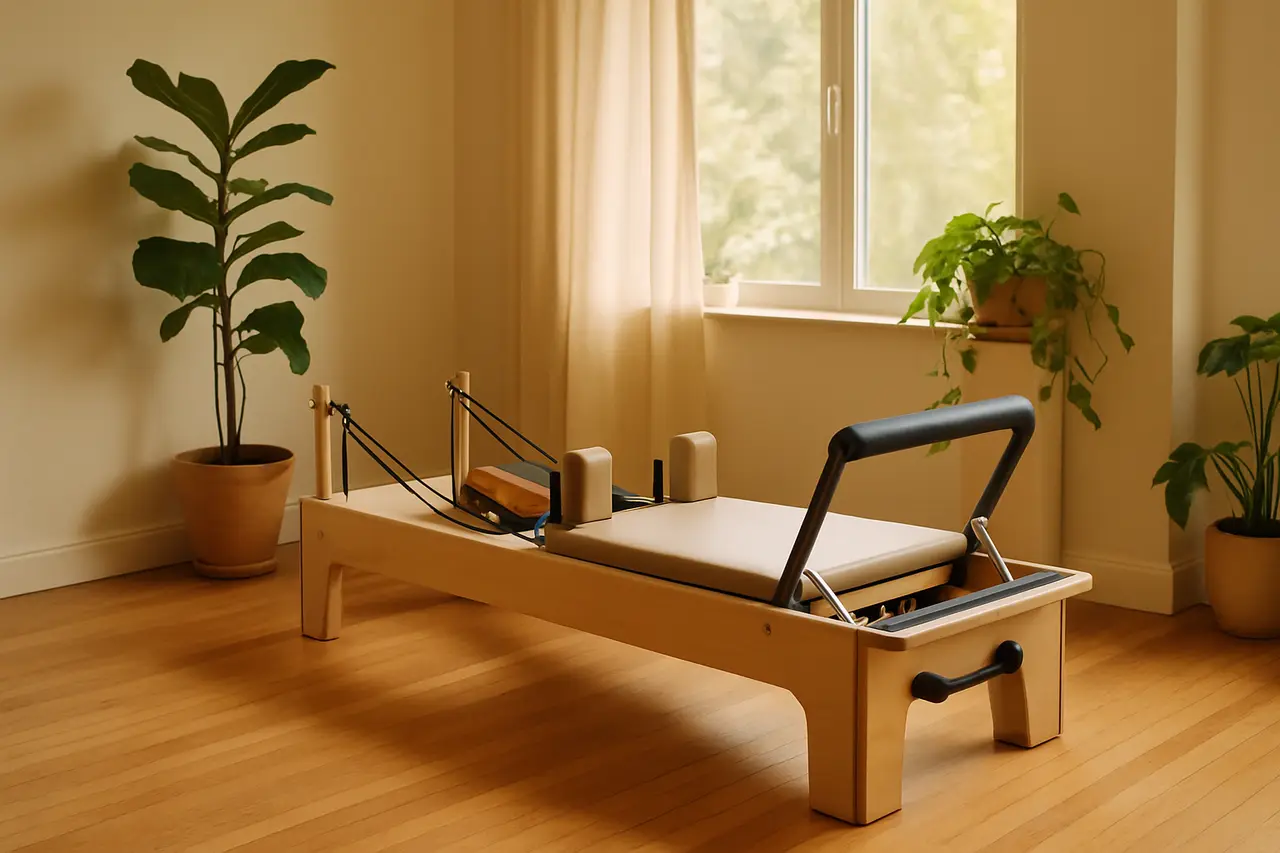
Short answer: Worth it if you already practice consistently, learned your form in taught classes, and have a sofa-sized patch of clear floor. At roughly $30 to $45 a class, two sessions a week pays off a mid-range machine in about a year. As a way to start, no: the reformer rewards taught technique.
A home reformer is worth it if you already practice reformer Pilates consistently, learned your form in taught classes, and have the space, because the machine typically pays for itself against studio prices in about a year of regular use. It is not worth it as the way to start: the reformer rewards technique, and technique comes from being taught, not from owning springs.
Here is the honest buyer’s math, tier by tier.
The home reformer decision at a glance
| Studio classes | Home reformer | |
|---|---|---|
| Typical cost | Roughly $30 to $45 a class | Hundreds to several thousand once |
| Form correction | Instructor watching you | None unless you add virtual coaching |
| Programming | Built into the class | On you, or an app subscription |
| Space needed | None | A footprint about the size of a sofa |
| Consistency driver | Booked slots, sunk cost | Discipline, zero friction |
| Resale | Nothing to resell | Quality frames hold value reasonably |
| Best for | Learning, accountability, community | Committed regulars adding volume |
The two numbers that decide it
Your real monthly class spend, and your honest sessions per week at home.
The break-even. At typical studio prices, two classes a week runs roughly $250 to $350 a month. Against a mid-range home machine, that is a payback measured around a year; against a budget frame, a few months; against a studio-grade machine, two years or more. Run it with your own numbers, not the brochure’s.
The usage haircut. Home equipment gets used less than buyers project, and a reformer is a large object your living room reminds you about. If you do not already maintain a home practice of some kind, assume your projected usage is optimistic and halve it before doing the math. If the purchase only makes sense at your most disciplined imagined self, keep the studio habit instead.
What the tiers actually buy
Budget frames (roughly $300 to $700). Lighter builds, lighter spring feel, often foldable. Genuinely fine for maintaining a practice you already have, and the sensible first machine. The honest caveat: the carriage feel is not a studio machine, and taller or heavier users notice the limits sooner.
Mid-range and smart reformers (roughly $2,000 to $4,000). Studio-adjacent build quality; the smart ones add guided classes and form cues by camera or sensors, which partially answers the supervision gap for a subscription fee. This is where most serious home buyers should look.
Studio-grade machines ($4,000 and up). What your studio uses. Buy this only if the reformer is the center of your training and the machine will outlive several apartments. It will, which is also why used studio-grade frames are worth watching.
Whatever the tier, the springs and the footprint are the two specs to check in person if you can: spring feel varies more between brands than the photos suggest, and a reformer needs clear floor well beyond the frame itself.
Learn first, buy second
The reformer is equipment that assumes technique.
Spring tension hides poor mechanics in ways mat work does not, which is why we would not recommend anyone start reformer Pilates unsupervised at home. Take taught classes until the foundational repertoire feels boring, then bring it home. Our guides on reformer vs mat Pilates, barre vs reformer, reformer Pilates vs Lagree and group class vs private session cover the learning path, and our city directories list the studios near you.
One session type worth budgeting even after you buy: an occasional private, specifically to audit the habits you are building alone. It is the cheapest insurance on a four-figure machine.
FAQ: home reformers
Can I start reformer Pilates at home as a beginner? We would not recommend it. Learn the repertoire in taught classes first; the machine amplifies whatever mechanics you bring to it.
Do the smart reformers replace an instructor? They narrow the gap with guided classes and cues, not close it. Treat their subscriptions as part of the real price when you do the math.
How much space does a reformer actually need? Plan for the frame plus working clearance on all sides, roughly a sofa’s footprint of dedicated floor. Foldable frames help storage, not the space you need while using it.
Is a used studio machine a good buy? Often the best value in the category, since quality frames last decades. Check the springs’ age and ride the carriage before paying.
The bottom line on home reformers
Worth it for the committed: if you already practice twice a week, learned form in classes, and have the floor, the machine pays for itself in about a year and removes every scheduling excuse. Not worth it as a shortcut into the practice; the studio is the right first spend, and our honest read is that an unused reformer is the most expensive coat rack in fitness.