Rheumatoid and psoriatic arthritis: what wellness can and cannot do
Most arthritis advice online is written for wear and tear. These two are a different disease, and the useful adjustments are about flares, medication and shared water rather than about protecting a worn joint.
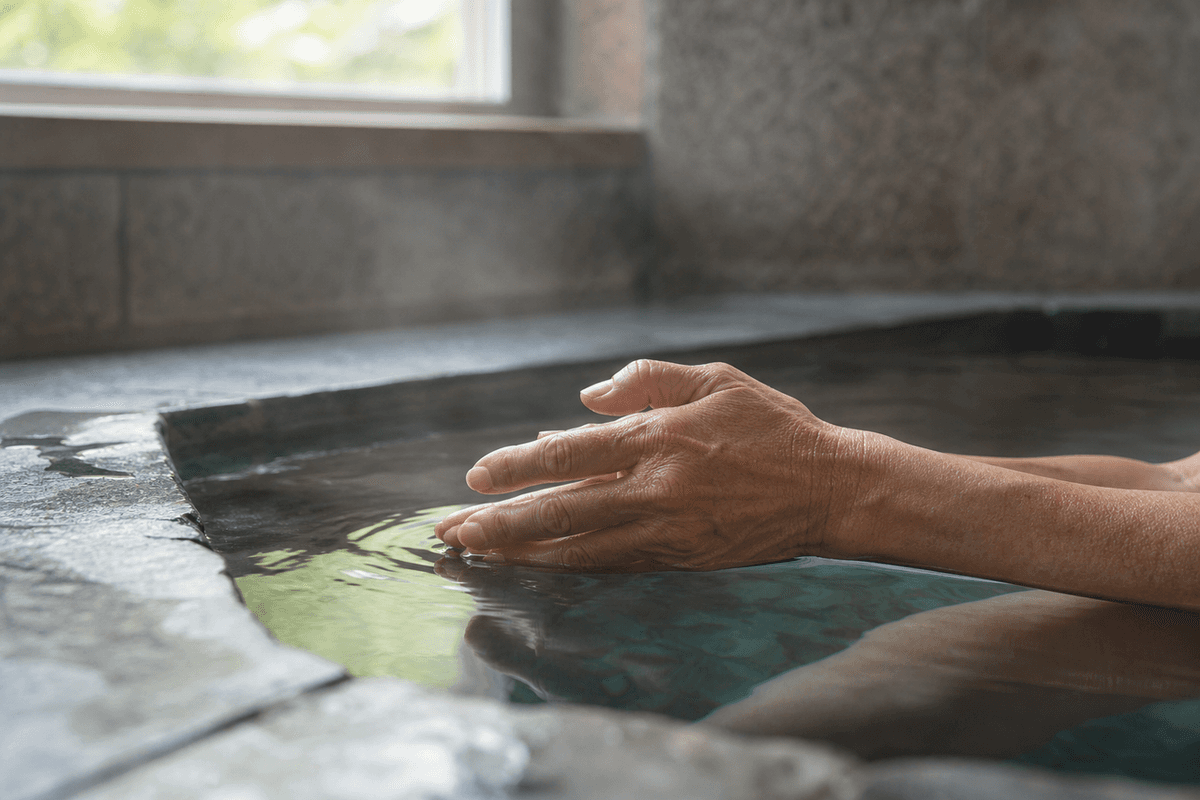
The honest verdict first: rheumatoid arthritis and psoriatic arthritis are inflammatory, immune-driven diseases rather than wear and tear, and the treatment that changes their course is disease-modifying medication managed by a rheumatologist. Around that, movement is safe and recommended, warmth eases stiffness between flares, and massage at moderate pressure helps comfort as long as inflamed joints are left alone.
The real risks are specific: working on an actively inflamed joint, and, on immune-suppressing medication, shared water and skin infections. Our guide to wellness with an autoimmune condition is the parent of this piece. It covers the shared-water question in full and explains why “immune boosting” and “anti-inflammatory detox” are the wrong frames for you, so this piece takes one pair of conditions and gets specific.
This is general information, not medical advice. Your rheumatologist knows your disease and your medication, and their answer beats anything here.
What makes these different from osteoarthritis
A different disease, not a worse version of the same one.
Osteoarthritis is a joint’s cartilage and bone changing over years of use. Rheumatoid arthritis is the immune system attacking the lining of joints, and psoriatic arthritis is the same kind of process in someone with psoriasis, sometimes years before or after the skin shows anything.
Rheumatoid arthritis tends to be symmetrical, the same joints on both sides, and often starts in the hands and feet. Morning stiffness lasts an hour or more rather than easing within minutes, the disease runs in flares and quieter spells, and fatigue is part of it. Psoriatic arthritis adds skin and nail changes, can swell a whole finger or toe, and often involves the points where tendons attach to bone.
Osteoarthritis is stiff for minutes after rest and worse with use, and our osteoarthritis guide covers it on its own terms. The two can coexist, which is one reason our guide to which bodywork suits which complaint puts assessment before booking.
Why the medication is the treatment
Everything else sits around it.
The guideline rheumatologists work from, Fraenkel and colleagues in Arthritis Care and Research in 2021, is built around disease-modifying medication and treating toward a target of low disease activity. That medication is what stops the immune system damaging joints, and nothing in a studio, a sauna or a treatment room does that job.
Saying so plainly changes which question is useful. Wellness here is for comfort, stiffness, fatigue and mood, in the space the medication creates, and a practitioner who presents their work as an alternative to your prescription is a reason to leave.
Why movement is recommended rather than merely allowed
The guidelines put it inside standard care.
The old blanket advice was to rest inflamed joints, and the evidence points the other way. The European recommendations, Rausch Osthoff and colleagues in Annals of the Rheumatic Diseases in 2018, state that physical activity is safe and beneficial for people with inflammatory arthritis and should be an integral part of their care.
That describes disease under control rather than mid-flare, and what it looks like for your joints is a clinician’s call. We are not handing out a programme for hands nobody here has examined, and our comparison of massage and physical therapy covers why strengthening belongs with someone who can.
Tai chi is the class people ask about most. Mudano and colleagues in the Cochrane Database of Systematic Reviews in 2019 found the evidence in rheumatoid arthritis too low in quality to say whether it improves pain or function, while noting no safety signal. Our tai chi and qigong guide covers the form.
Heat, sauna and hot water between flares and during one
Warmth for a stiff joint, never for a hot one.
Between flares, warmth is a long-standing comfort measure for stiffness, and there is a little direct evidence. Oosterveld and colleagues in Clinical Rheumatology in 2009 studied infrared sauna in people with rheumatoid arthritis and ankylosing spondylitis and found short-term improvements in pain and stiffness with no worsening of disease activity. The effects were modest and the sample small, so read it as reassuring rather than as a treatment. Our guide to infrared sauna for pain covers the wider evidence.
Mineral baths have a longer tradition and thinner proof. Verhagen and colleagues in the Cochrane Database of Systematic Reviews in 2015 found the evidence for balneotherapy in rheumatoid arthritis too weak and low in quality to conclude either way. Our hot springs guide covers the soak on its own merits.
During a flare the picture reverses. A hot, swollen joint usually feels worse with heat on it, and the useful moves are rest, something cool on it, and a call to your team rather than a session. On immune-suppressing medication, a dry sauna or a private option carries less of the shared-water risk than a communal tub.
What massage can do, and the inflamed-joint rule
Comfort from hands, with one line not to cross.
Field and colleagues in Complementary Therapies in Clinical Practice in 2013 compared moderate-pressure with light-pressure massage on the arms and hands of people with rheumatoid arthritis and reported less pain, better grip strength and more range of motion after a month in the moderate-pressure group. It is small and preliminary, and a fair reason to ask for moderate rather than featherlight pressure on muscles when your joints are quiet.
The rule is that an actively inflamed joint, hot, swollen and painful, is left alone. Work goes to the muscles around it and elsewhere, never into the joint, and nobody should be forcing a stiff joint through its range for you.
One caution is specific to rheumatoid arthritis. It can affect the joints at the top of the neck, so forceful neck manipulation is one to decline, and our piece on whether neck manipulation is safe explains why the question is sharper here than for most people.
Medication realities that change what you tell a studio
Say what you take, in general terms, before anyone starts.
Disease-modifying medication and biologics damp the immune response. That is why they work, and why communal hot tubs, plunge pools and wet floors deserve more caution than the heat itself. Any skin infection or slow-healing cut is a reason to pause hands-on work until it has cleared.
Steroids, whether a short course or long-term, thin the skin, make bruising easier and over time affect bone density, which argues for lighter pressure than you might otherwise choose and for saying so at the start.
Psoriatic arthritis adds the skin. Plaques are not contagious, and oil and friction over active patches can still irritate them, so ask for those areas to be worked around. A recently injected site is best left alone too, and your team can say for how long.
Rheumatoid and psoriatic arthritis at a glance
| Practice | Between flares | During a flare |
|---|---|---|
| Walking, swimming, general movement | Recommended, part of standard care | Gentle, as tolerated, with your team’s input |
| Strength and conditioning | Recommended, under guidance | Rest the affected joints |
| Yoga, Pilates, tai chi | Gentle forms, no forced range | Usually not the week for a class |
| Dry or infrared sauna | Often eases stiffness | Skip until it settles |
| Communal hot tub or plunge pool | The infection question on immune-suppressing drugs | Skip |
| Massage, moderate pressure on muscles | Helps comfort, flag medication and skin | Around an inflamed joint, never on it |
| Heat on a stiff joint | A comfort tool for morning stiffness | Usually unwelcome |
| Cool on a hot joint | Rarely needed | Comfort while you contact your team |
What is oversold
The two pitches aimed straight at this reader.
“Immune boosting” is the wrong direction for an immune system that is already overactive, and “anti-inflammatory detox” describes nothing that hands, heat or a juice can do to a systemic disease. The parent guide sets out why, and our piece on what actually reduces inflammation covers the general claim, so we will not repeat either here.
Beyond those, be wary of anything sold as reversing arthritis or promising remission. Passive treatment alone is the subtler trap: appointments that feel good on the day and change nothing about how you move or what you take.
When to see your rheumatologist
Some of this is a call, not a booking.
A new hot, swollen joint is a same-day question. So is a flare that does not settle the way your flares usually do, and any fever, which on immune-suppressing medication is treated as serious until proven otherwise.
New symptoms outside the joints belong to your team as well: eye pain or redness, breathlessness, a new rash, numbness or weakness. Both conditions can reach beyond the joints, and your rheumatologist knows which of your symptoms fit the disease and which need a different look.
Before starting anything strenuous, a new class, a retreat with a physical programme, a first sauna, ask, because the answer changes with disease activity and treatment phase. If you book bodywork alongside proper care, check whoever you see with our credential-checking guide. We only recommend what we would send a friend to, and here that means a rheumatologist first.
FAQ
Is a sauna safe with rheumatoid arthritis? Between flares, usually yes, and a small study found short-term easing of pain and stiffness with no worsening of disease activity. On immune-suppressing medication the shared-water question matters more than the heat, so a dry sauna beats a communal hot tub.
Can massage make rheumatoid arthritis worse? Not when it stays on muscles and off inflamed joints. Working into a hot, swollen joint, forcing its range, or manipulating the neck forcefully are the mistakes.
Should I exercise during a rheumatoid arthritis flare? Gently, as tolerated, and with your team’s input rather than a class timetable. Between flares the guidelines treat movement as part of standard care.
Does psoriatic arthritis change what I tell a massage therapist? Yes. Mention the skin, since plaques are best worked around, any tender tendon attachments, and your medication. The inflamed-joint rule is the same as for rheumatoid arthritis.
The bottom line on rheumatoid and psoriatic arthritis
Rheumatoid and psoriatic arthritis are the immune system attacking joints, not joints wearing out, and the treatment that changes their course is disease-modifying medication managed by a rheumatologist. Everything a studio, a sauna or a therapist offers sits around that.
Between flares, movement is part of standard care, warmth eases stiffness, and moderate massage on muscles helps comfort. During a flare the inflamed joint is left alone, heat on it is unwelcome, and the useful move is a call to your team.
The specific risks are an inflamed joint, forceful neck manipulation, and, on immune-suppressing medication, shared warm water and skin infections. A new hot swollen joint, a flare that will not settle, fever, or new symptoms outside the joints are reasons to call your rheumatologist rather than book.