Sound bath vs meditation: which is better for stress?
One asks you to do the work of quieting your own mind. The other floats sound at you and lets your mind follow. For a stressed beginner, the easier one is often the one that actually helps.
Short answer: Meditation has the far stronger evidence for stress and costs nothing, but it takes effort to start and stick with. A sound bath is passive, immediately relaxing and thinly evidenced, and for someone too stressed to sit and meditate it is the one they will actually attend. Neither treats serious anxiety.
For stress, meditation has considerably stronger evidence and builds a skill you can use anywhere for free. A sound bath is passive, easy, and immediately relaxing, with much lighter evidence behind it. Neither is a treatment for serious anxiety.
The honest twist is that the better-evidenced option, meditation, is also the harder one to actually start and stick with. A sound bath asks almost nothing of you, and for someone too stressed or skeptical to sit and meditate, the easy thing they will actually do can beat the effective thing they avoid.
So choose by temperament and by what you will realistically keep doing, not just by the strength of the studies.
What is the difference in practice?
One is active and internal, the other passive and external.
Meditation asks you to do the work: sit, focus your attention, notice when your mind wanders, and gently return, usually to your breath or a point of focus. The calm comes from a skill you are practising, and it can be done anywhere, any time, for free. Our meditation for beginners guide covers starting.
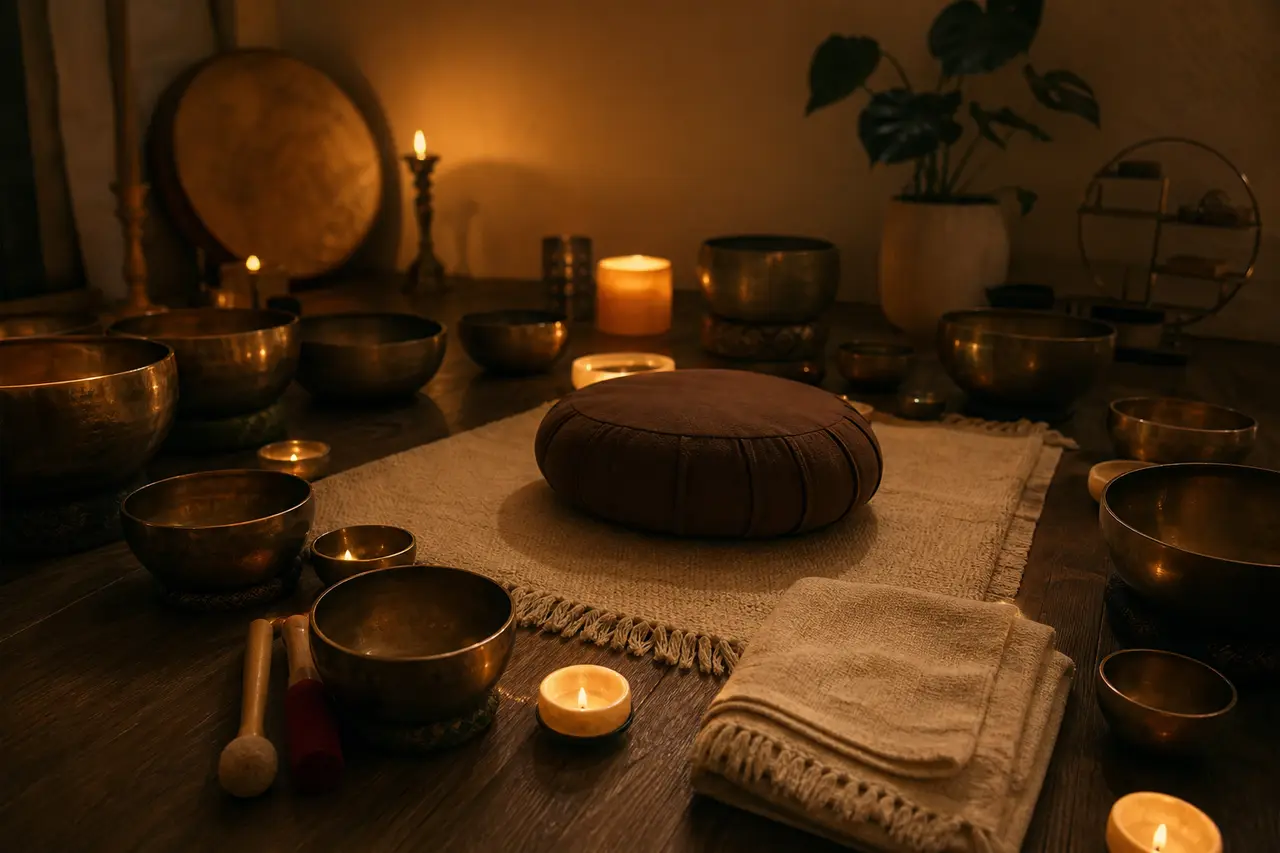
A sound bath is something done to you. You lie down, and a facilitator plays resonant instruments, singing bowls, gongs, chimes, while you simply listen and let the sound wash over you. There is nothing to achieve and no technique to get right. Our first sound bath guide covers a session.
That active-versus-passive split is the whole practical difference, and it drives who suits which.
Which has better evidence for stress?
Meditation, clearly, and it is not close.
Meditation and mindfulness have a large research base showing genuine, if moderate, benefits for stress, anxiety, and wellbeing across many trials. It is one of the better-supported practices in the whole wellness field. Our meditation benefits guide covers what the science does and does not show.
Sound baths have far less evidence. What exists is mostly small studies, such as work by Goldsby and colleagues (2017) reporting improved mood and reduced tension after singing-bowl sessions, based largely on self-report with no real control. It is promising and consistent with how relaxing they feel, but it is thin, and much of the effect is plausibly deep rest and expectation rather than anything specific to the frequencies.
So on evidence alone, meditation wins comfortably. Claims that specific sound frequencies heal or tune your body are not supported.
So why would you choose a sound bath?
Because ease and enjoyment decide what you actually do.
Meditation’s catch is that it is hard, especially when stressed. Sitting with a racing mind can feel frustrating or even briefly worse before it helps, and a lot of beginners quit early, concluding they cannot do it. A sound bath removes every barrier: you just lie down and listen, and the relaxation is close to automatic.
For someone overwhelmed, skeptical, or put off by the effort of meditation, a sound bath is a gentle, guaranteed hour of calm they will happily return to. An effective practice you avoid helps less than a pleasant one you actually attend.
It is also communal and atmospheric, which some people find more soothing than sitting alone in silence. Our float tank versus sound bath guide covers another passive reset.
Cost and practicality: how do they compare?
Meditation is free and portable. A sound bath is a paid outing.
Meditation costs nothing and needs nothing once you learn the basics, and you can do five minutes at your desk or twenty before bed. That portability is a large part of its value for stress, because you have it exactly when stress hits.
A sound bath is a booked, paid group session at a studio, typically in the range of other wellness classes, and you get its benefit only while you are there. Our session cost guide covers pricing. It is an experience you schedule, not a tool you carry.
If you want an always-available stress tool, that points to meditation. If you want a restful treat, that points to the sound bath.
Can you use both?
Yes, and they complement each other well.
A common and sensible pattern is to use meditation as your daily, portable practice and the occasional sound bath as a deeper, communal reset, a bit like cooking at home most days and going out sometimes. Many people also find a sound bath is an easy on-ramp that makes sitting meditation feel less intimidating afterwards.
If your goal is calming down fast in the moment, breathwork is another option worth knowing. Our meditation versus breathwork guide covers that comparison.
There is no need to pick a side permanently. Use the daily tool and the occasional treat together.
The bottom line on sound baths vs meditation
Meditation is the better-evidenced, free, portable choice for stress, but it takes effort to start. A sound bath is passive, easy, and immediately relaxing, with lighter evidence. Serious anxiety needs more than either.
Pick the one you will actually keep doing, and if that is the easy one for now, that is a reasonable and honest choice.
To find a sound bath or meditation studio near you, start with our city wellness maps.