Is a massage chair worth it? The honest arithmetic
A mid-range chair costs about what forty professional massages cost, takes up more room than an armchair, and does something genuinely different from what a therapist does. Whether that trade works depends on one honest answer.
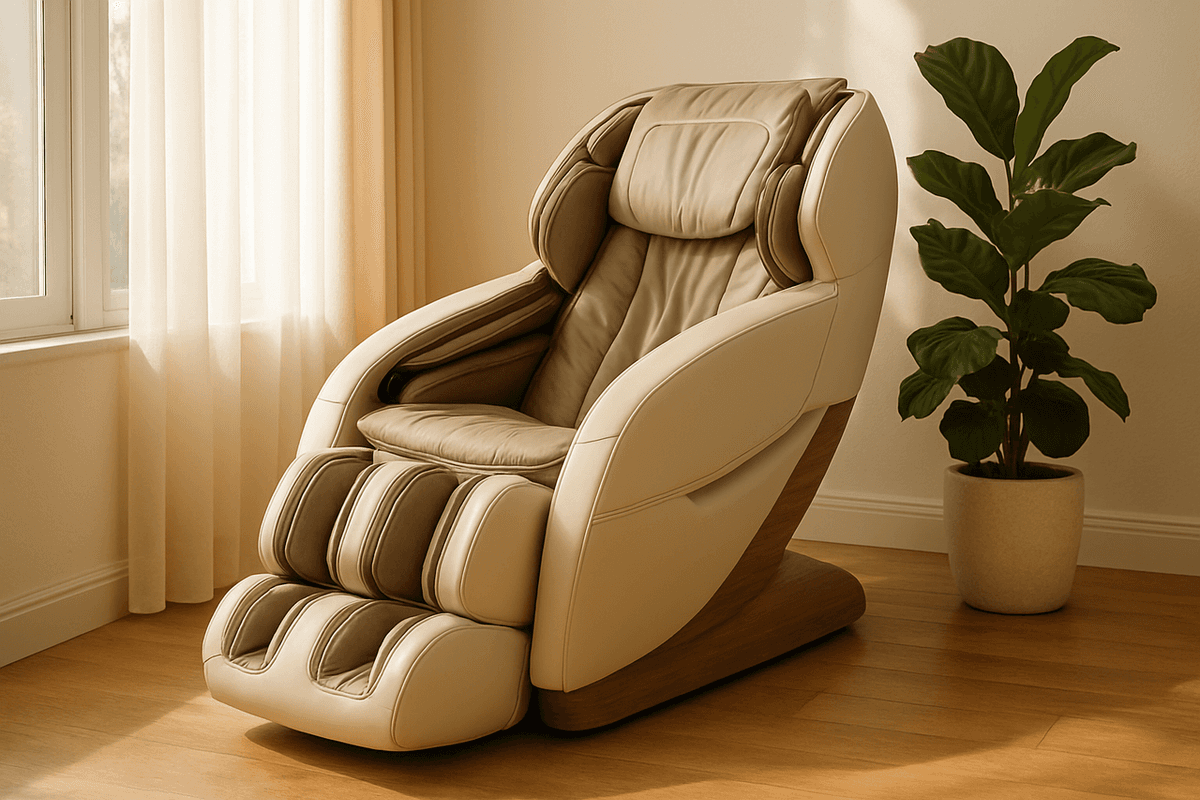
The short answer: a massage chair is worth it if you will genuinely use it several times a week, you value how it feels rather than expecting a therapeutic result, and you have measured the space it needs when fully reclined. It is not worth it as a substitute for a therapist, because a chair applies programmed pressure to the areas it can reach, while a person assesses what is actually tight and adjusts. Buy it as a comfort item that gets used daily and it earns its keep. Buy it expecting treatment and it becomes the most expensive furniture in the room.
Massage chair tiers at a glance
| Entry | Mid | Premium | |
|---|---|---|---|
| Rough price | $500 to $1,500 | $2,000 to $5,000 | $6,000 to $12,000+ |
| Mechanism | Fixed rollers, basic paths | 3D rollers, body scan, air compression | 4D rollers, longer track, refined programs |
| Coverage | Back only, often partial | Back, legs, arms, feet | Neck to feet, better fit range |
| Recline | Limited | Zero-gravity positions | Full, with heat and finer control |
| Fits taller users | Poorly | Usually | Best |
| Reclined footprint | Needs clearance | Needs real clearance | Needs planned space |
| Worth it when | Testing the idea | Daily or near-daily use | It replaces a standing habit |
The arithmetic that actually decides it
Cost per use, against the alternative.
A $4,000 chair costs roughly what forty professional massages cost at typical US prices, and our guide on what a massage costs has the current ranges. If you would realistically book a massage once a month, that chair is about three years of massages, and the therapist wins on quality every single time.
The calculation flips on frequency. Used four times a week for a couple of years, the same chair works out to a few dollars a session, which no therapist can match. Home equipment is only ever cheaper per use if it actually gets used, and the honest correction we apply across every home purchase applies here too: halve your projected usage, then run the numbers again. Our guides on the home reformer, the home float tank and home cold plunge setups land on the same rule for the same reason.
What a chair does, and what it does not
Programmed pressure, not assessment.
A chair runs rollers along a fixed track through the areas it can reach, with air bladders squeezing limbs. It is consistent, available at 11pm, and requires nothing from anyone else. What it cannot do is notice that your right shoulder is the problem, find the spot you could not describe, or change approach halfway through. That gap is the whole difference between comfort and treatment.
The evidence follows the same line: massage has reasonable support for perceived soreness, relaxation and short-term tension relief, and our does massage actually help recovery and types of massage explained guides cover what the research supports. None of that support transfers automatically to a machine running a preset. Treat medical claims on a spec sheet, particularly around circulation, alignment or detoxification, as marketing.
If your reason for wanting one is a specific problem, a persistent neck, a bad back, an injury, a chair is the wrong first purchase. Our comparison of massage vs physical therapy covers where that money is better spent.
The specs that change the experience
Three, and the third is the one people forget.
Track shape and length. How far the rollers travel determines whether the chair reaches your neck and glutes or stops at your mid-back. This matters more than the number of programs.
Body-scan and fit range. Chairs are built around an average body. Taller and shorter users get a meaningfully worse fit on cheaper models, and a body scan that adjusts the roller path is the feature that fixes it. If you are over roughly 6 foot 2 or under 5 foot, check the stated fit range specifically.
Reclined footprint and wall clearance. This is what people discover after delivery. A chair needs space behind it to recline unless it is a wall-hugging design, and the reclined length is much greater than the upright one. Measure the actual reclined dimensions against the actual room, including how the door opens.
Who it genuinely suits
Four cases where the answer is usually yes.
People who will use it daily, because the per-use maths only works at frequency. People with limited mobility or transport, for whom getting to a studio is the real barrier and a chair at home is the difference between something and nothing. People with chronic tension who already know massage helps them and cannot afford it weekly. And households where several people will use it, which quietly halves the cost per person.
The case where the answer is usually no: buying one to create a habit you have never had, or buying one to fix a diagnosed problem.
FAQ: massage chairs
Is a massage chair as good as a real massage? No. A chair applies a programmed pattern; a therapist assesses and adapts. The chair wins on availability and cost per use, not on quality.
How long should you use a massage chair? Most manufacturers suggest around 15 to 20 minutes per session, and longer is not better. Overuse on the same area is how people end up sore rather than relaxed.
Are massage chairs safe for everyone? Not for everyone. Pregnancy, recent surgery, osteoporosis, blood clots, pacemakers and acute injuries all warrant asking a doctor first, because the pressure is significant and not adjustable in the way a therapist can be. Our osteoporosis guide covers why the pressure question matters there.
Do massage chairs help with back pain? They can ease general tension and feel good. They are not a treatment for a specific back problem, and a persistent one belongs with a clinician.
What is the most overlooked thing when buying a massage chair? The reclined footprint. Measure the space with the chair fully reclined, not upright, and check the wall clearance the model needs.
The bottom line on massage chairs
It is a comfort purchase, and comfort purchases are legitimate. At several sessions a week the cost per use beats any therapist, and for someone with limited mobility it can be the difference between regular relief and none. Just buy it for what it is, measure the reclined footprint before you buy, and keep the therapist for the times something specific is actually wrong.