Wellness on a business trip: what actually survives three nights
You land late, the gym is two treadmills and a broken cable machine, dinner is with clients, and you fly home Thursday. Keeping your whole routine is not the goal, and trying to is why people abandon it entirely.
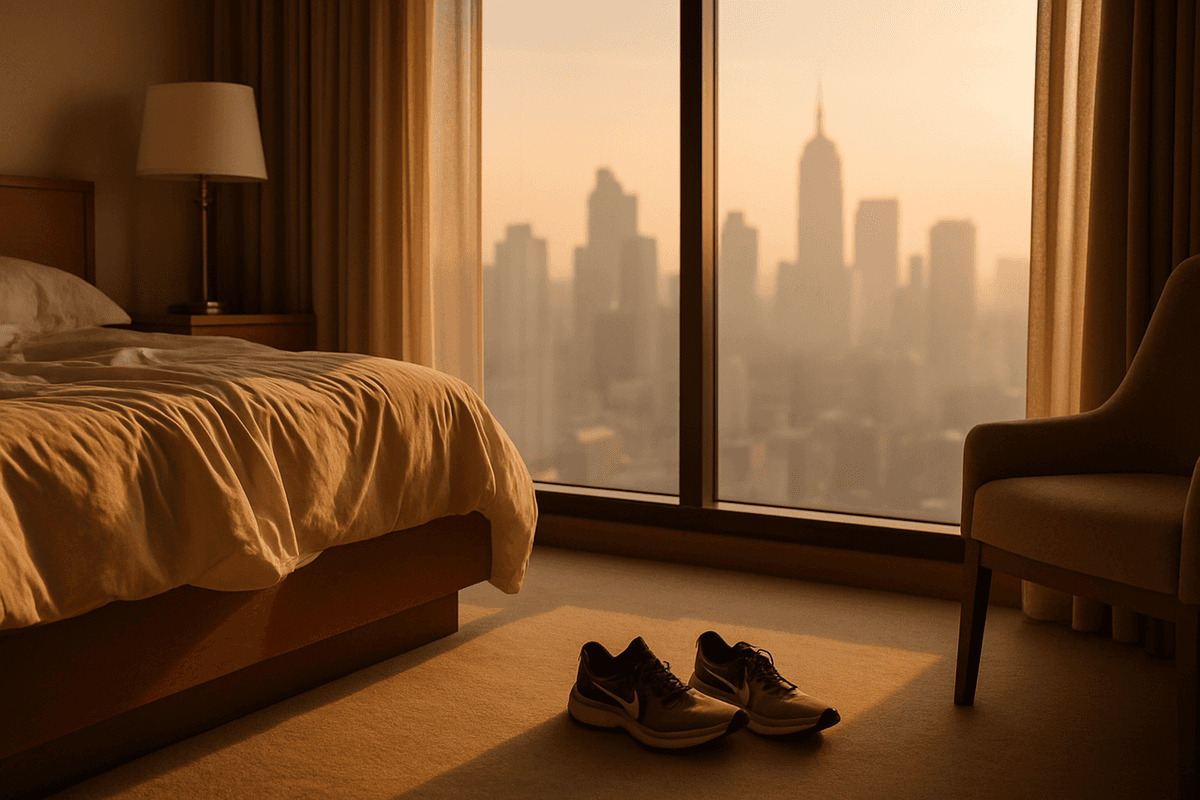
The short answer: on a two or three night work trip, pick one habit and protect it, rather than trying to run your whole routine badly. For most people the highest-value choice is morning daylight plus a walk, because it fixes the sleep problem that everything else depends on. Book the hotel with the real sauna if heat is your thing, use a local studio day pass instead of the hotel gym, and treat the client dinner rather than the schedule as the thing most likely to derail you.
Business travel is its own problem, different from a holiday, and worth a plan of its own.
The short-trip playbook at a glance
| The constraint | What actually works |
|---|---|
| Landing late, early start | Daylight within an hour of waking, even through a window |
| Hotel gym is poor | A walk outside, or a day pass at a local studio |
| No time block longer than 30 minutes | One 20-minute thing, done, rather than a planned hour skipped |
| Jet lag | Light timing, and eating on local time |
| Client dinners | Decide your alcohol line before you sit down |
| Wanting the sauna | Check temperature and hours before booking, not after |
Pick one thing, and make it the sleep one
Everything else follows sleep.
On a short trip you do not have the hours or the energy to run a full routine, and attempting it usually ends with doing nothing on night two. So choose deliberately, and if you have no strong preference, choose the sleep-and-light option: get outside within an hour of waking in the destination’s morning, keep the room dark and cool at night, and eat on local time rather than on your body’s.
Light is the lever with the strongest evidence for shifting your clock, and it is free. Supplements are the thing people reach for first and the thing that changes the least.
What to actually do with a bad hotel gym
Leave it.
Most hotel gyms are two cardio machines and a rack of light dumbbells, which is fine for twenty minutes and pointless to feel guilty about. Two better options usually exist within a few blocks.
Walk outside. A brisk 30-minute walk in daylight does more for jet lag, mood and a stiff back after a flight than anything on that treadmill, and it shows you the city.
Buy a day pass. Most sauna, cold plunge and boutique studios sell single sessions, and our city directories list what is near where you are staying with addresses and official sites. Our guide on finding a good sauna or studio when travelling covers how to judge one you have never visited, and trying wellness without a membership covers the day-pass and intro-offer routes.
Check the hotel spa before you book, not after
The photographs are the worst evidence available.
Hotel listings call any warm room a spa, and a “sauna” is frequently a cabin at 55°C that gets switched off at 8pm. If heat matters to you, call and ask three questions before booking: what temperature the sauna actually runs, what the hours are, and whether it is included or charged. Two minutes on the phone beats discovering it at 10pm after a delayed flight.
The same applies to pools listed as cold plunges, which are usually just unheated. Our guide on how to choose a sauna or cold plunge studio covers the questions that separate a real setup from a warm room.
The client dinner is the actual risk
Not the schedule. The wine.
Alcohol is the single most consistent factor in wellness plans falling apart on work trips, and it compounds: it wrecks the sleep you were already short on, and it makes the next morning’s walk or gym visit far less likely. It is also genuinely unsafe to combine with heat, which matters if your plan was a late sauna after dinner. Our guide on alcohol and the sauna covers why that combination is the one to avoid entirely.
The workable version is not abstinence, it is deciding your line before you sit down rather than in the moment, and keeping the sauna for the morning.
The twenty-minute version of everything
If you only have a short block.
A 20-minute walk outside in the morning beats a 45-minute gym session you will skip. A 10-minute mobility routine on the hotel room floor addresses the flight and the conference chair better than anything in the gym, and our guide on wellness for desk workers covers the neck and shoulder pattern that travel amplifies. A five-minute breathing practice before a presentation is the most portable tool there is, and our meditation vs breathwork comparison covers which calms faster.
None of this is impressive. All of it survives a trip, which is the only criterion that matters here.
FAQ: wellness on a business trip
What is the single best thing to do on a short work trip? Get daylight in the destination’s morning and walk. It addresses jet lag, sleep and stiffness at once, and it needs no facility.
Do hotel gyms have saunas? Sometimes, and often not real ones. Call and ask the temperature and hours before booking rather than trusting the listing photograph.
How do you handle jet lag on a two-night trip? For very short trips, many travellers do better staying closer to home time rather than fully shifting. Light exposure and meal timing are the levers that matter either way.
Is it worth booking a massage on a work trip? If it replaces an hour you would have spent on email, often yes. Our guide on what a massage costs covers what to expect to pay in an unfamiliar city.
What should you pack for wellness on a work trip? Very little: shoes you will actually walk in, an eye mask, and whatever your one chosen habit needs. Packing for a routine you will not run is how the bag gets heavy and the plan gets abandoned.
The bottom line on business travel
Three nights is too short to maintain a routine and long enough to wreck one, so stop trying to do both. Choose one habit, make it the light-and-walking one unless you have a better reason, verify the hotel’s heat claims before booking, and decide the alcohol question before dinner rather than during it. That version survives the trip, and surviving is the whole goal.