Barre vs Pilates: which should you try?
They share studios, grip socks, and a reputation for making small movements brutal. But one is built around a machine and a method, and the other around a ballet barre and the burn. The right pick depends on what you want your body to do.
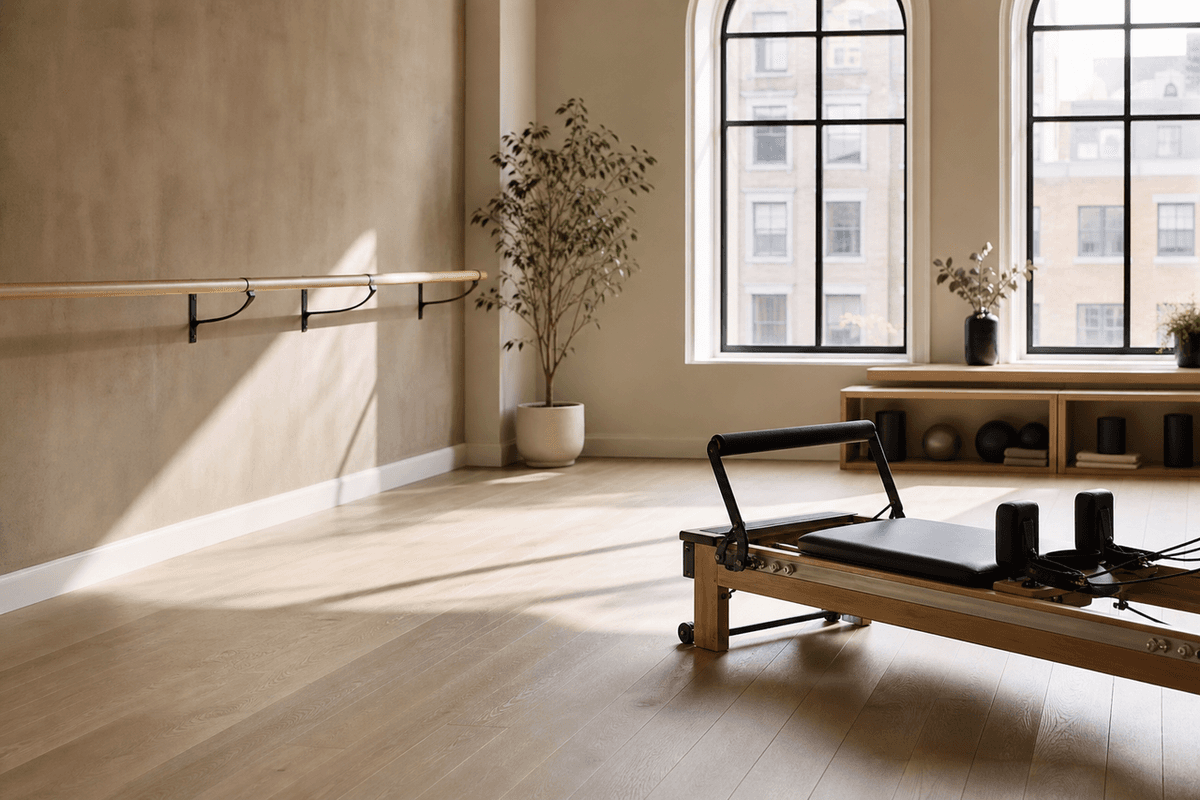
Short answer: Choose Pilates for core strength, control and a precise, rehab-friendly method that scales on the reformer’s spring resistance. Choose barre for an up-tempo, high-repetition, low-impact class that burns out the legs and glutes. Both are joint-friendly, neither is real cardio, and neither is a complete fitness programme alone.
Choose Pilates if you want core strength, control, and a precise, rehab-friendly method, especially on the reformer. Choose barre if you want an up-tempo, high-repetition, low-impact class that lights up your legs and glutes and feels more like a workout set to music.
They overlap a lot, share studios, and both use small controlled movements, so there is no wrong answer. The honest deciding factor is usually the vibe you prefer and which room you will keep coming back to.
Both are low-impact and joint-friendly, and neither is a complete fitness programme on its own.
What is the core difference?
Method and machine versus tempo and the barre.
Pilates is a defined method built around core control, precise alignment, and breath, developed by Joseph Pilates. On the reformer, it uses a sprung sliding carriage to add adjustable resistance, which makes it both scalable and genuinely strengthening. Our first Pilates class guide and reformer versus mat guide cover it.
Barre is a fitness class that borrows ballet positions and a ballet barre, then blends in Pilates and light strength work. It is more up-tempo and more about repeating small movements until the muscle fatigues and shakes, particularly in the lower body. Our barre explainer covers a class.
So Pilates is a method you progress within, and barre is an energetic class format that draws on it.
Which builds more strength?
Pilates, especially on the reformer, has the edge.
Pilates focuses on deep core and stabilising strength, and the reformer’s spring resistance lets you actually load muscles and progress over time, which builds real, functional strength and control. It is also the more established choice for rehab and for people working around injuries, because it can be precisely scaled.
Barre builds muscular endurance more than maximal strength. The loads are light, hand weights and bodyweight, and the goal is fatigue through repetition rather than lifting anything heavy. It tones and conditions, particularly legs and glutes, but it is not a strength-building method in the way loaded Pilates or actual weight training is.
If strength and core control are the priority, lean Pilates. If endurance and a leg-and-glute burn appeal, barre delivers that.
Which is the harder workout?
Different kinds of hard.
Barre usually feels more intense in the moment: it is faster, set to music, and the relentless pulsing produces a burning, shaking fatigue quickly, so it feels more like a sweaty workout. Many people find their first barre class humbling.
Pilates is often slower and more controlled, and the difficulty is in the precision and the deep core demand rather than breathless intensity. It can be just as challenging, but it is a quieter, more internal kind of hard, and a well-taught reformer class will absolutely make you work.
Neither is real cardiovascular training despite the effort. For that you still need something that raises your heart rate for a sustained period. Our recovery routine guide covers building a balanced week.
Which suits which person?
Match it to your goal and your temperament.
Pick Pilates if you want core strength and control, are recovering from or working around an injury, prefer a slower and more precise practice, or want something you can progress in methodically over years. It is the more therapeutic, method-driven choice.
Pick barre if you want an energetic, music-driven, low-impact class, enjoy group fitness energy, are chasing muscular endurance and toning in the lower body, and like the idea of a sweaty burn without high-impact jumping. It is the more up-tempo, class-format choice.
If you are injury-cautious or want guidance, Pilates, especially private or small reformer classes, gives more individual attention. Our practitioner credentials guide covers finding a well-qualified instructor.
What about cost and starting out?
Similar world, with reformer Pilates often pricier.
Both are commonly sold as class packs or memberships, and prices overlap, but reformer Pilates, especially in small or private classes, tends to sit at the higher end because of the equipment and lower class sizes. Mat Pilates and group barre are usually the more affordable entry points. Our memberships guide covers deciding before you commit, and our reformer Pilates vs Lagree comparison covers the format that usually sits above both on price.
For both, book a beginner or intro class, wear fitted clothes, bring grip socks, and tell the instructor it is your first time and about any injuries. The etiquette and kit are nearly identical.
Trying one class of each is the honest way to decide, since the studies will not tell you which you enjoy.
The bottom line on barre vs Pilates
Pilates for core strength, control, precision, and rehab-friendly progression, especially on the reformer. Barre for an up-tempo, high-rep, low-impact burn in the legs and glutes. They overlap heavily, both are joint-friendly, and neither is a full fitness plan alone.
When the goals are close, let the vibe decide, and pick the class you will actually keep showing up for.
To find a barre or Pilates studio near you, start with our city wellness maps.