Dry brushing: what it actually does (and what it doesn't)
It exfoliates and it feels invigorating, and both are real. The bigger claims, about draining lymph, flushing toxins, and erasing cellulite, are where the bristles meet marketing rather than evidence.
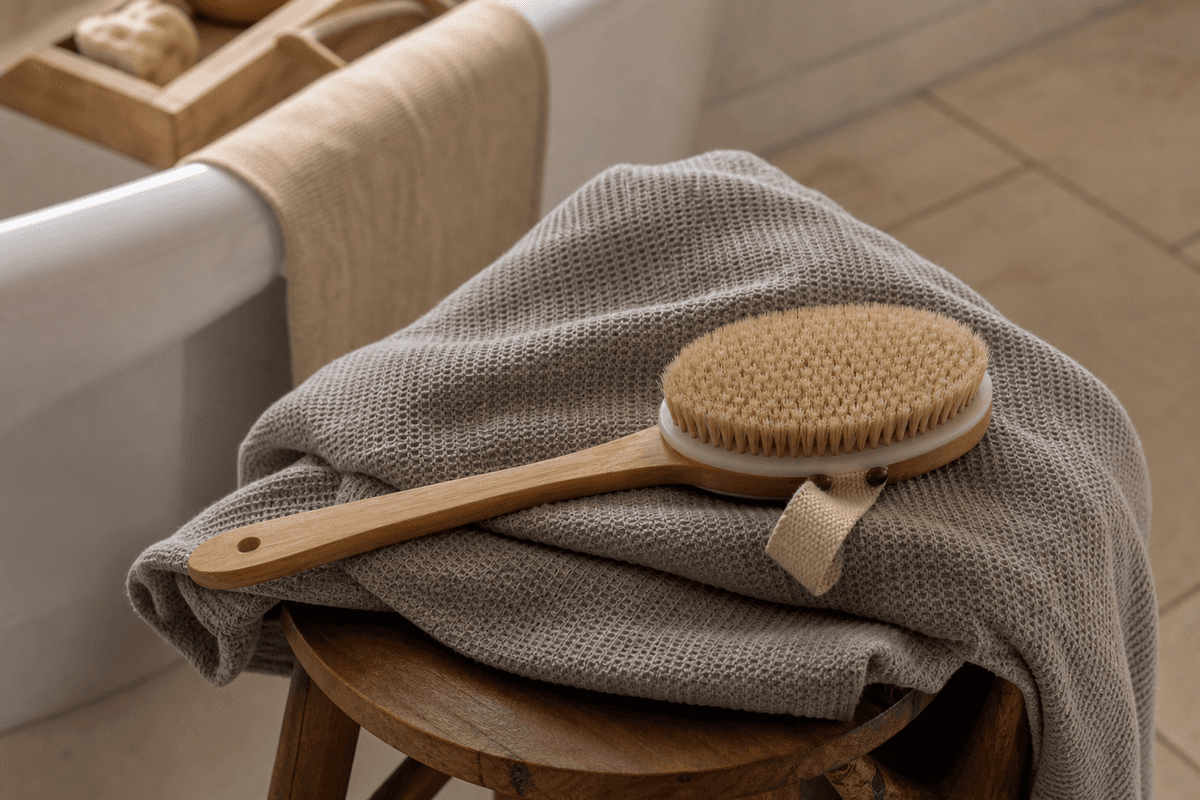
Short answer: It exfoliates dead surface skin and produces a brief flush of blood to the surface, which is why it feels invigorating. That is the whole of it. It does not detox you, drain lymph in any meaningful way, or remove cellulite. Keep the pressure light, and skip it on broken or inflamed skin.
Dry brushing genuinely exfoliates your skin, leaves it feeling smooth, and gives a pleasant, invigorating start to the day. Those effects are real and reason enough to do it if you enjoy it. What it does not do is detoxify your body, meaningfully drain your lymphatic system, or get rid of cellulite, no matter how confidently those benefits are sold.
So the honest version is: a nice exfoliating ritual with real but modest skin benefits, wrapped in a lot of wellness claims it does not earn.
If you like how it feels, that is a perfectly good reason to keep a brush in the bathroom. Just do not expect it to cleanse you from the inside.
What is dry brushing?
Brushing dry skin with a stiff-bristled brush before you wash.
Dry brushing means sweeping a firm, natural-bristle brush over dry skin, usually in strokes toward the heart, before a shower or bath. It takes a few minutes and covers the arms, legs, and torso.
It has roots in various traditional practices and has become a fixture of wellness and spa routines, often paired with claims about circulation, lymph, and detoxification.
The physical action is simply mechanical exfoliation plus stimulation of the skin. That is the honest basis, and it does deliver a couple of genuine effects. The trouble is everything layered on top of it.
What does it genuinely do?
Exfoliation, a temporary glow, and a pleasant ritual.
The real, defensible benefit is exfoliation: the bristles slough off dead surface skin cells, which can leave skin feeling smoother and looking brighter, and can help with rough, bumpy texture. This is the same reason any exfoliation feels good.
The brisk brushing also stimulates the skin and can cause a temporary flush of increased blood flow to the surface, which is why it feels invigorating and warming. That surface stimulation is real, if short-lived.
And there is genuine value in the ritual itself: a few calm, deliberate minutes as part of a routine can feel grounding. Our body wraps guide covers a neighbouring spa practice with a similar real-versus-claimed split.
Does it detox or drain your lymph?
No, and this is the central overclaim.
The big marketing story is that brushing toward the heart drains the lymphatic system and helps flush toxins. Your lymphatic system does move fluid and is part of immune function, but light brushing of the skin surface does not meaningfully pump it, and your body does not have toxins that need brushing out. Your liver and kidneys handle clearance, continuously and far more effectively than a brush could. Our sauna detox guide covers the same detox myth in the heat context.
Genuine lymphatic drainage is a specific, gentle, trained massage technique used in real medical contexts like managing lymphedema, and it is not what a stiff brush on dry skin does. Our lymphatic drainage massage guide covers the real thing, and our guide to wellness with lymphedema covers why a brush on an affected limb is a risk rather than a treatment.
So the invigorated feeling is circulation and exfoliation, not detoxification. The word detox here is decorative.
What about cellulite and fat?
No effect on either, despite the before-and-after photos.
Dry brushing is frequently sold as a cellulite reducer. It does not reduce cellulite in any lasting way. What it can do is temporarily plump and flush the skin, briefly making dimpling look slightly less pronounced for a short time, which is a cosmetic, temporary appearance change, not a reduction in cellulite itself.
Cellulite is a normal structural feature of how fat, connective tissue, and skin are arranged, and no amount of brushing changes that structure. Anyone claiming a brush removes cellulite is selling the temporary flush as a permanent result.
It also does nothing to fat underneath. If those are your goals, dry brushing is not the tool, and honestly nothing topical is.
How do you do it, and who should skip it?
Gently, on intact skin, and not everyone.
If you want to try it, use a soft-to-medium natural brush, keep the pressure light rather than scrubbing hard, brush dry skin before showering, and moisturise afterward. Once every day or two is plenty. Aggressive daily scrubbing irritates skin rather than improving it, so gentler is better.
Skip it, or be very cautious, if you have sensitive skin, eczema, psoriasis, sunburn, wounds, rashes, or any broken or inflamed skin, since brushing will aggravate them. Never brush over irritated or damaged skin, and if it leaves you red, scratched, or sore, you are pressing too hard. Our studio checklist is a reminder to be skeptical of any place promising detox or cellulite results.
For most people with healthy skin who enjoy it, it is harmless and pleasant. That is the right expectation.
The bottom line on dry brushing
Dry brushing exfoliates, briefly invigorates the skin, and makes a pleasant ritual, all real. It does not detox you, drain your lymph in any meaningful way, or remove cellulite, all marketing.
Enjoy it as gentle exfoliation and a nice few minutes, keep the pressure light, and treat the grander claims as the decoration they are.
To find spas and wellness studios near you, start with our city wellness maps.