Home hyperbaric chambers: what the pressure difference means
Hyperbaric oxygen is a real medical treatment with a specific approved list, delivered at pressures a soft home chamber cannot reach. That single number is the whole story, and almost nobody selling one leads with it.
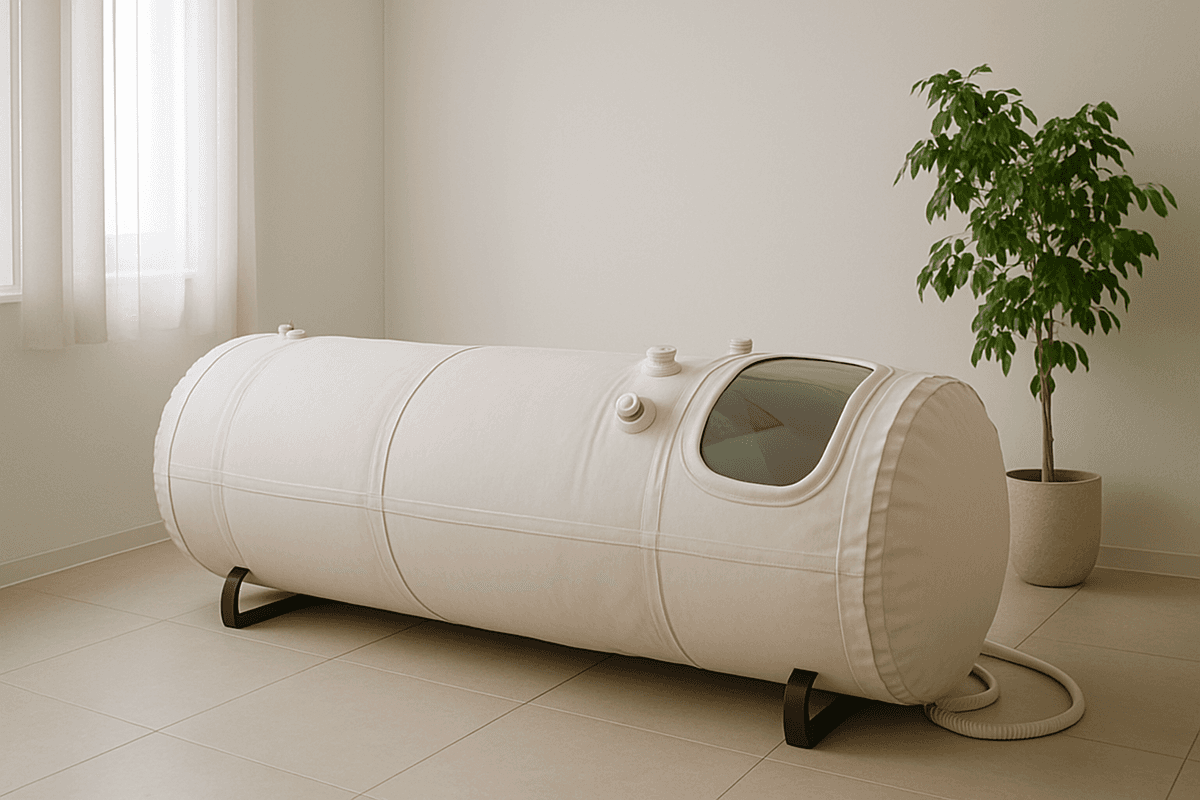
Short answer: Pressure is the whole story. Clinical HBOT runs at 2.0 to 3.0 atmospheres on 100% oxygen for a defined list of approved conditions; a soft home chamber reaches about 1.3 on room air, for $4,000 to $25,000. That is a different exposure, not a smaller dose, and the fire and ear risks become yours.
Hyperbaric oxygen therapy is a genuine medical treatment with a defined list of approved conditions, and it is delivered at roughly 2.0 to 3.0 atmospheres in a clinical setting with a trained operator. Soft-sided chambers sold for home use typically reach about 1.3 atmospheres. That is not a smaller dose of the same treatment so much as a different exposure, and the evidence people cite when selling home chambers usually comes from the clinical pressures the home unit cannot produce. If a doctor has prescribed HBOT for an approved condition, get it where it is prescribed. If you are buying a chamber because of what you read about recovery, longevity or brain fog, buy it knowing that gap exists.
This is the same pattern we keep finding: real research, then a consumer product sold at parameters the research never tested.
Medical HBOT vs a home chamber at a glance
| Clinical HBOT | Soft-sided home chamber | |
|---|---|---|
| Pressure | Roughly 2.0 to 3.0 ATA | Roughly 1.3 ATA |
| Oxygen | Typically 100% by mask or hood | Room air, or a concentrator |
| Setting | Hospital or clinic, trained operator | Your spare room |
| What it is approved for | A specific published list of conditions | Sold as a wellness device |
| Cost | Per session, sometimes insured | $4,000 to $25,000 to own |
| Main risks | Managed by staff | Yours to manage |
| Evidence base | Real, and condition-specific | Thin at this pressure |
What hyperbaric oxygen is actually approved for
A specific list, and it is not the marketing list.
Clinical HBOT has accepted, evidence-backed uses including decompression sickness, carbon monoxide poisoning, gas embolism, certain non-healing wounds such as diabetic foot ulcers, delayed radiation tissue injury, some serious infections, and compromised skin grafts. These are treated in medical facilities at clinical pressures, often insured, and often over many sessions.
What is not on that list is the reason most home chambers are sold: general recovery, energy, cognition, anti-aging, autism, long COVID and athletic performance. Some of these are under genuine study; being studied is not the same as being established. The US Food and Drug Administration has publicly warned consumers that HBOT is being marketed for conditions it has not been approved to treat, which is a useful thing to know before a five-figure purchase.
Our hyperbaric oxygen therapy explainer covers the mechanism and the evidence in more depth, and our first session guide covers what a clinical session is like.
Why 1.3 atmospheres is the crux
Because the dose is the treatment.
Hyperbaric therapy works by dissolving more oxygen into plasma than breathing at normal pressure allows, and how much more depends directly on the pressure and the oxygen concentration. A clinical protocol at 2.4 ATA on 100% oxygen and a home session at 1.3 ATA on room air are separated by a large multiple, not a rounding difference.
That is why quoting a trial run at clinical pressure to justify a mild home chamber is the core problem with this category. It is the identical move we documented in PEMF mats, where a real meta-analysis at researched parameters gets used to sell a consumer device that never reaches them.
If you want the honest framing: a mild chamber may do something, the studies at that pressure are limited, and anyone telling you it delivers what clinical HBOT delivers is overselling.
The risks are real and they become yours
Three worth taking seriously.
Fire. Oxygen-enriched environments burn fiercely, and there have been fatal chamber fires. Clinical facilities control ignition sources rigorously, down to what patients may wear and bring in. At home, that discipline is entirely on you.
Ears and sinuses. Barotrauma is the most common side effect, and clearing your ears on descent is a learned skill. A cold or blocked sinuses turns a session into an injury.
Contraindications you may not know you have. Untreated pneumothorax is the classic absolute one, and certain medications and lung conditions matter. In a clinic someone screens for this. Buying online, nobody does.
Anyone with a chamber at home should also be honest about who else can access it, because a chamber is an enclosed pressurised space and children treat interesting boxes as places to hide.
If you are still considering one
Five questions before any money moves.
Ask the maximum pressure in ATA, not in vague “hyperbaric” language. Ask whether the seller claims any medical benefit, because a wellness device that is being described as a treatment is a regulatory problem you do not want to fund. Ask what training comes with it and who operates it. Ask what your home insurance says about a pressurised oxygen-enriched device in the house. And ask your own doctor, particularly if the reason you want one is a diagnosed condition, because for approved indications the clinical version is both stronger and frequently covered.
The honest alternative for most of the goals people cite here is unglamorous: sleep, training, and the recovery basics our which recovery tool for which problem guide ranks by what actually has evidence behind it.
FAQ: home hyperbaric chambers
Is a mild hyperbaric chamber the same as hospital HBOT? No. The pressure is roughly half, the oxygen concentration is usually lower, and the approved clinical uses are studied at the higher pressure.
Are home hyperbaric chambers FDA approved? Soft-sided home chambers are generally sold as wellness products rather than approved treatments for specific conditions, and the FDA has warned about HBOT being marketed for unapproved uses.
Can a home hyperbaric chamber help with recovery or brain fog? It is being studied and it is not established, particularly at mild pressures. Treat confident claims as marketing.
What is the most common side effect of hyperbaric therapy? Ear barotrauma. It is usually avoidable with proper equalisation technique and by skipping sessions when congested.
Is renting clinic time better than buying? For anything medical, yes, because the pressure, the oxygen and the supervision are all higher. Buying only makes sense as a wellness purchase you are making with your eyes open.
The bottom line on home hyperbaric chambers
The pressure number is the honest summary of this entire category. Clinical HBOT is a real treatment for a defined list at 2.0 to 3.0 atmospheres; a home soft chamber is a different, milder exposure at about 1.3, sold as wellness and supported by thinner evidence. If a doctor prescribed it, use the clinical version. If nobody prescribed it, at least buy knowing which product you are actually getting, and take the fire and ear risks as seriously as the clinic does.