Home infrared saunas compared: cabins, blankets and the EMF question
Every result you find is written by someone selling a cabin, and the arguments they pick are rarely the ones that decide whether you will still use it in a year. The specs that matter are boring and easy to check.
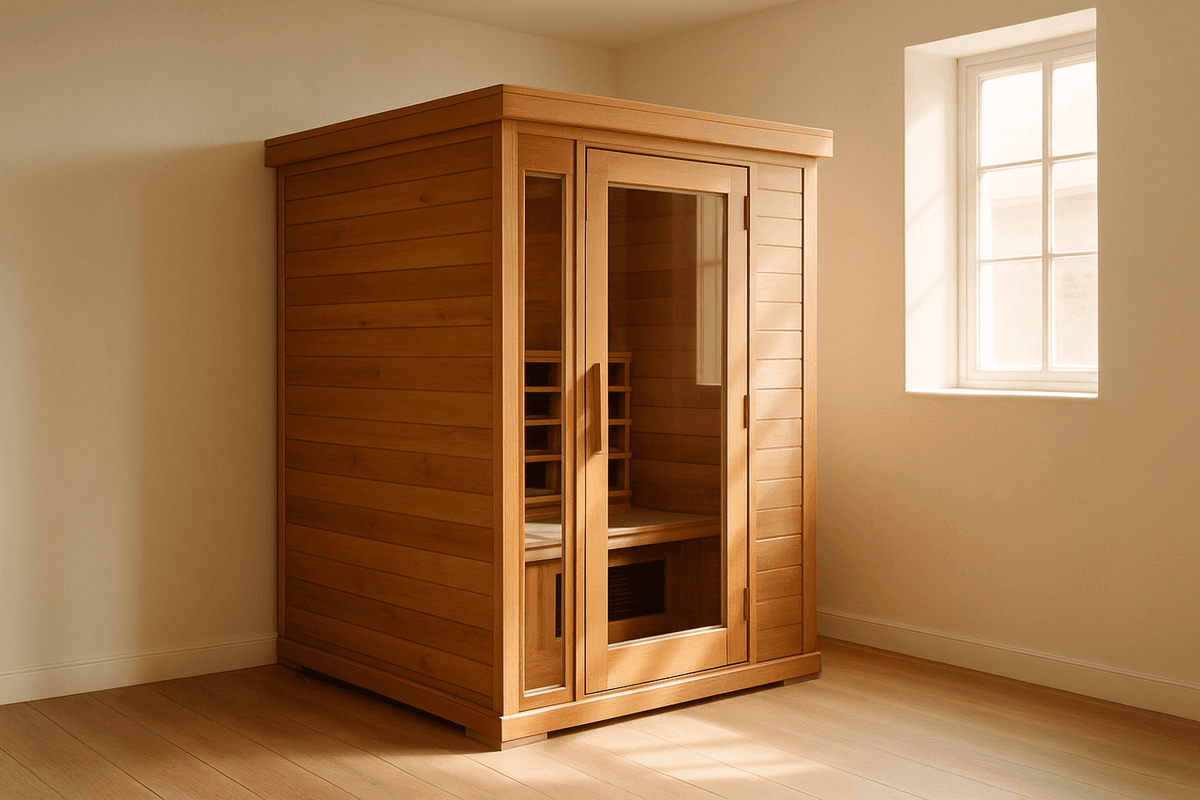
The short answer: a two-person cabin is the format most people end up happy with, a one-person unit fits where a cabin will not, and a blanket is the cheap way to find out whether you will use any of this before spending four figures. The specs that actually decide it are the heater type, the wood, and whether the outlet in that room can run it, and the low-EMF argument the industry fights over matters far less than any of those.
We have not tested these units, and we would not pretend to. What follows is what the formats are, what genuinely differs between them, and the questions that separate a serious seller from a good-looking listing.
Home infrared formats at a glance
| Blanket | One-person unit | Two-person cabin | Outdoor cabin | |
|---|---|---|---|---|
| Rough price | $400 to $800 | $1,500 to $3,000 | $2,500 to $6,000 | $5,000 and up |
| Space | A sofa and a wipe-down | A corner, permanently | Roughly a shower footprint | A yard and a base |
| Setup | Unbox it | Hours, one person | Hours, two people | A project, often a trade |
| Power | Standard outlet | Standard outlet | Usually standard, check | Often dedicated circuit |
| Sit up in it? | No, you lie zipped in | Yes | Yes, and stretch out | Yes |
| Resale | Poor | Modest | Reasonable | Good |
| Best for | Testing the habit cheaply | Apartments, small rooms | The realistic default | Committed, with space |
Start with the format, not the brand
The format decides how often you use it.
A blanket is the honest entry point at a fraction of the price. You lie zipped inside it, you sweat, and you cannot sit up, read, or share it. That limitation is the whole story: some people use one three times a week for years, and others find the confinement enough friction to stop. Our sauna blanket vs a real sauna comparison covers the trade honestly, and at this price it is a genuinely good way to test whether the habit sticks before spending more.
A one-person cabin is the apartment answer: you sit upright, it fits in a corner, and it plugs into a normal outlet. The compromise is that you cannot lie down or bring anyone in, and the smaller cabin heats a smaller volume, so the experience is closer than you would expect to a two-person unit.
A two-person cabin is where most buyers land, and not because they use it in pairs. The extra width is what lets you sit sideways, stretch a leg out, and stay comfortable for a 30-minute session. If the room allows it, this is the format least likely to be regretted.
An outdoor cabin is a different commitment: a level base, weatherproofing, usually an electrician, and often a traditional-sauna option instead. Worth it if you have the space and want the ritual of walking out to it.
The specs that actually change the experience
Three, and none of them appear in the headline.
The heater type. Carbon panels give a larger, gentler radiating surface at a lower surface temperature; ceramic rods run hotter in smaller spots and heat up faster. Most people find carbon more comfortable for a long sit and ceramic more intense. “Full spectrum” units add near and mid infrared through separate emitters, which is a genuinely different piece of hardware rather than a setting, and it is also where the marketing gets loosest. Our red light therapy vs infrared sauna comparison covers what near-infrared does and does not have evidence behind it.
The wood. Cedar is aromatic, naturally rot-resistant and the classic choice. Hemlock and basswood are close to odourless, which matters more than people expect if you are sensitive to scent or share a small home with someone who is. None of them change the heat.
The power. Most one and two-person cabins in the US run on a standard 120V outlet, but larger and full-spectrum units can need a dedicated 20-amp circuit or 240V, which turns a delivery into an electrician’s visit. Confirm the amperage against the circuit in the actual room before you buy, not after.
The EMF argument, honestly
It is the loudest fight in the category and close to the least important.
Infrared cabins have heating elements and wiring, so they produce low-frequency electric and magnetic fields, and brands compete hard on “low EMF” and “zero EMF” labels. The honest position: the health concern from these low-frequency fields is not established, the measurements brands publish are taken under conditions they choose, and there is no agreed standard for how the number is produced. If it matters to you, ask where on the unit the reading was taken and at what distance, because a figure without those two details means nothing.
What we would not do is pay a large premium for an EMF claim while ignoring the heater type, the wood and the circuit, which are the things you will actually notice every session.
What it costs to run, and the part people skip
Electricity is minor. Attention is not.
A typical session draws roughly the power of a hair dryer for 30 to 45 minutes, which lands in the range of pennies to a couple of dollars depending on your rate and unit. That is rarely the deciding number.
The real costs are space you give up permanently and the honest usage question. Home wellness equipment gets used less than buyers project, and the pattern is consistent across categories: our home float tank guide and home reformer guide both land on the same rule. Halve your projected sessions per week, then redo the maths against a studio pass. Our home cold plunge and sauna cost guide has the underlying numbers.
Questions to ask before you pay
Six that filter most of the field.
Ask the amperage and voltage, then check the circuit in your room. Ask the heater type and material, and whether “full spectrum” means separate emitters or marketing. Ask the wood and whether it is treated or glued, and with what. Ask what the warranty covers and for how long, separating the heaters from the cabinet. Ask about assembly: how many people, how many hours, and whether it fits through your door assembled or in panels. And ask what happens if it arrives damaged, because these ship as large freight and damage is not rare.
If the seller cannot answer the first two without checking, buy from someone else.
FAQ: home infrared saunas
Is a home infrared sauna as good as a traditional sauna? Different, and milder. Infrared heats you at a lower air temperature, and most of the impressive research used hotter traditional saunas. Our infrared vs traditional comparison covers what that gap means.
Do I need a dedicated electrical circuit for an infrared sauna? Often not for a one or two-person cabin, frequently yes for larger or full-spectrum units. Confirm the amperage against your room’s circuit before ordering.
Is a sauna blanket worth buying first? As a test of the habit, yes, and it is the cheapest way to learn whether you will actually use heat at home. As a permanent substitute for a cabin, most people say no.
Does low EMF matter when buying an infrared sauna? The health concern is not established, and the numbers brands publish are not measured to any common standard. Prioritise heater type, wood and power, and treat EMF claims as marketing until someone shows you the measurement conditions.
How long does a home infrared sauna last? Cabinets outlast heaters. Ask which parts the warranty covers separately, because a lifetime cabinet warranty next to a two-year heater warranty tells you where the failures happen.
The bottom line on buying a home infrared sauna
Pick the format by the room and by how you will actually sit, not by the brand’s hero image. Check the heater type, the wood and the circuit; treat the EMF argument as the marketing battleground it is. And if you have never kept a heat habit going for a month, buy a blanket first and find out cheaply, because the most expensive infrared sauna is the one that becomes a very well-built cupboard.