A home steam room: what it really takes to build one
The generator is the cheap, easy part. Everything that makes a steam room work is the sealed, waterproofed box around it, which is why the failure mode is not a broken unit but mould behind the tile.
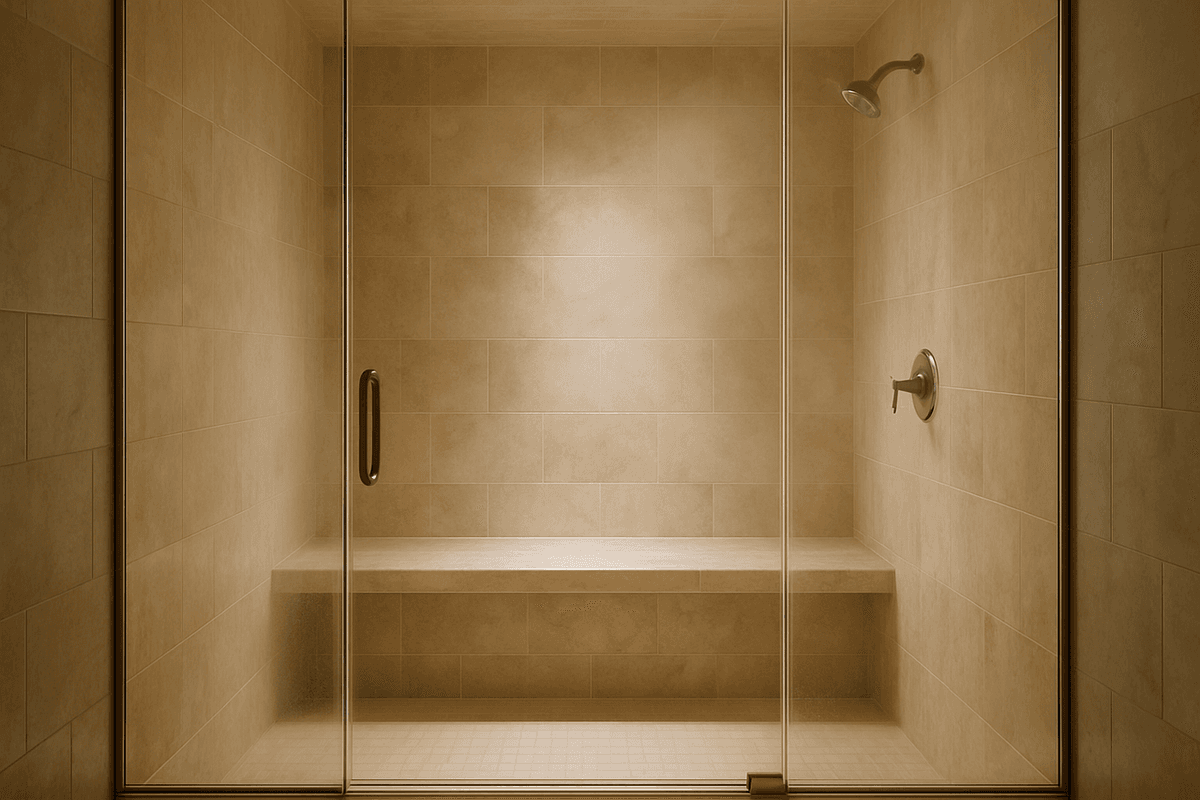
The short answer: a home steam room is a construction project, not an appliance purchase. The generator costs a few thousand dollars and is the straightforward part; the sealed, sloped, fully waterproofed enclosure it feeds is where the money, the time and the risk sit. If you want heat at home with the least trouble, a sauna is the easier build by a wide margin. If it specifically has to be steam, budget for a proper waterproofing job and treat anything less as a future mould problem.
Cost ranges below are 2026 US ballparks for comparison, not quotes.
Home steam options at a glance
| Convert an existing shower | Prefab steam shower unit | Portable steam cabinet | Home sauna instead | |
|---|---|---|---|---|
| Typical all-in | $4,000 to $15,000 | $3,000 to $10,000 | $150 to $600 | $2,500 to $6,000 |
| The real work | Waterproofing and sealing | Delivery and hookups | Unbox it | Assembly |
| Electrical | Usually a dedicated 240V circuit | Usually dedicated | Standard outlet | Often standard |
| Plumbing | Water line plus drain | Water line plus drain | None, you fill it | None |
| Ceiling | Must be sloped to shed condensate | Built in | None | None |
| Risk if done badly | Mould inside the wall | Low | Low | Low |
| Feels like | A real steam room | Close | A tent with a kettle | A different thing entirely |
Why the enclosure is the whole project
Steam goes where water cannot.
A shower gets wet on its surfaces. A steam room fills with vapour that finds every unsealed seam, penetrates grout, and condenses inside wall cavities if the vapour barrier is not continuous. That is why a steam conversion is not “add a generator to the shower you have”: it needs a full vapour barrier, sealed and sloped ceiling so condensate runs down the walls instead of dripping on your head, a properly sealed door with no gap at the top, and a floor drain sized for the load.
Get that right and it lasts decades. Get it wrong and the failure is invisible for a year and then expensive, which is the honest reason this is a trade job rather than a weekend.
Sizing the generator, and the part installers get asked to fix
Volume, then materials.
Generators are sized by the enclosure’s cubic volume, but the surface materials change the answer significantly: stone, thick tile and large glass panels pull heat out of the room and need a meaningfully larger unit than the same volume finished in standard ceramic. The most common complaint about a home steam room is that it never quite gets there, and undersizing against a stone finish is usually why.
Practical questions to settle before ordering: the exact enclosure volume including the ceiling height, every surface material, whether the water is hard enough to need a descaling routine, and where the generator itself will live, since it needs a serviceable, dry location within a limited pipe run of the room.
What steam actually is, compared to a sauna
Cooler air, total humidity, a different experience.
A steam room runs far cooler than a sauna, roughly 43 to 49°C at effectively 100% humidity, while a traditional sauna runs 80 to 100°C dry. That is why steam feels heavier and hotter than the thermometer suggests and why you sweat differently in each. Our sauna vs steam room comparison covers the difference in full, and the choice matters more than people expect: many people who install steam actually wanted the dry heat.
If breathing is part of the motivation, be precise about it. Our guide on sauna, steam and asthma covers what warm humid air does and does not do, and the honest version is comfort rather than treatment.
The cheap versions, honestly
They exist and they are not the same thing.
A portable steam cabinet or tent is a zip-up enclosure with a small steam generator, usually with your head outside. For a few hundred dollars it delivers real steam on your body and almost none of the experience of sitting in a warm, quiet, vapour-filled room. As a way to find out whether you like steam before spending five figures, it is genuinely useful.
A shower steam head or a hot shower with the door closed is not a steam room and will not behave like one, though it costs nothing to try.
The same rule we apply across home wellness applies here: buy the cheap version first, and see whether you use it. Our guides on the home float tank, the home reformer and home cold plunge setups all land on the same arithmetic.
Should you build a sauna instead?
For most people, yes.
A home sauna is a simpler installation with no vapour barrier to get wrong, frequently no plumbing at all, and often a standard circuit. It also has the deeper research base behind it, though our home infrared sauna guide is careful about which research applies to which format.
Choose steam over a sauna when you specifically prefer the humid heat, when you want it inside an existing bathroom footprint rather than taking a new corner, or when a sauna’s dry air genuinely bothers you. Those are good reasons. “It seems more luxurious” is how people end up with an expensive room they use monthly.
FAQ: home steam rooms
Can I convert my existing shower into a steam room? Sometimes, and only with a full vapour barrier, a sloped sealed ceiling, and a proper door. A standard shower enclosure is not steam-tight, and treating it as one is how moisture gets into the wall.
How much does a home steam room cost to run? The electricity for a session is modest, comparable to other heat appliances. The costs that matter are installation and, in hard-water areas, descaling and maintenance of the generator.
Do I need a dedicated electrical circuit for a steam generator? Almost always, and frequently 240V. Confirm the requirement against your panel before you buy anything.
Is a portable steam cabinet worth buying first? As a test of whether you like steam, yes. As a substitute for a built steam room, no.
How long should a home steam session be? Most people are comfortable for 10 to 20 minutes, and the humidity makes it feel longer than dry heat. Hydrate, and our guide on what to do if you feel faint applies to steam just as much.
The bottom line on home steam rooms
Buy the enclosure, not the generator. Size the unit against your actual materials rather than the brochure’s volume, get the vapour barrier and the sloped ceiling done by someone who has built one before, and try a cheap cabinet first to confirm you actually prefer steam to dry heat. If the honest answer is that you just want heat at home, a sauna will cost less, install easier, and get used more.