Home cold plunge setups compared: freezer, barrel, tub or chiller
The container is the cheap part and the decision everyone agonises over. What actually separates a setup you use daily from one you drain in March is how the water gets cold and how it stays clean.
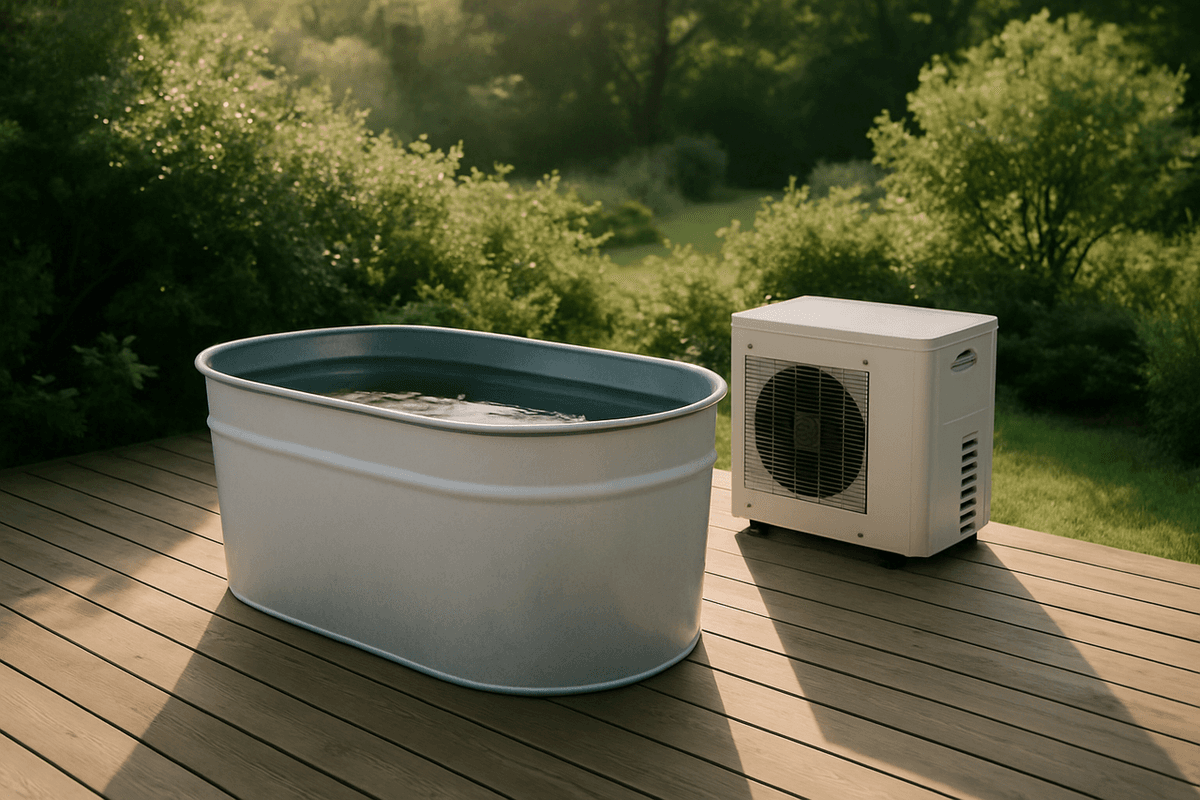
The short answer: if you plunge occasionally, ice in any container is fine and cheapest. If you plunge more than twice a week, a chiller pays for itself and is the only version that stays convenient through summer. The chest freezer conversion is genuinely the cheapest cold water you can own and it carries real electrical and warranty caveats. And whichever you pick, the thing that ends most home plunge habits is not the cold, it is the water going cloudy and nobody wanting to deal with it.
Cost ranges below are 2026 US ballparks to compare formats, not quotes.
Home cold plunge setups at a glance
| Ice in a tub or barrel | Chest freezer conversion | Stock tank plus chiller | All-in-one plunge tub | |
|---|---|---|---|---|
| Upfront | $100 to $400 | $400 to $900 | $1,200 to $3,500 | $3,000 to $10,000 |
| Ongoing | Ice, every session | Modest electricity | Modest electricity | Modest electricity |
| Gets cold without you | No | Yes | Yes | Yes |
| Filtration | None | Usually retrofitted | Usually separate | Built in |
| Effort per session | Buy and haul ice | Open lid | Open cover | Open cover |
| Risk to manage | Cost creep | Electrical and sealing | Plumbing the loop | Mostly cost |
| Best for | Trying it, occasional use | Cheapest daily cold | Flexible, DIY-comfortable | Wanting it to just work |
The chiller is the product. Everything else is a container.
That single sentence resolves most of the decision.
A cold plunge is water held at a temperature you choose, filtered enough to stay clean. What you sit in, a barrel, a stock tank, a moulded tub, changes comfort and looks, not the physics. What determines whether you will still be doing this in six months is whether the water is cold when you walk up to it without any work from you.
Ice does not do that. Ice is a purchase, a haul, and a delay every single session, and in July it is a purchase, a haul and a delay twice as large. Nearly everyone who plunges daily ends up on a chiller, and the people who quit are usually the ones who kept buying bags.
The chest freezer conversion, honestly
Cheapest real cold, with genuine caveats.
The appeal is simple: a chest freezer already contains a compressor, so converting one into a plunge is the cheapest route to water that is cold on demand. Done properly it works well and people run them for years.
Three caveats worth taking seriously. Electrical: you are putting a person in water inside an appliance that was never designed to hold it, which makes a GFCI-protected circuit non-negotiable rather than a nice-to-have. Sealing: freezers are not watertight, so a liner or a proper sealing job is the difference between a plunge and a slow leak into your garage floor. Warranty and insurance: you are voiding the appliance warranty by definition, and it is worth a thought about what your home insurance says about water damage from a modified appliance.
None of that makes it a bad choice. It makes it a project with a safety step you do not skip. If DIY plus electricity plus water is not your comfort zone, this is the option to walk past.
Stock tank plus chiller, and the all-in-one
The flexible route and the no-thinking route.
A stock tank with a separate chiller is the most common self-assembled setup: a galvanised or poly tank, a chiller sized to the volume, and a pump loop, usually with an inline filter. It is flexible, repairable, and you can upgrade one part at a time. The work is in sizing the chiller to your water volume and ambient temperature and getting the loop plumbed without leaks.
An all-in-one tub integrates chiller, pump, filtration and sanitation into a product with a warranty and a support line. You pay a large premium for that, and what you buy is the absence of a project. For a lot of people that is a perfectly rational trade.
Sizing note that catches people out: chillers are rated by the volume they can hold at a given temperature in a given ambient. A unit that holds 4°C in a cool garage may only manage 10°C on a hot patio in August, which is exactly when you want it most.
Sanitation: the part that actually ends home plunge habits
Cold water is not clean water.
Cold slows bacterial growth, it does not stop it, and every session adds skin cells, oils and whatever was on you. Without filtration and some sanitation, water goes cloudy and then slimy, usually within a week or two of regular use. The fix is unglamorous: a filter running on a loop, a sanitiser regime you understand, a cover to keep debris and light out, and a rinse before you get in. Budget for it in the plan rather than discovering it.
This is also the honest argument for the all-in-one tubs: they make the maintenance routine simple enough that people keep doing it.
Does a home setup beat going out?
Sometimes, and less often than the sales pages suggest.
The arithmetic that matters is your realistic sessions per week against a studio pass, and then the same haircut we apply to every home purchase: assume you will use it about half as often as you are picturing. Our home cold plunge and sauna cost guide runs the numbers, and the same pattern shows up in our home float tank and home reformer guides.
The strongest case for home is frequency and friction: if you would plunge daily and the drive is what stops you, a home setup genuinely changes behaviour. The weakest case is buying one to create a habit you have never actually had. Start with a cold shower and a few studio sessions; our cold plunge vs cold shower comparison covers what you lose in the cheap version, and where to find a cold plunge covers trying before buying.
Before you set anything up
Safety first, then plumbing.
Get the safety questions settled first, because cold immersion is not for everyone and a home setup removes the staff member who would have noticed you going pale. If blood pressure or a heart condition is in the picture, our guide on sauna, cold plunge and blood pressure covers why cold is the half that deserves caution. Never plunge alone if you are new to it, and never put your face under.
Then the practical three: where the water drains when you empty it, whether the floor or deck takes the loaded weight, and whether the circuit is GFCI protected.
FAQ: home cold plunge setups
Is a chest freezer cold plunge safe? It can be, on a GFCI-protected circuit and properly sealed. Those two conditions are the whole answer, and neither is optional.
How cold does a home cold plunge need to be? Colder is not automatically better. Most protocols people follow sit around 10 to 15°C, and our temperature and timing guide covers the ranges the research actually used.
How often do I change the water? With filtration and sanitation, weeks. Without them, days, and you will notice before the calendar does.
Can I just use ice from the shop? Yes, and it is the right way to start. Add up the cost across a month of real use before assuming it is the cheap option long term.
Do I need a cover? Yes. It keeps debris and light out, slows evaporation, and makes the chiller’s job easier, which shows up on the electricity bill.
The bottom line on home cold plunge setups
Buy the chilling and the filtration; the container is a preference. Ice is the honest way to start and the expensive way to continue. A chest freezer is the cheapest daily cold if you are comfortable with the electrical and sealing work, a stock tank plus chiller is the flexible middle, and an all-in-one is what you pay for when you would rather not run a project. And whichever you choose, plan the water hygiene on day one, because that is the part that quietly decides whether the thing gets used or drained.